Ceylon Natural Pastel Blue Sapphire

This Ceylon pastel blue sapphire was recorded as a 9.88 carat natural rough stone sourced from Endana village in Sri Lanka. Its transformation into a 5.23 carat trilliant-cut gemstone demonstrates the relationship between natural material, gemstone evaluation, and lapidary craftsmanship.

Verified authenticity with trusted certification

Sourced from mining and cutting origin

Safe and secure delivery to your location

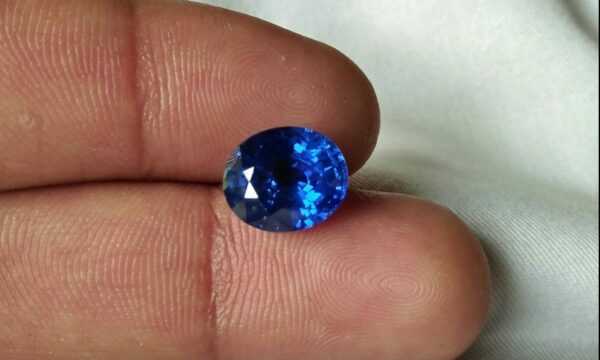
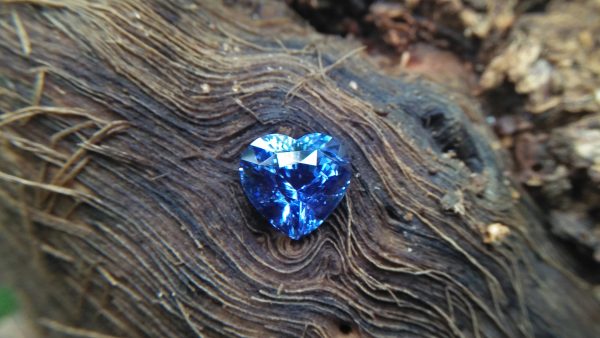


The PRICE mentioned on the website includes shipping cost. After You paid through the website cart (Visa, Master, Amex or Discover Diners club card), We start shipping process. If customers need more information or any JEWELRY request, Please Contact Us!
| Weight | 5.23 Ct |
|---|---|
| Dimensions | 9.52 × 9.41 × 7.94 mm |
| STYLE OF CUT | Trilliant |
| COLOR | Pastel Blue |
| SPECIES | natural corundum |
| VARIETY | natural blue sapphire |
| REFRACTION INDEX | 1.760–1.768 |
| PLEOCHROISM | Distinct |
| ABSORPTION SPECTRUM | Recognized |
| HARDNESS | 9 |
| SPECIFIC GRAVITY | 3.80–4.05 |
| CLARITY | VVS (Premium Grade) |
| QUALITY GRADE | Premium Quality |
| TRANSPARENCY | Transparent |
| TREATMENT | Unheated |
| ORIGIN | Endana Village, Ratnapura district, Sri Lanka 🇱🇰 |
| ORIGINAL ROUGH WEIGHT | 9.88 Ct |
| ORIGINAL ROUGH DIMENSIONS | 11.3 × 10.7 × 9.4 mm |
| SOURCE | Directly sourced from Endana village, a traditional gemstone mining area in Sri Lanka. |
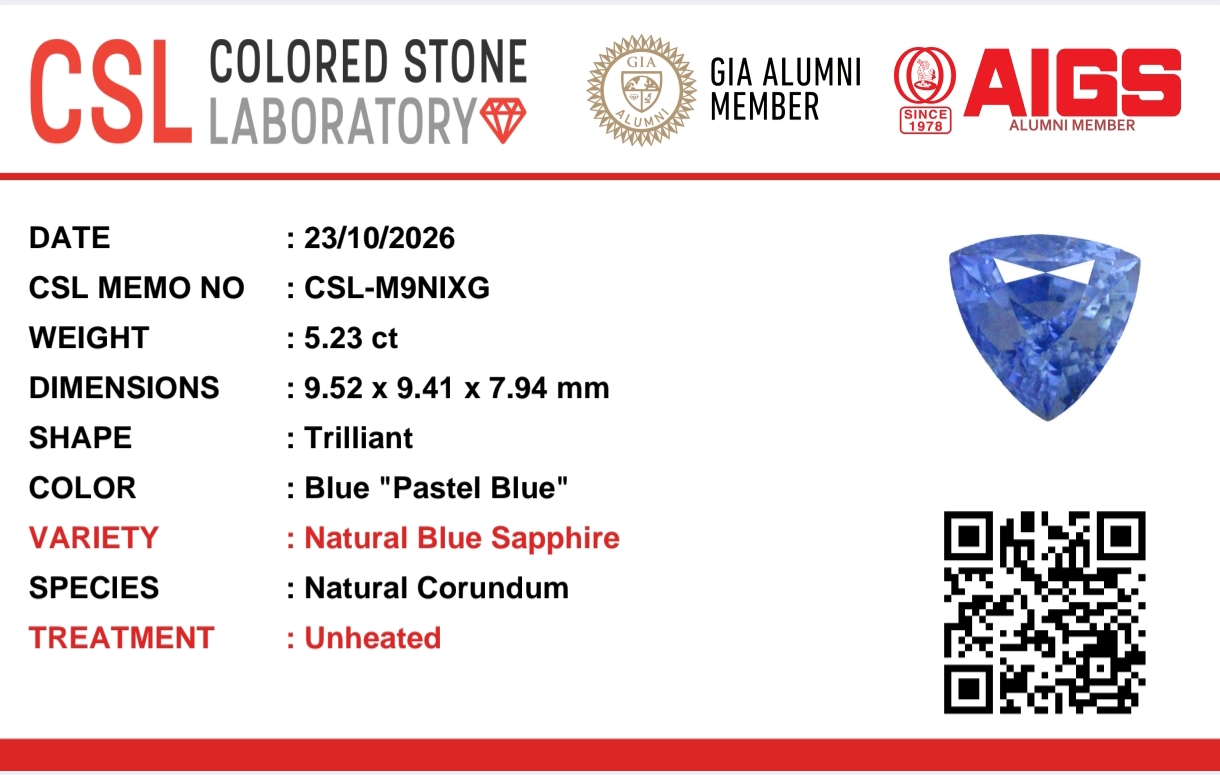
| CERTIFICATE | CSL – Colored Stone Laboratory Certified ( Gemological Institute of America “GIA” Alumni Association Member & Asian Institute of Gemologycal Science "AIGS" Alumni Member) |
| BIRTHSTONE | September |
| DESTINY NUMBER | 8 |
| PLANET | Saturn 🪐 |
| ZODIAC SIGN | Capricorn ♑, Aquarius ♒ |
| WEARING FINGER | middle finger of the right hand |
| WORN FOR | Good luck, wisdom, protection, mental clarity, and inner strength |
| SYMBOLIZES | Truth, loyalty, wisdom, protection, happiness, and lasting love |
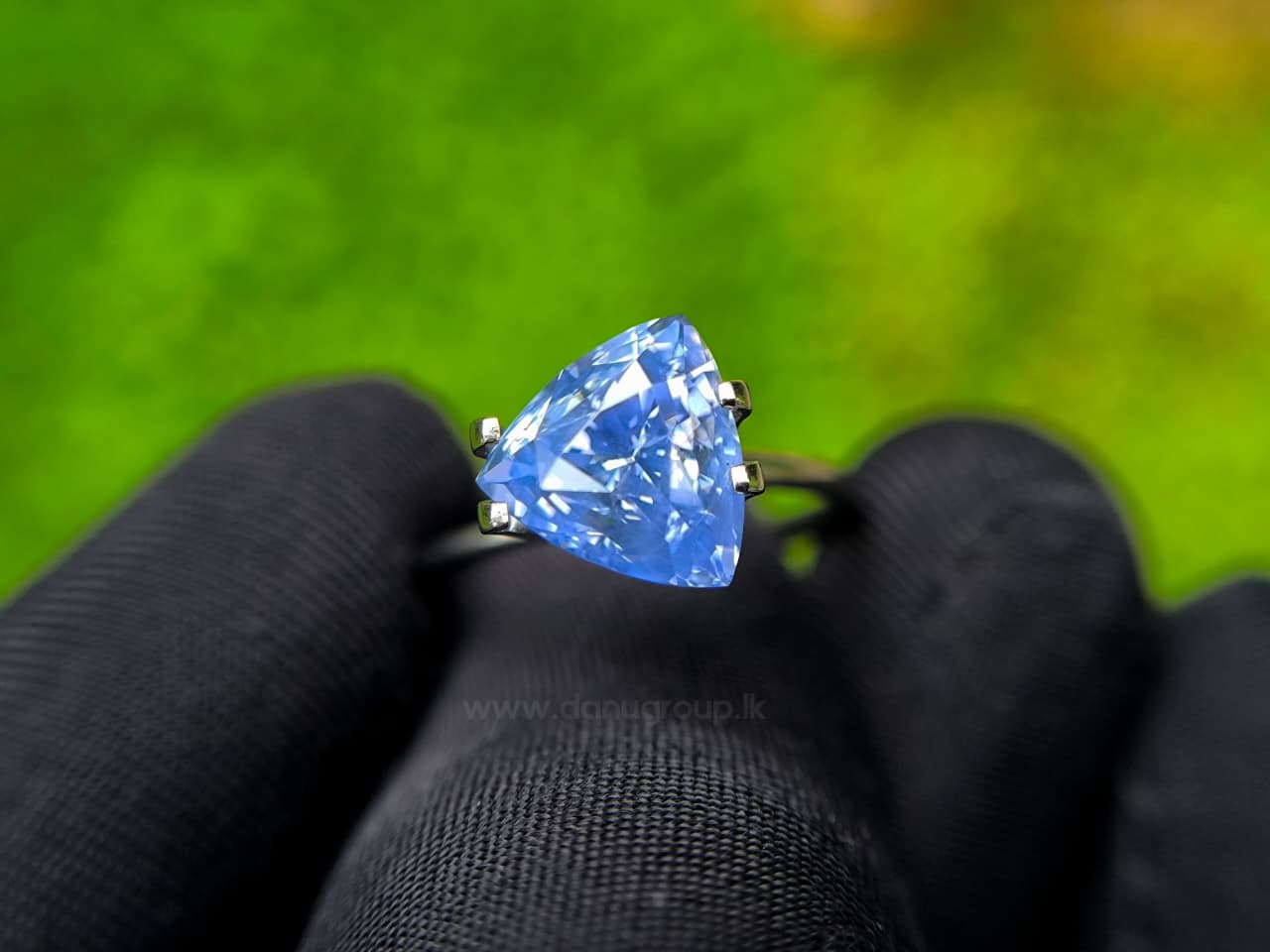
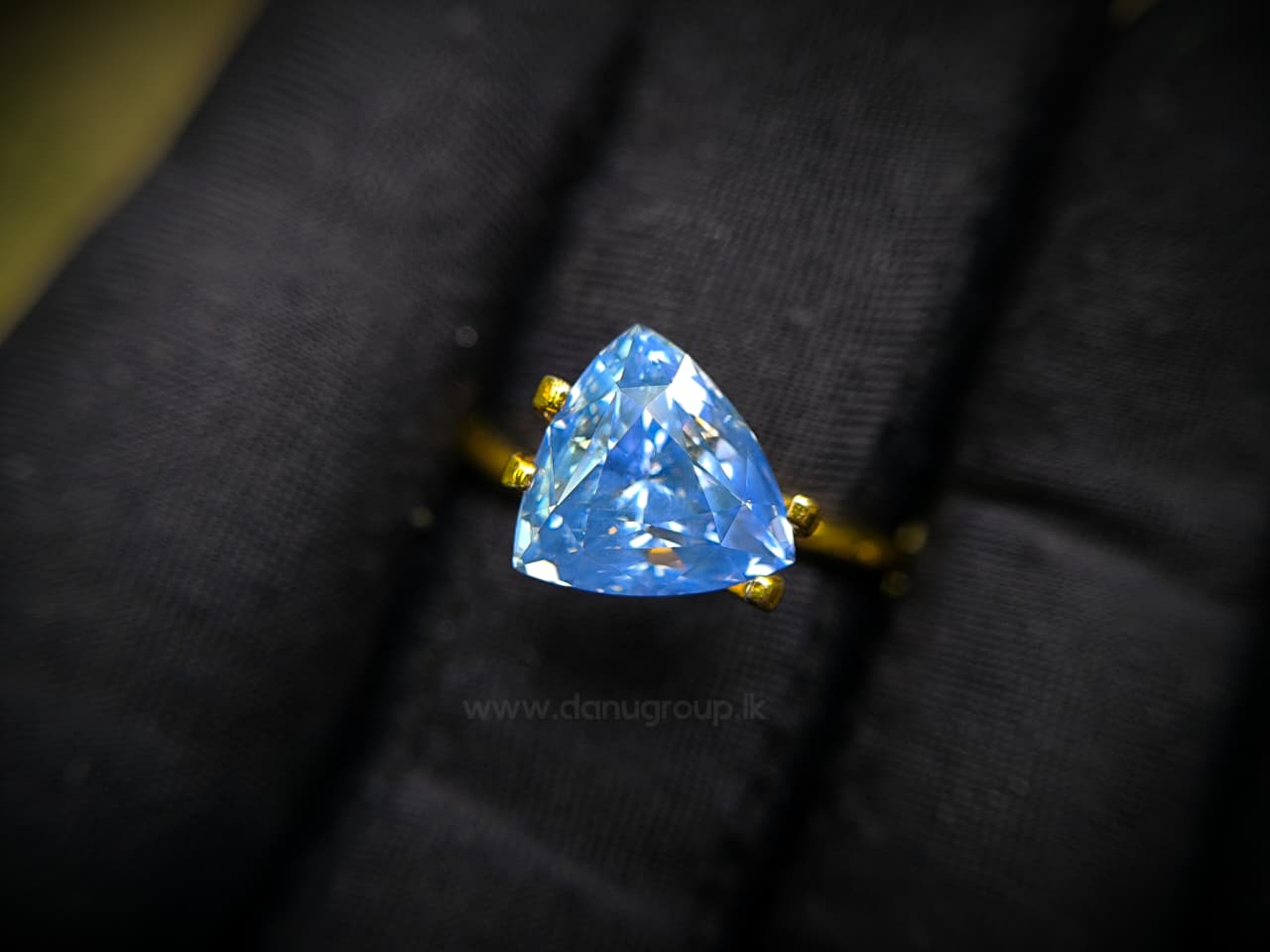
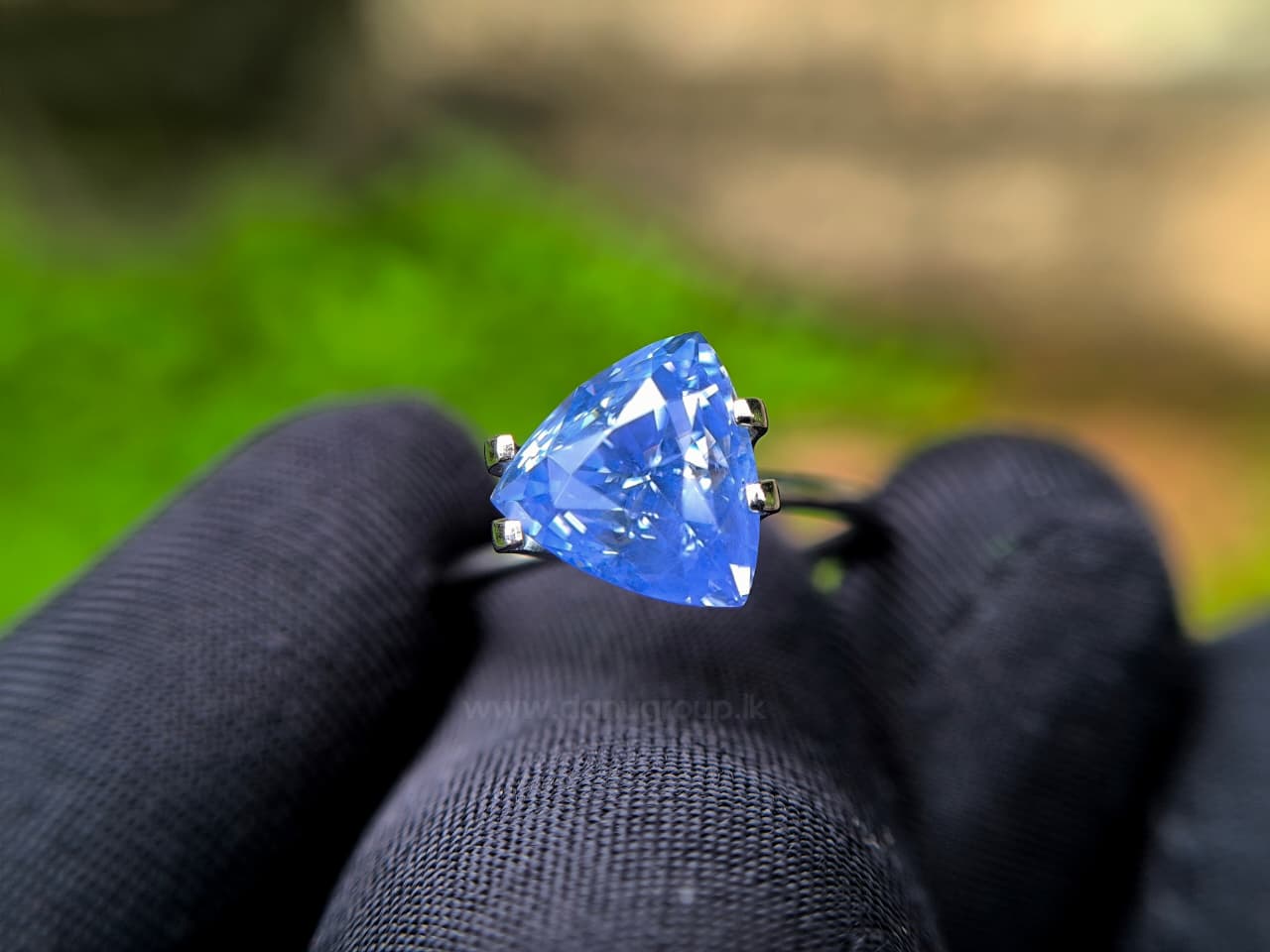
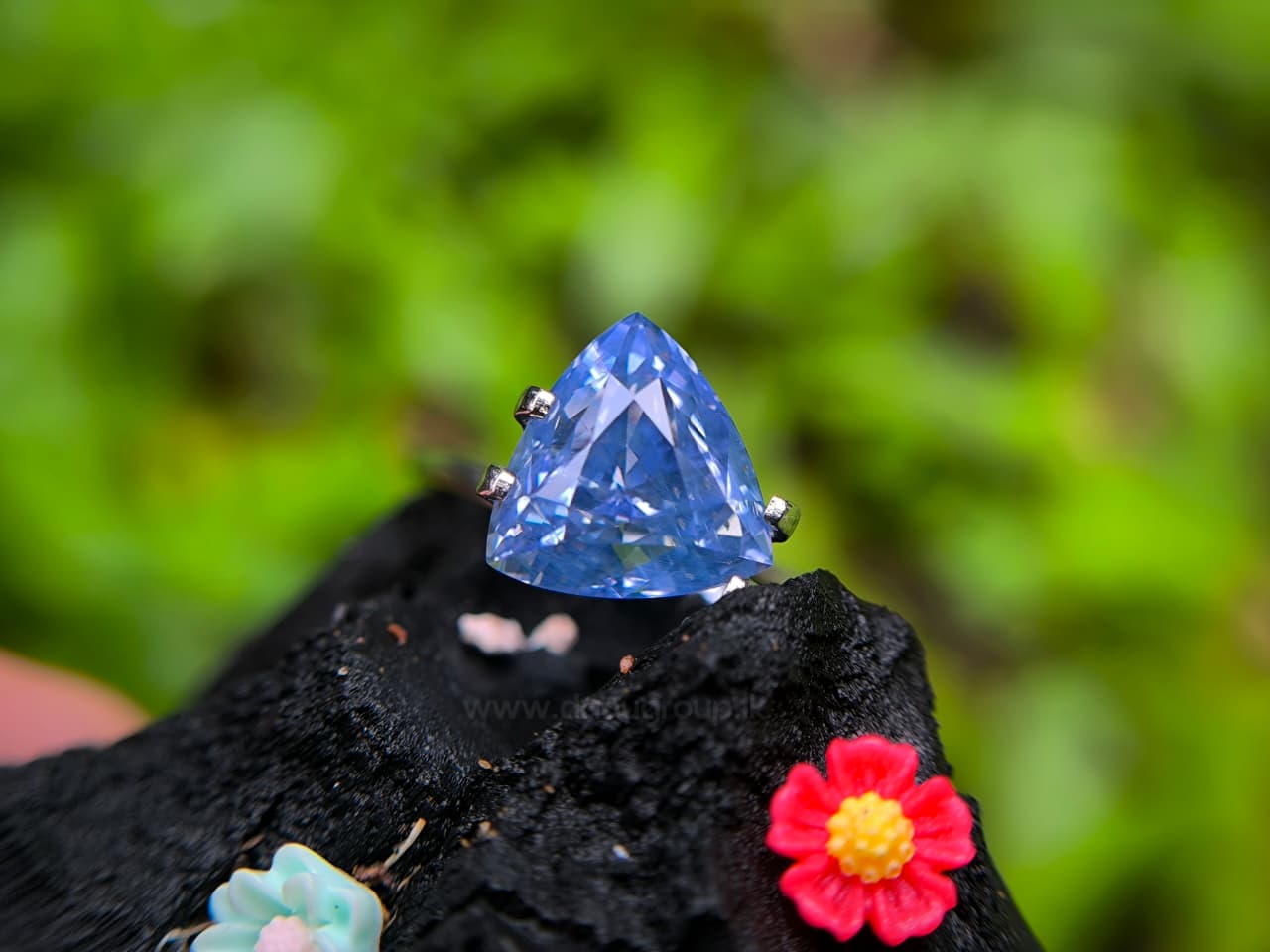
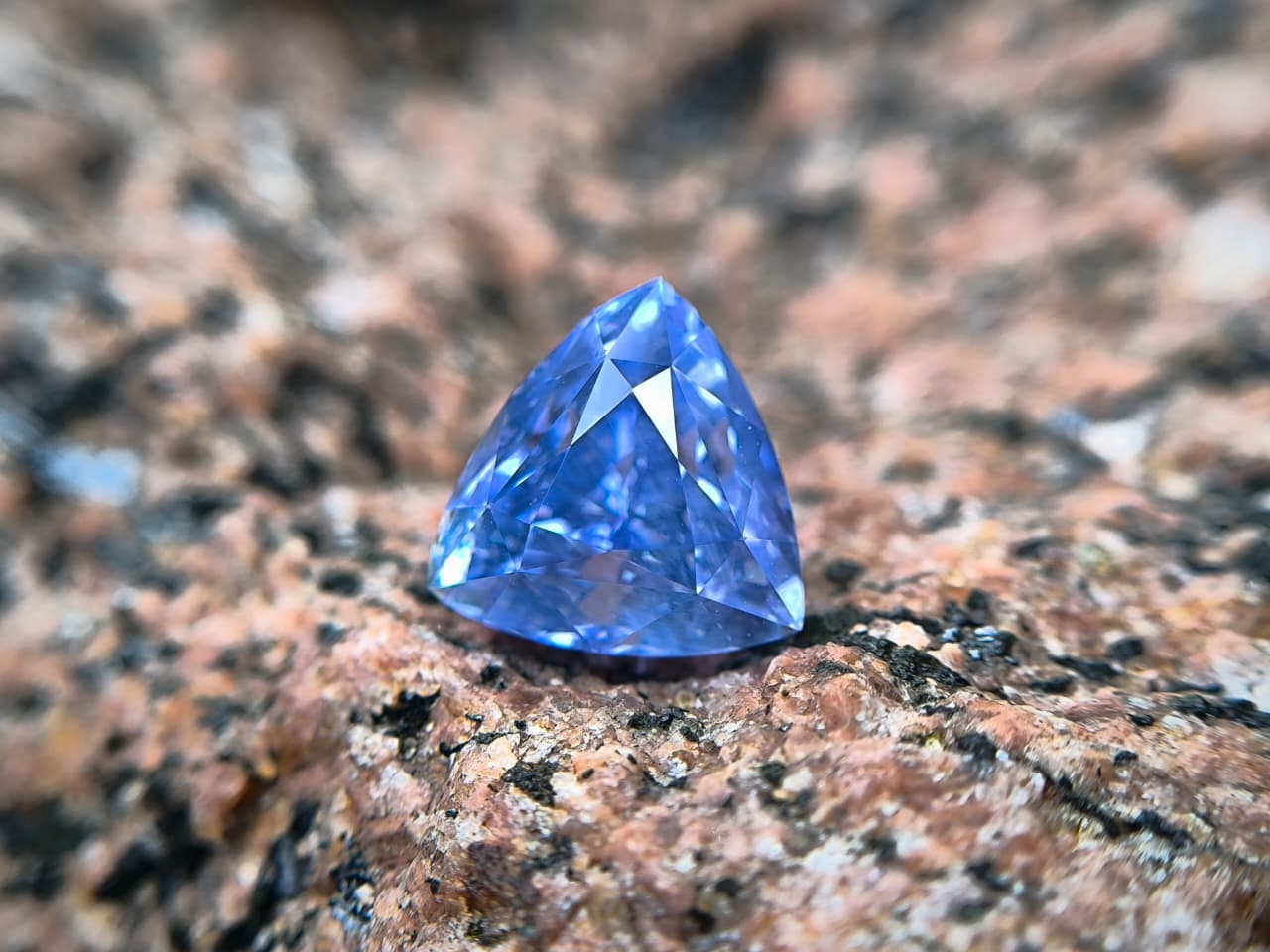
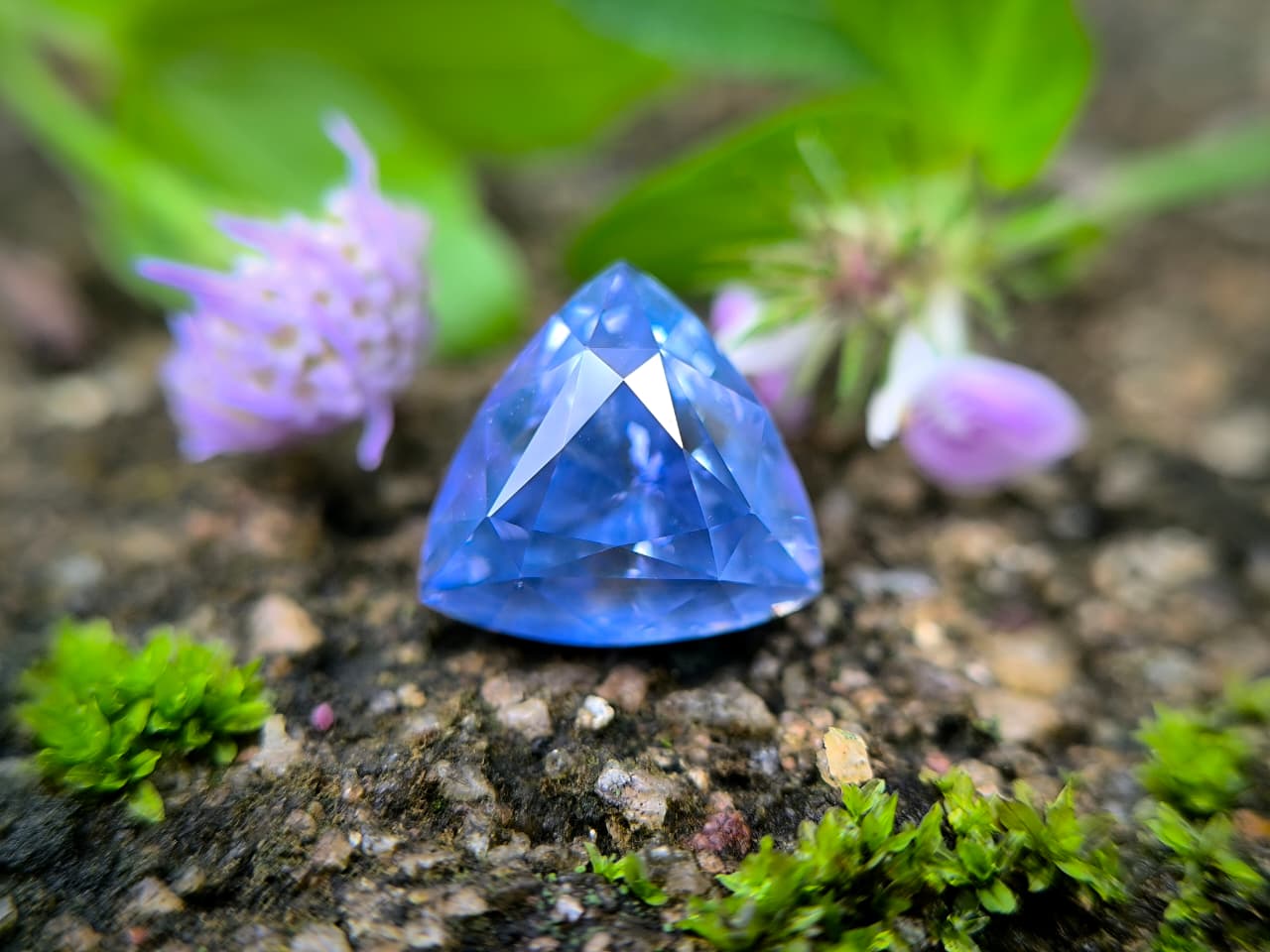
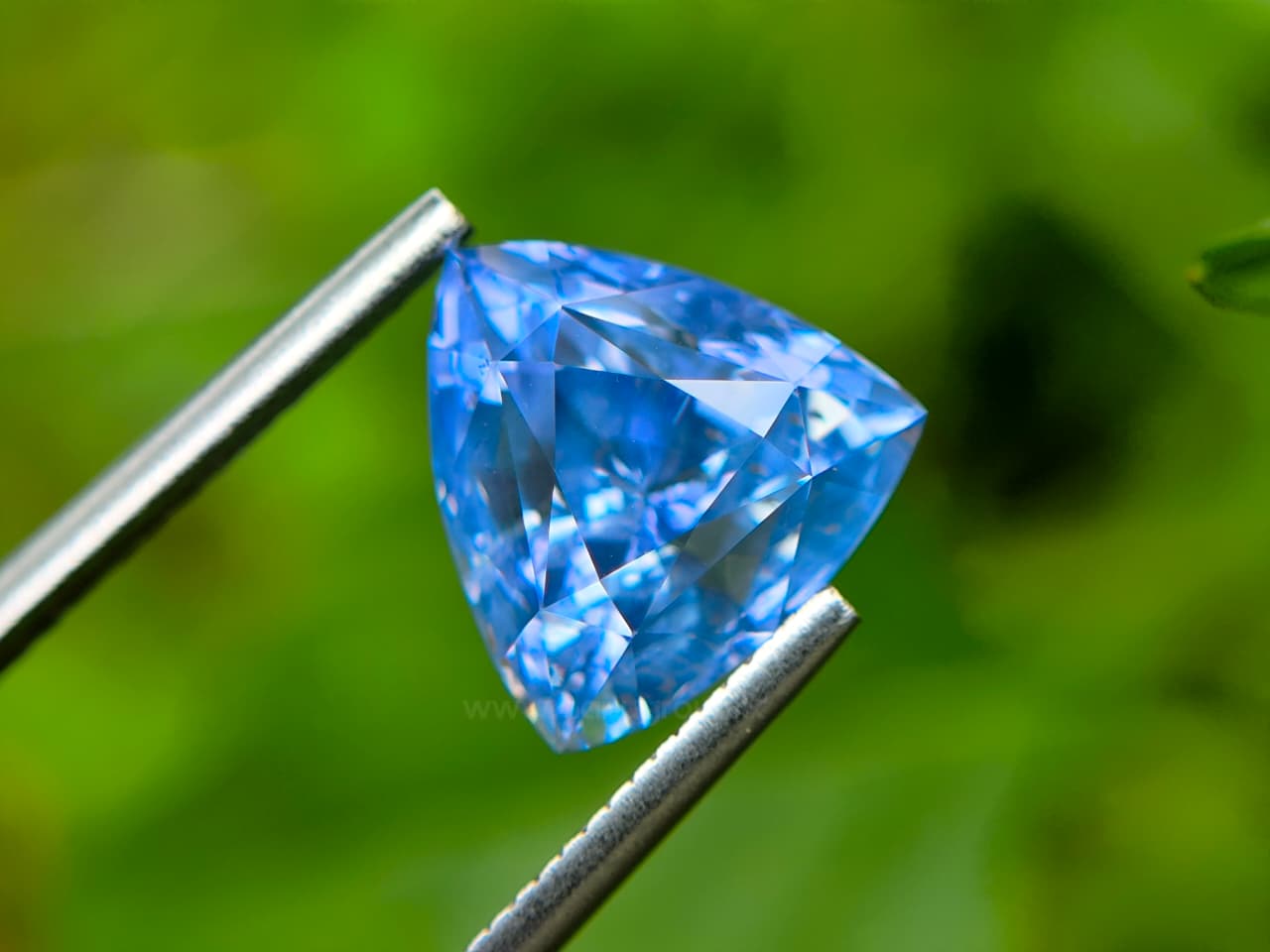
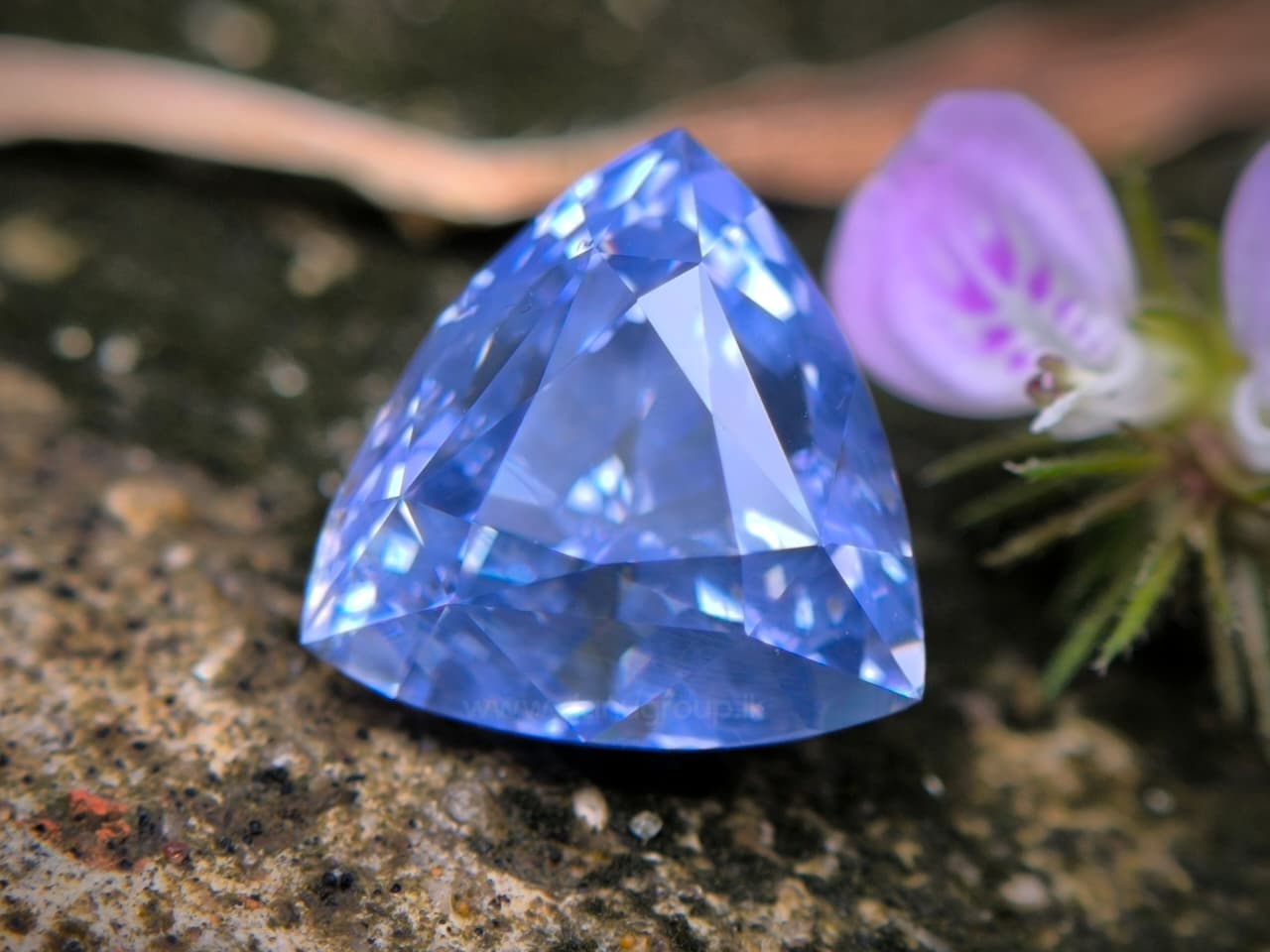
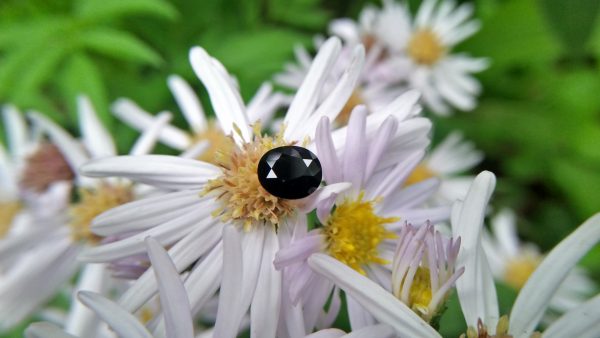
SOME GEMSTONE IMAGES ARE PHOTOGRAPHED ON NATURAL BACKGROUNDS TO OFFER A MORE REALISTIC SENSE OF THE STONE’S TRUE BEAUTY, CHARACTER, AND APPEARANCE WHEN PURCHASING ONLINE.
Sri Lankan National Gem and Jewellery Authority Licenced Gem Dealer.
5.23 Ct Ceylon Pastel Blue Sapphire – From Endana Rough to a Finished Trilliant
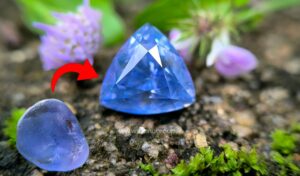
Every natural gemstone begins long before it reaches a jeweller’s workshop or a collector’s collection. Its journey starts beneath the earth, shaped by geological processes over immense periods of time. What happens after its discovery depends on the people who recognize its potential, understand its natural characteristics, and carefully transform it into a finished gemstone.
This 5.23 carat natural pastel blue sapphire from Endana, Sri Lanka, represents that journey.
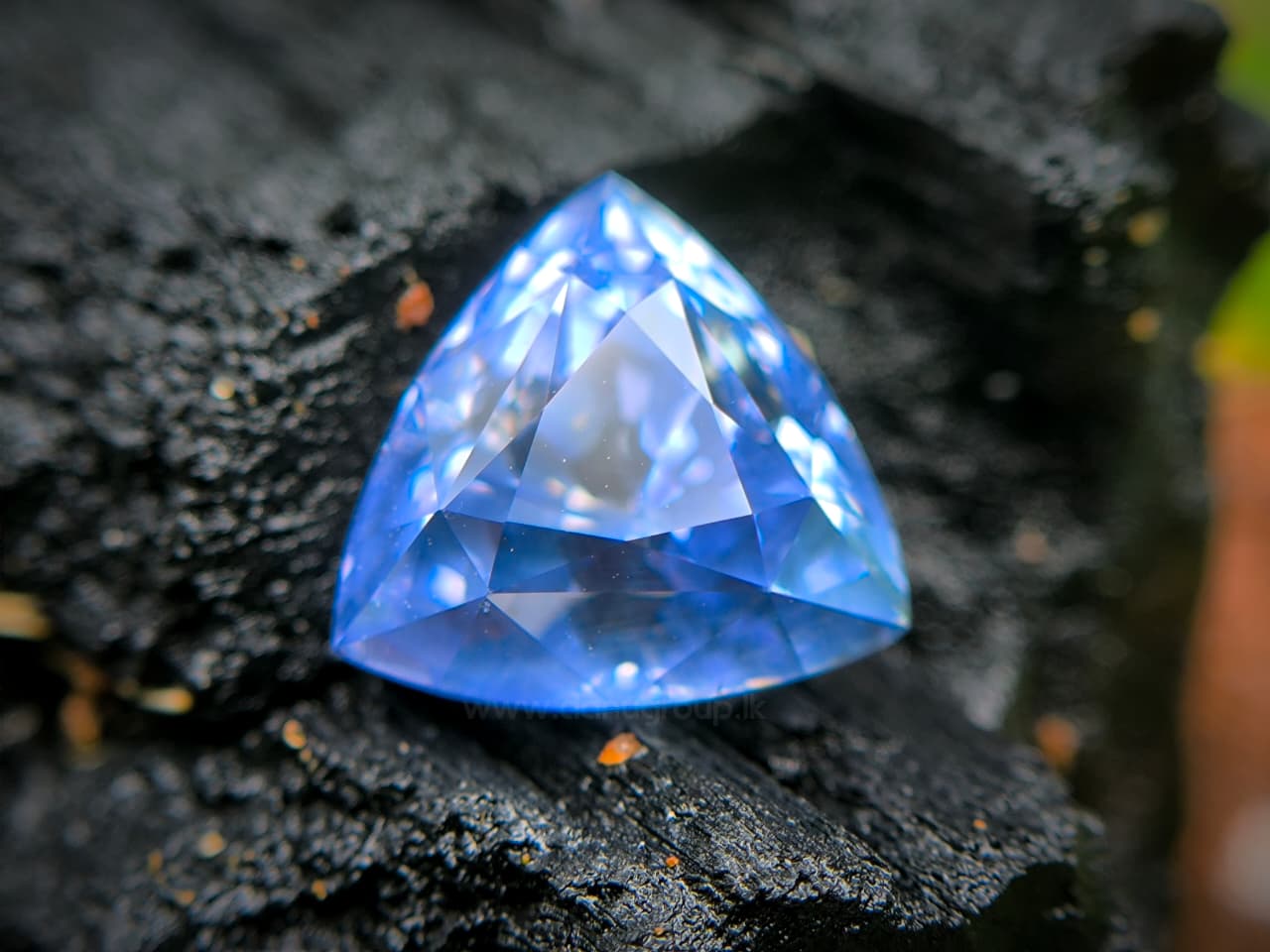
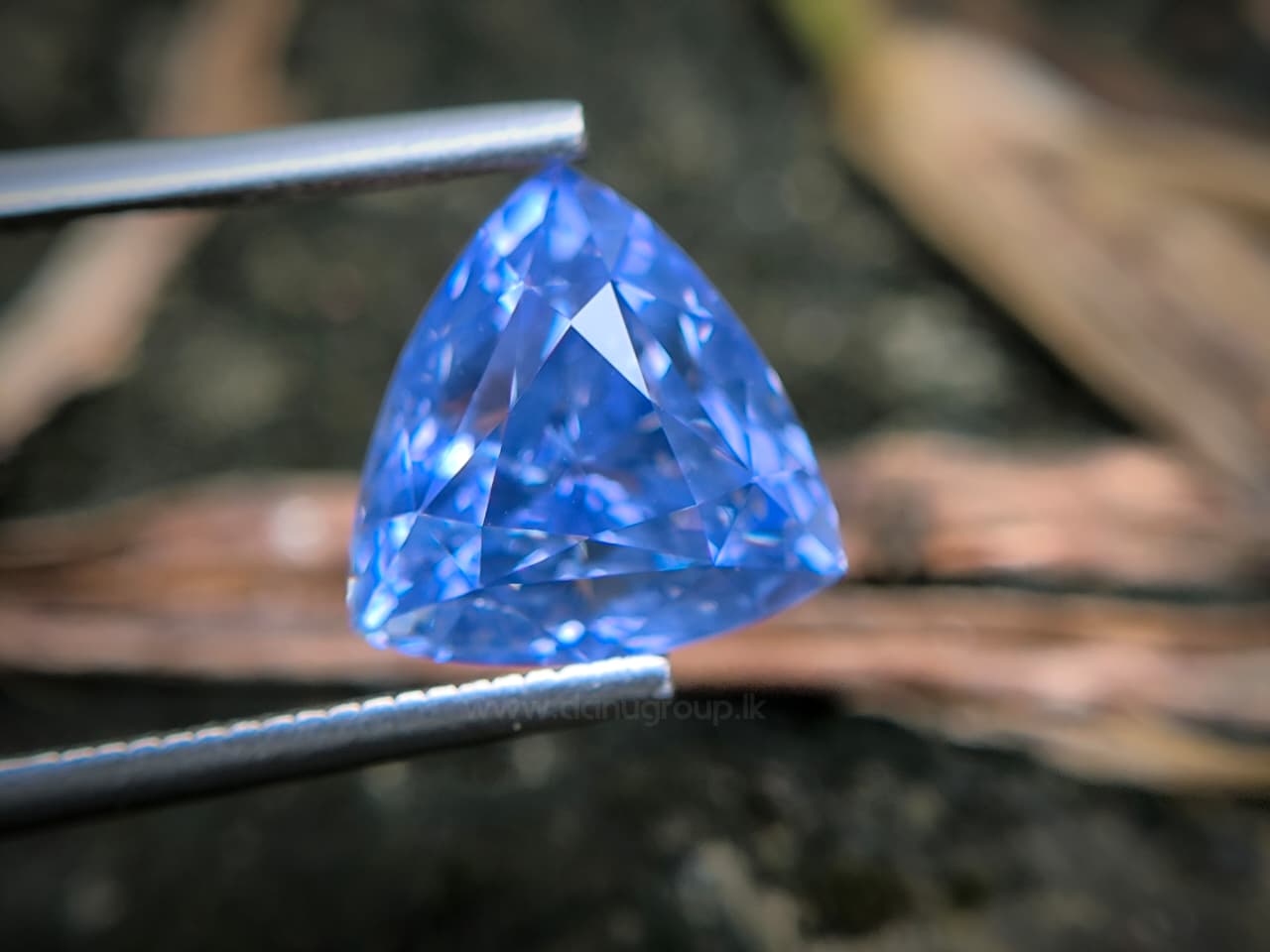
Directly sourced by DGM as a 9.88 carat rough sapphire, the stone was subsequently transformed into a transparent, trilliant-cut gemstone measuring 9.52 × 9.41 × 7.94 mm. Its soft pastel blue colour, natural unheated condition, and documented progression from rough material to polished sapphire form the foundation of its identity.
What distinguishes this sapphire is not simply its finished appearance. It is the connection between the land where the rough was sourced, its original natural form, the cutting process, and the final gemstone.
* From Endana Village – The Beginning of the Journey
The sapphire originated from Endana village in Sri Lanka’s Ratnapura District, an area associated with the country’s longstanding gemstone-mining traditions.
Sri Lanka is internationally recognized for natural corundum, particularly sapphires occurring in a broad spectrum of colours. Many gemstone-bearing deposits are associated with weathered and transported material, where minerals released from their original host rocks accumulate in secondary deposits.
Danu Group sourced this sapphire directly from the Endana gemstone-producing area rather than acquiring it as an already polished stone through an international trading market.
At the time of sourcing, the rough weighed 9.88 carats and measured approximately 11.3 × 10.7 × 9.4 mm.
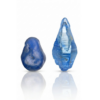
The rough photographs preserve an important stage of the gemstone’s history. They show a naturally shaped, translucent-to-transparent-looking blue sapphire with irregular surface features and internal visual characteristics that differ considerably from its polished appearance.
The original material displayed a blue body colour before cutting. However, its rough appearance did not fully reveal the brightness, facet reflections, and colour distribution that would become visible after polishing.
* Evaluating the Natural Rough Sapphire
A rough sapphire is not simply a larger version of the finished gemstone.
Its natural shape, internal features, colour distribution, optical orientation, and available cutting depth all influence the possible finished result.
Before faceting, a cutter must consider several important questions. Which orientation will best present the gemstone’s colour? How can the material be shaped without unnecessarily sacrificing weight? Where should the table and pavilion be positioned? What final outline will suit the rough?
For blue sapphire, these decisions are particularly important because corundum is optically anisotropic and may display different colour intensities when observed in different crystallographic directions.
The original rough’s relatively compact proportions provided material for a three-sided finished outline.
The resulting shape was a trilliant, also commonly described as a triangular brilliant-style cut.
* The Cutting Journey – From 9.88 Ct to 5.23 Ct
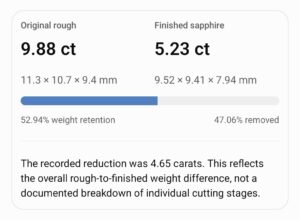
The finished gemstone weighs 5.23 carats, retaining approximately 52.94% of the original rough weight.
The reduction was 4.65 carats. This reflects the overall rough-to-finished weight difference, not a documented breakdown of individual cutting stages.
Weight retention is only one consideration in gemstone cutting. A heavier finished stone is not necessarily a better-cut stone.
The cutter must balance finished weight with visual presentation, proportions, colour, transparency, and structural suitability.
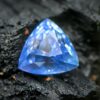
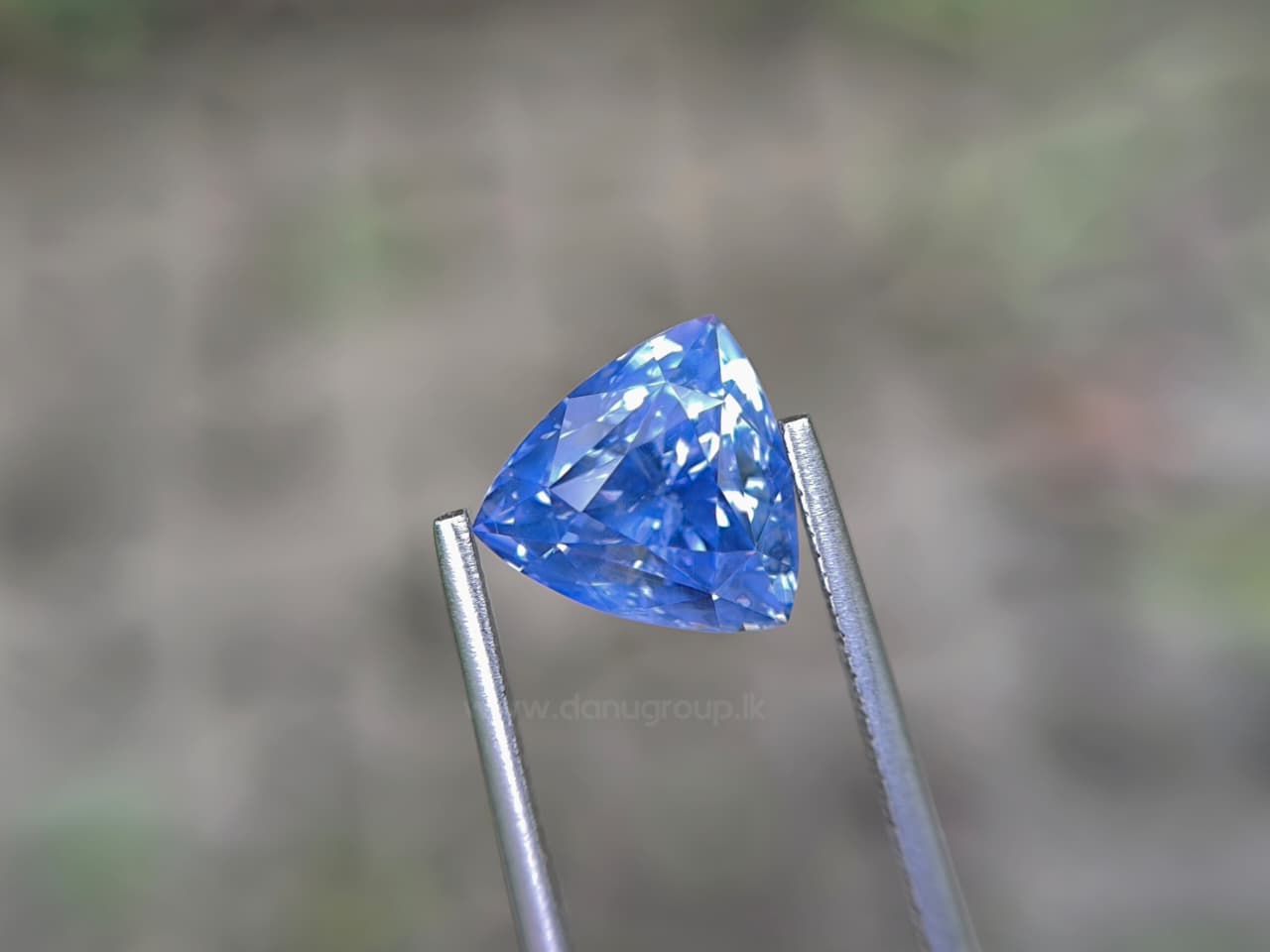
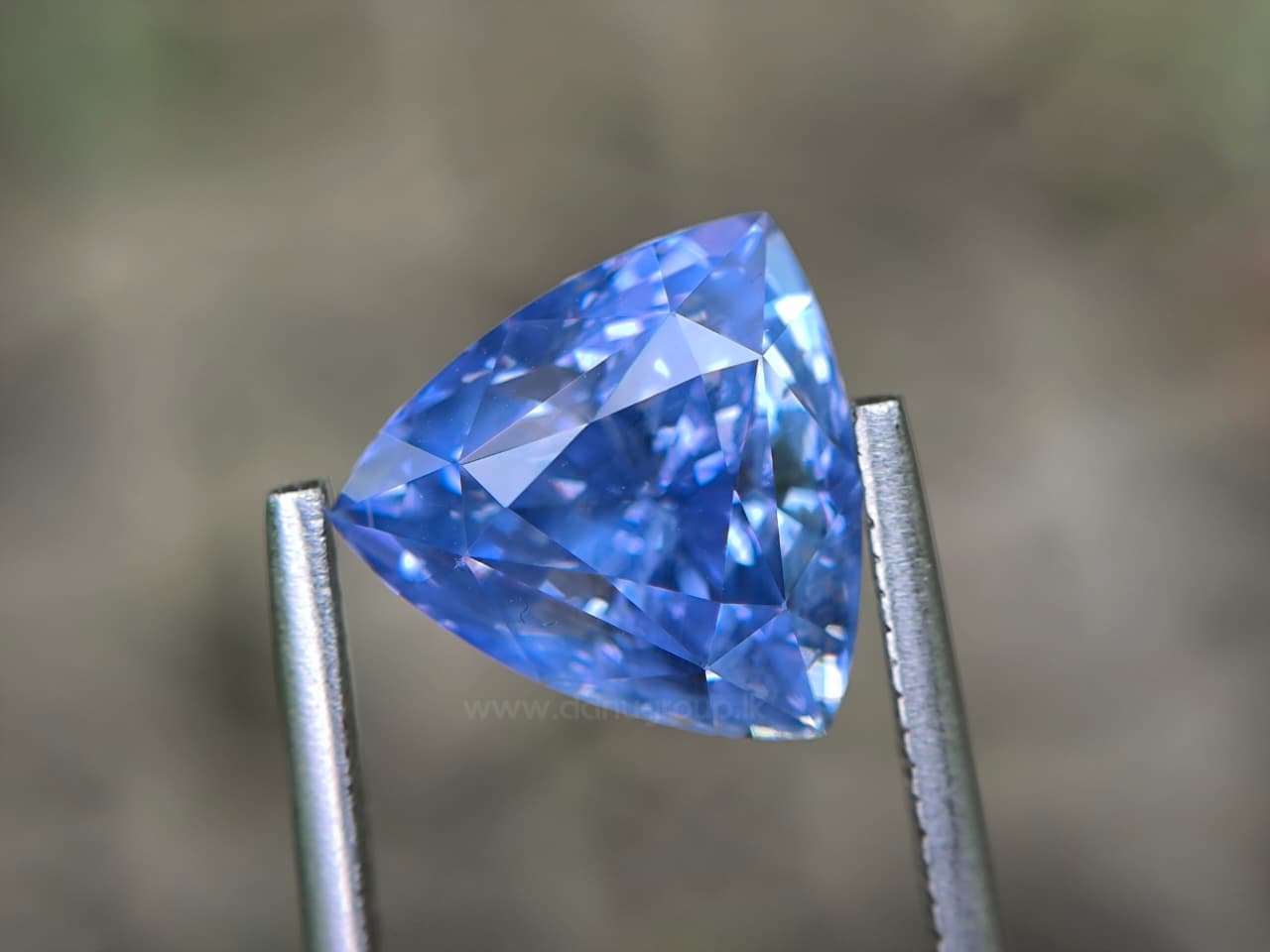
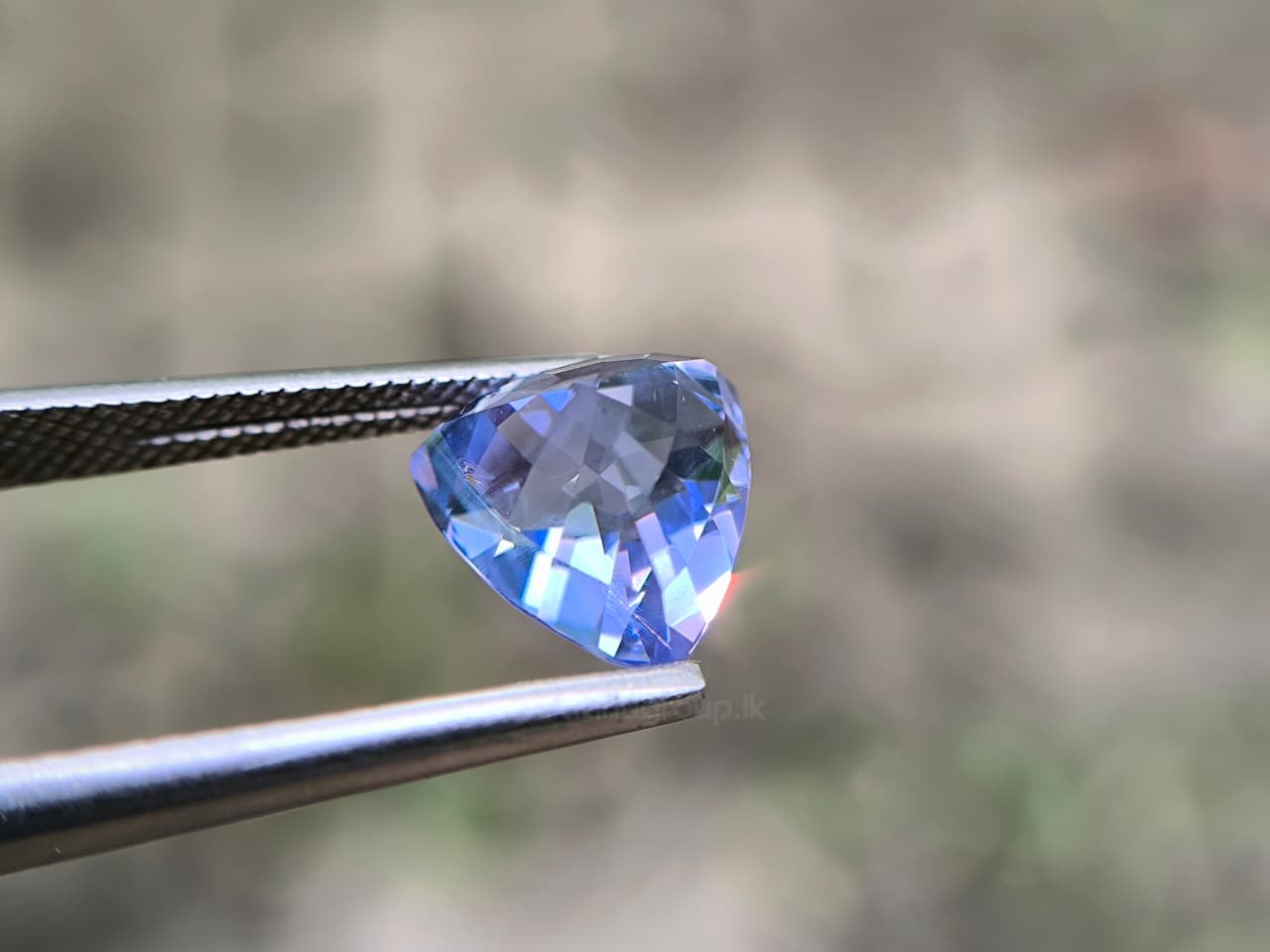
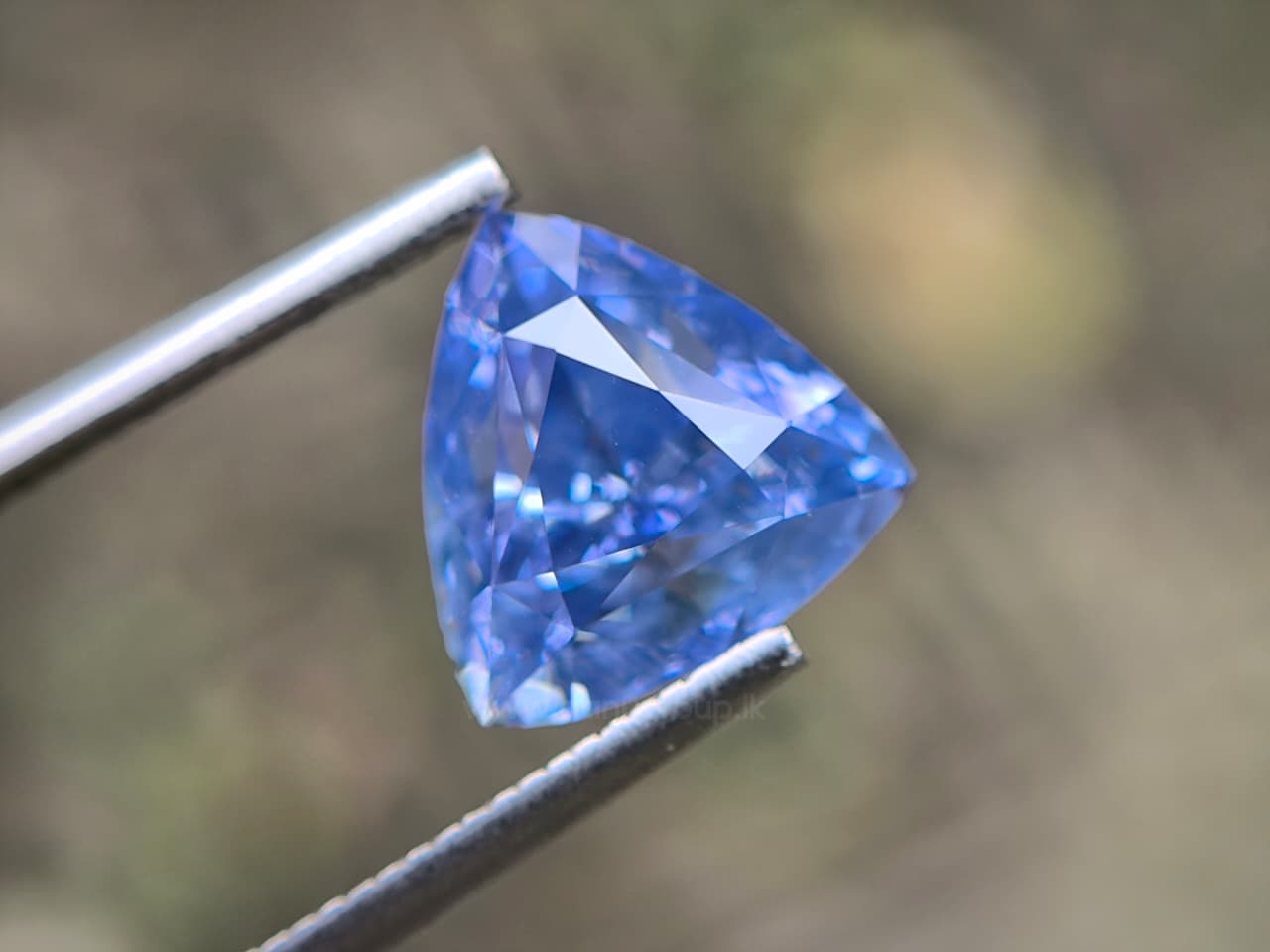
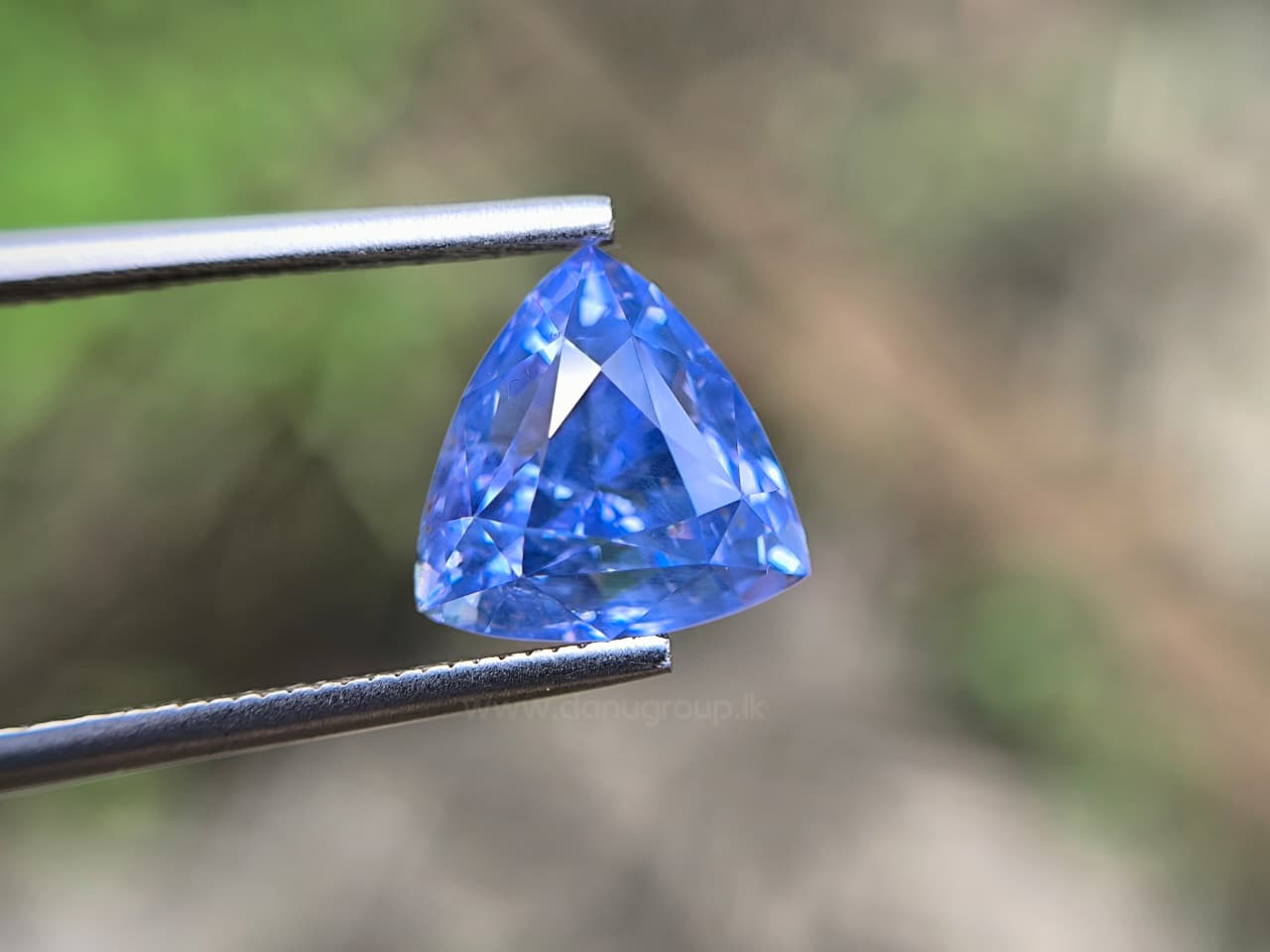
The trilliant design introduces a distinctive geometric character. Its three principal corners create a triangular outline, while the facets direct light through the gemstone and produce changing patterns of brightness and reflection.
With its near-equal face-up dimensions of 9.52 × 9.41 mm, this sapphire presents a balanced triangular silhouette.
Its depth of 7.94 mm is substantial relative to its face-up dimensions. The actual optical performance depends on the complete facet arrangement, angles, and orientation, rather than depth alone.
* A Natural Pastel Blue Colour
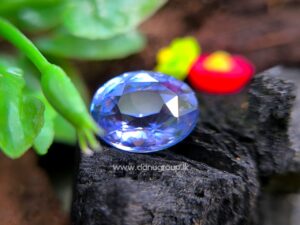
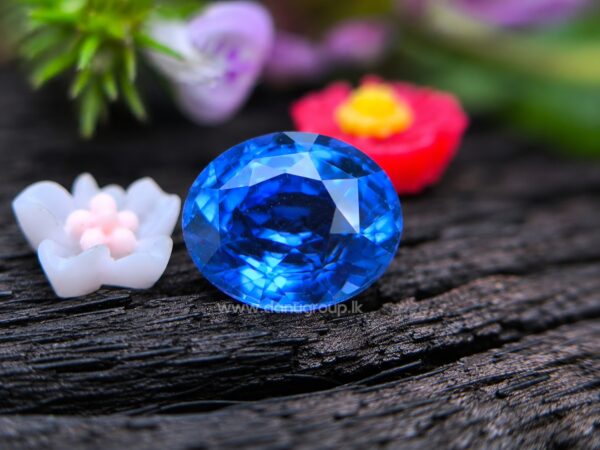
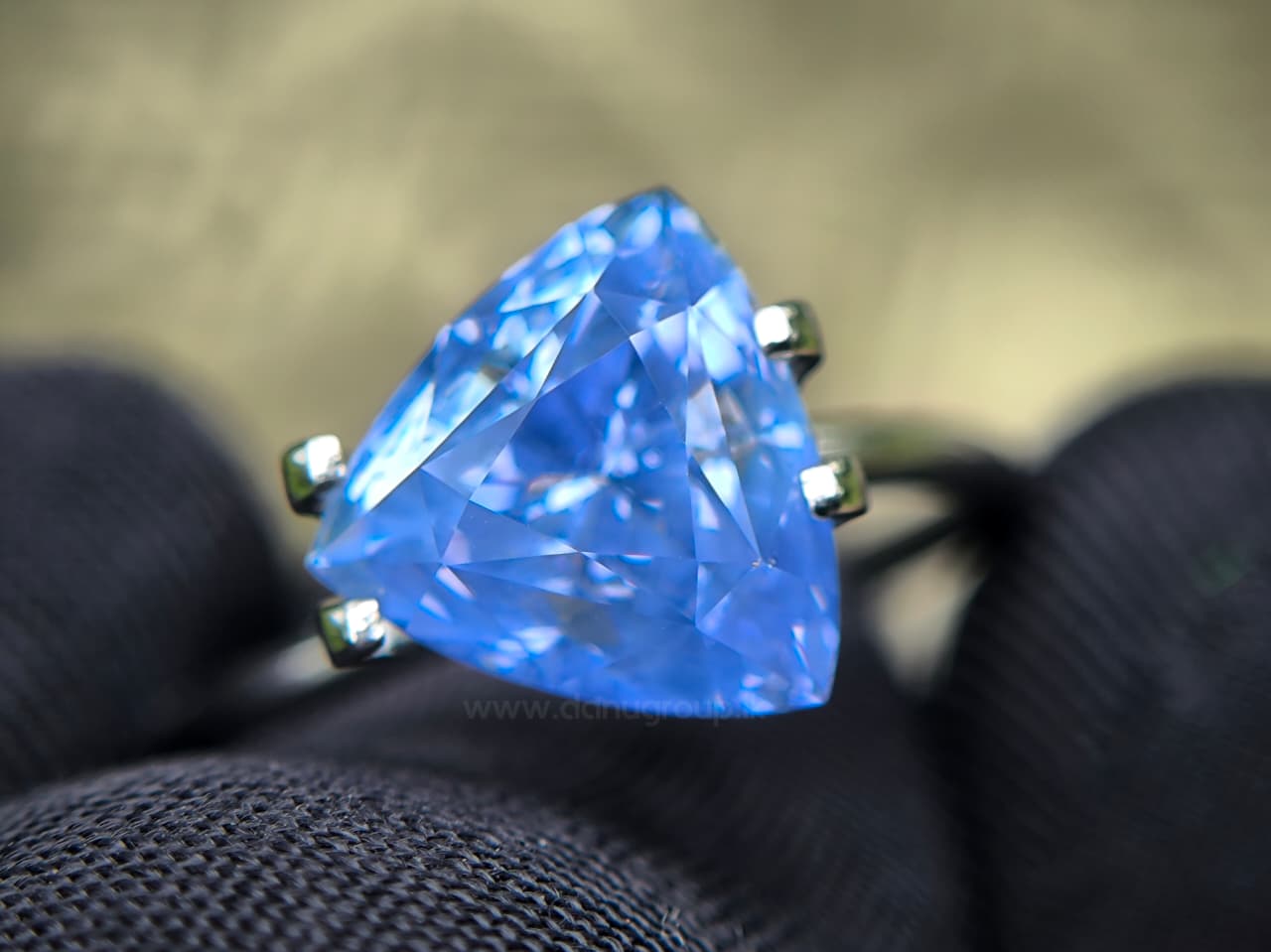
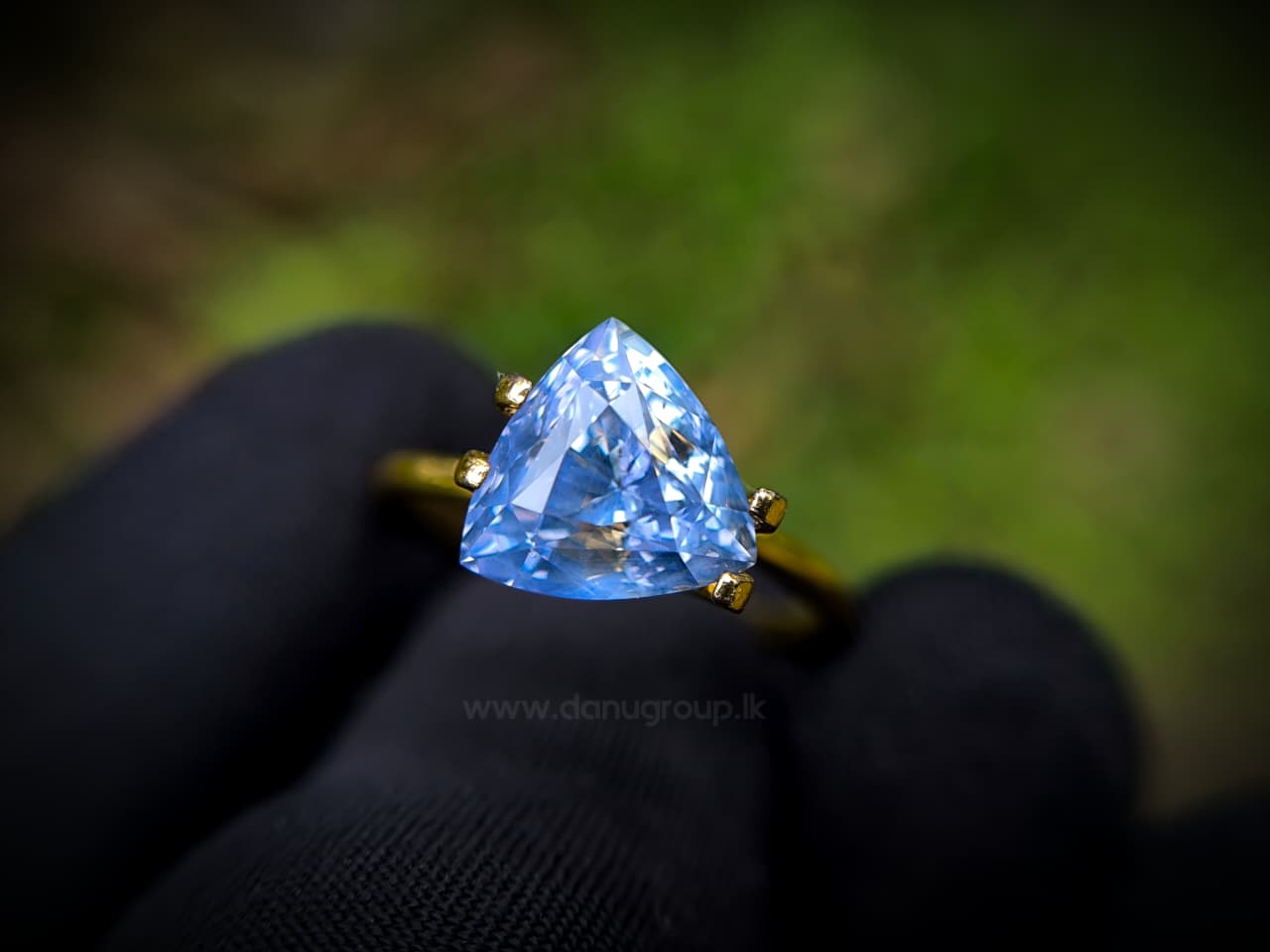
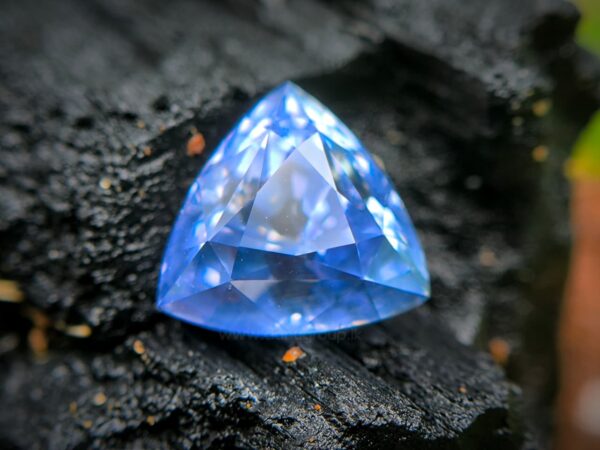
The finished sapphire displays a soft pastel blue colour with delicate violet-blue impressions visible under some lighting conditions.
Unlike darker royal blue sapphires, where the colour may dominate the visual appearance, this gemstone’s lighter tone allows its faceting and internal reflections to become prominent.
The supplied photograph shows a lively interaction between pale blue areas, stronger blue reflections, and bright facet flashes.
These appearances can change with lighting intensity, background, camera settings, and viewing direction. The laboratory memo identifies the colour as Blue – Pastel Blue.
The stone is transparent with VVS clarity and premium quality grading.
The gemstone’s visual character is particularly suitable for collectors and jewellery designers who appreciate softer sapphire colours rather than highly saturated blue material.
* Natural and Unheated – Preserving the Original Colour
One of the important characteristics of this sapphire is its unheated condition.
Heat treatment is widely practiced in the sapphire trade and may be used to modify colour or improve the visual appearance of certain types of corundum.
This particular gemstone is disclosed as unheated,
Its pastel blue appearance is therefore presented without a declared artificial heating process.
This distinction matters for buyers who specifically seek untreated gemstones and wish to understand the treatment history of their purchases.
An unheated designation does not mean that every natural feature or inclusion must remain visible to the naked eye. Nor does it establish that a sapphire is necessarily rarer or more valuable than every heated stone. Value depends on several factors, including colour, clarity, size, cut, market demand, and the strength of the available documentation.
For this gemstone, the combination of natural pastel colour, unheated treatment status, and recorded sourcing history provides a clear and meaningful description.
* The Gemological Science of Blue Sapphire
Blue sapphire belongs to the mineral species corundum, whose principal chemical composition is aluminium oxide, Al₂O₃.
Corundum crystallizes in the trigonal crystal system and is known for its considerable hardness, durability, and ability to occur in a wide range of colours.
Pure corundum is essentially colourless. The colours of natural sapphires are influenced by trace elements, defects, and their interactions within the crystal structure.
In many natural blue sapphires, the blue colour is associated with intervalence charge transfer involving iron and titanium. The exact distribution and concentration of these elements can influence the resulting colour.
This is a general explanation of blue sapphire colour formation, not a chemical analysis performed on this individual stone.
Corundum has a Mohs hardness of 9, making it one of the hardest naturally occurring gemstone minerals commonly used in jewellery.
Its typical refractive index is approximately 1.760–1.770, with birefringence generally around 0.008–0.010.
Natural sapphire has a specific gravity typically near 4.00, although reference ranges may vary slightly.
Corundum has a vitreous to subadamantine lustre and does not possess well-developed true cleavage. It can, however, exhibit parting along certain crystallographic planes and may fracture if subjected to sufficiently strong impacts.
Blue sapphire may display pleochroism, meaning that different colour appearances can be observed along different crystallographic directions. This is an important consideration in gemstone orientation and faceting.
Typical natural sapphire inclusions may include mineral crystals, rutile needles, growth structures, healed fractures, and other internal characteristics. The presence, appearance, and interpretation of inclusions vary between individual stones.
* Geological Background – Sri Lankan Sapphire Formation
Sri Lanka’s sapphire deposits are associated with a complex geological history involving high-grade metamorphic rocks and subsequent weathering, erosion, and sedimentary concentration.
Gem-quality corundum can originate in geological environments where aluminium-rich minerals form under suitable temperature, pressure, and chemical conditions.
Over time, natural processes may release resistant gemstones from their host rocks and transport them into secondary deposits.
These geological processes help explain why Sri Lankan gemstone sourcing often involves traditional mining areas, alluvial deposits, and local networks of miners and dealers.
For Danu Group, maintaining relationships within these source communities allows individual gemstones to be connected with the areas where they were acquired.
This particular sapphire is recorded as sourced from Endana village. Its village-level source record is part of Danu Group’s commercial documentation and should be distinguished from an independent laboratory determination of geographic origin.
* Jewellery Design and Collecting Potential
The finished trilliant shape provides an interesting foundation for jewellery design.
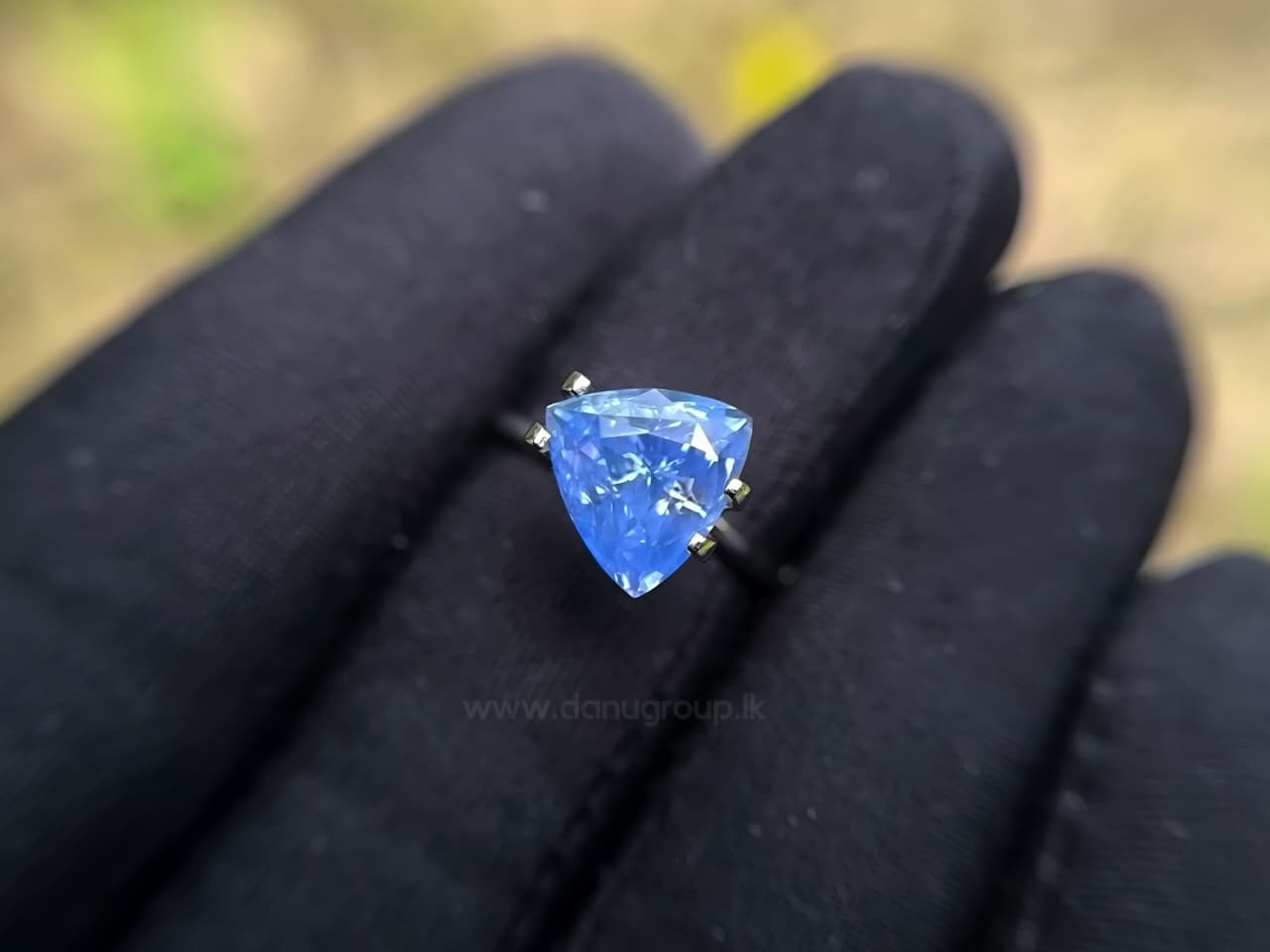
Its triangular outline can be used as the centrepiece of a pendant, an individually designed ring, or a distinctive gemstone setting.
The soft pastel blue colour can complement white gold, platinum, yellow gold, or other appropriate jewellery metals.
For rings, the three corners of a trilliant sapphire deserve particular attention. Protective prongs or a well-designed bezel can help reduce the likelihood of damage from accidental impacts.
With a Mohs hardness of 9 and generally good durability, sapphire is widely suitable for fine jewellery, although all gemstones require sensible care.
Collectors may also appreciate this sapphire for its recorded transformation, beginning as natural rough from Endana and continuing through its finished form and laboratory documentation.
* September Birthstone and Traditional Symbolism
Sapphire is the traditional birthstone for September and has longstanding cultural associations with wisdom, loyalty, truth, protection, and sincerity.
In some astrological traditions, blue sapphire is associated with Saturn, the number eight, and the zodiac signs Capricorn and Aquarius.
Certain traditions recommend wearing blue sapphire on the middle finger of the right hand.
These traditions contribute to sapphire’s historical and symbolic significance, independently of its gemological properties.
* A Gemstone With a Documented Journey – Danu Group
For Danu Group, a finished gemstone is not simply an object purchased and placed into inventory.
Whenever possible, its story begins at the source.
This Ceylon pastel blue sapphire was recorded as a 9.88 carat natural rough stone sourced from Endana village in Sri Lanka. Its transformation into a 5.23 carat trilliant-cut gemstone demonstrates the relationship between natural material, gemstone evaluation, and lapidary craftsmanship.
The preserved rough images, original measurements, finished specifications, and laboratory certification connect different stages of the same gemstone’s journey.
Rather than separating the finished sapphire from its beginnings, Danu Group presents both.
From the land where it was sourced, through the hands that shaped it, to the collector or jeweller who will give it a new purpose.
That is the story behind this natural Ceylon pastel blue sapphire.
Q & A
Frequently Asked Questions
Yes. The supplied CSL memo identifies the 5.23 ct gemstone as natural blue sapphire, belonging to the corundum species.
No. It's unheated amd certified
Danu Group records show that the original rough was directly sourced from Endana village in Sri Lanka's Ratnapura District from DGM.
Gemstone cutting removes material to create a suitable shape, proportions, and polished surfaces. This sapphire retained approximately 52.94% of its original rough weight.
Blue colour in sapphire is commonly associated with iron–titanium interactions within corundum.
Yes. Trilliant-cut sapphires can be used in rings, pendants, and other fine jewellery. Their corners should be protected by an appropriate setting.
Corundum has a Mohs hardness of 9, offering excellent resistance to scratching compared with many other jewellery gemstones.
It may appeal to collectors interested in natural unheated sapphires, distinctive trilliant cuts, pastel blue colours, and gemstones with preserved rough-to-finished sourcing records.
QR Code

Related Products

Ceylon Royal Vivid Blue Sapphire
Ceylon Natural Dark Blue Sapphire (Kakanil)

NATURAL BLUEISH WHITE SAPPHIRE

Ceylon Natural Pink Sapphire

Natural Dark Blue Sapphire ( Kakanil ) කාකනිල්

NATURAL BLUEISH WHITE SAPPHIRE