

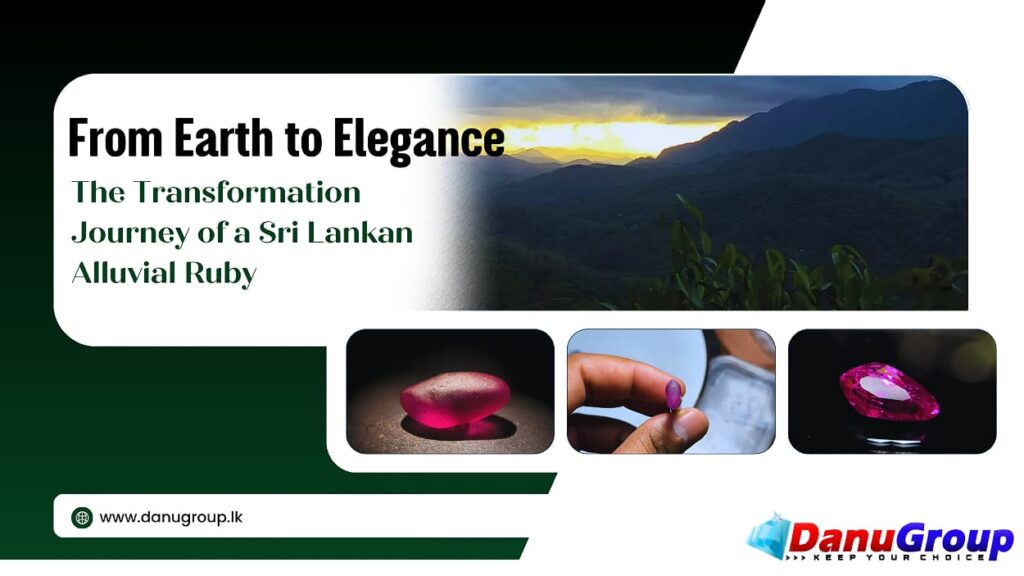
Deep within the rich gem-bearing lands of Sri Lanka, particularly in the Endana village around mining in Sri Lanka, nature quietly forms some of the world’s most fascinating gemstones. This story follows the transformation of a rare alluvial ruby, a stone that carried not only color but also complexity, character, and a journey that required careful decision-making at every stage.
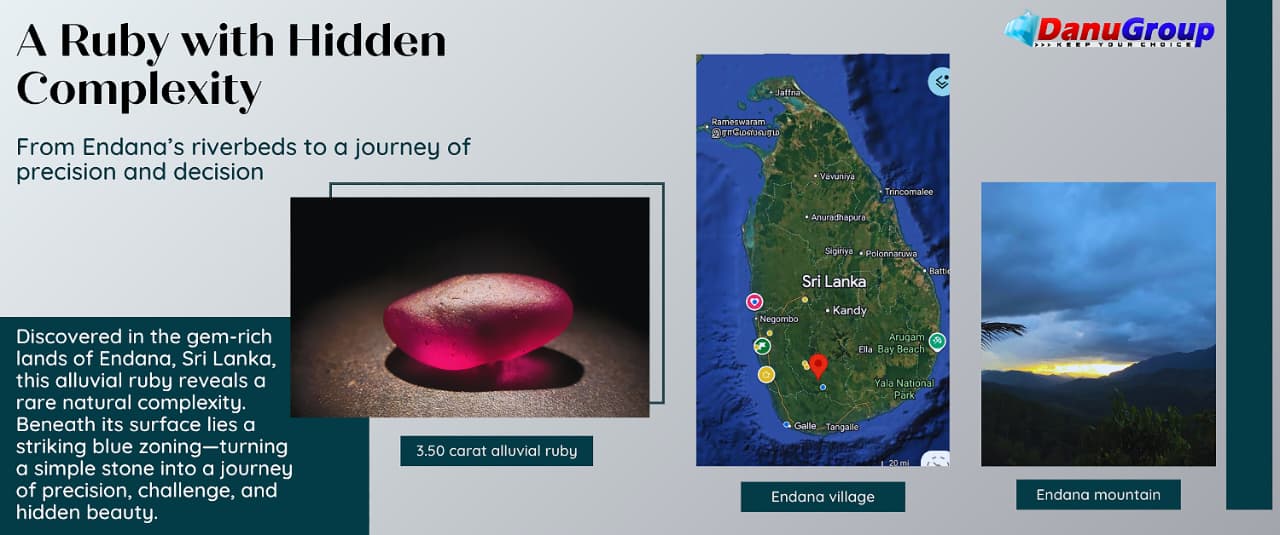
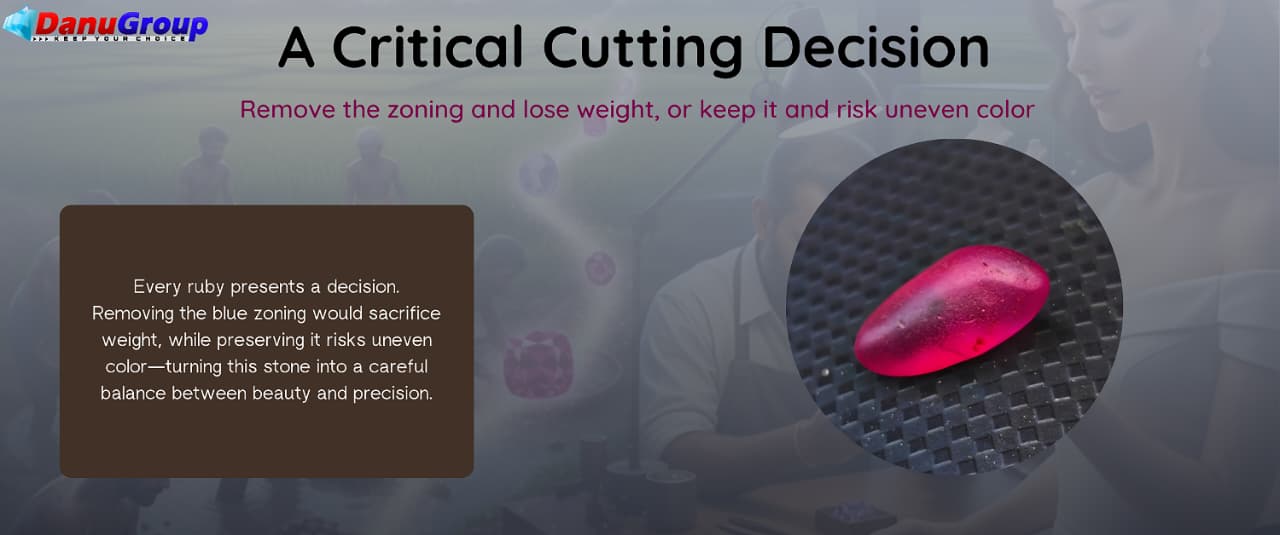
The rough stone began as a 3.50 carat alluvial ruby, naturally shaped by river movement over time. Like many Sri Lankan rubies, this gemstone revealed a unique internal feature—a visible blue color zoning at its center. This zoning presented both a challenge and an opportunity. In gem cutting, such features must be studied deeply, as they directly influence the final color, value, and beauty of the finished stone.
Before any cutting decision, the stone was carefully analyzed. If the cutter had removed the blue zoning completely through aggressive shaping, it would have resulted in significant weight loss and potentially a less attractive final form. On the other hand, keeping the zoning without treatment could lead to a mixed color appearance, where the stone would display uneven tones—especially a purplish shift rather than the desired rich red commonly associated with fine rubies.
Understanding the delicate balance between weight retention, shape, and color outcome, the decision was made to proceed with a traditional Sri Lankan heat treatment method. Unlike modern high-temperature treatments, this process involved a controlled, low-intensity heating technique using a traditional blowing pipe, carried out by Mr. Babu. The purpose was not to completely alter the stone, but to gently reduce the blue zoning and enhance the natural red tones.
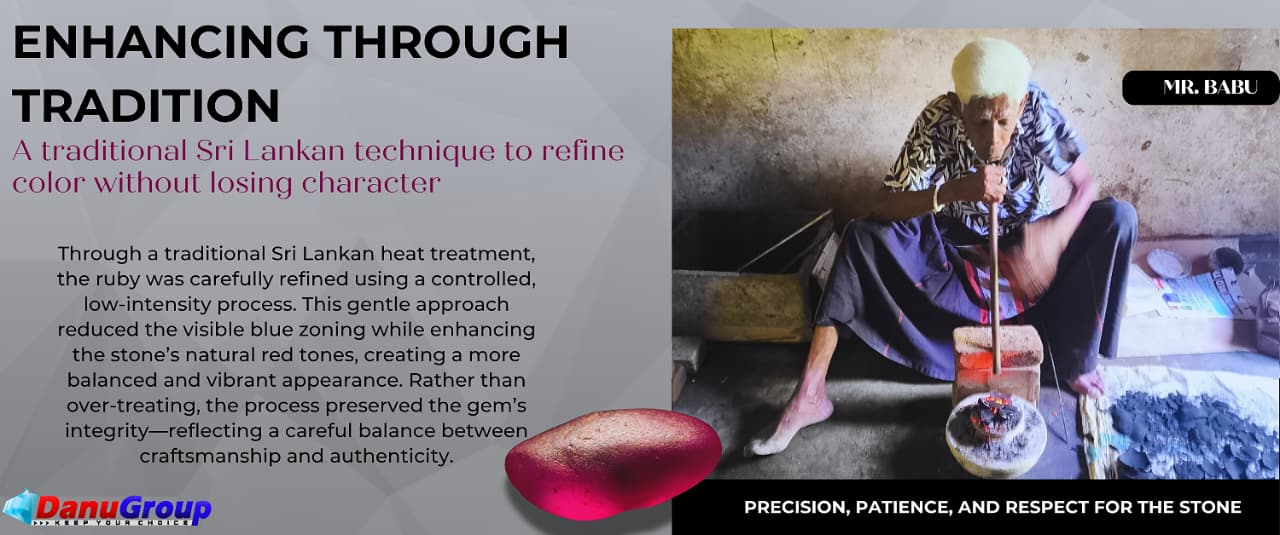
This stage required precision and experience. The heating process lasted only a few minutes, carefully monitored to avoid over-treatment. The result was impressive. While a very small trace of the blue zoning remained at a microscopic level, the overall visual impact of the stone improved significantly. The red color became more dominant, and the stone began to show a vibrant interplay between red and subtle purplish hues.
Instead of pushing the stone further through aggressive heat treatment, the decision was made to preserve its natural integrity. This approach aligns with a growing global preference for minimally treated gemstones, especially among collectors and connoisseurs who value authenticity and natural beauty.
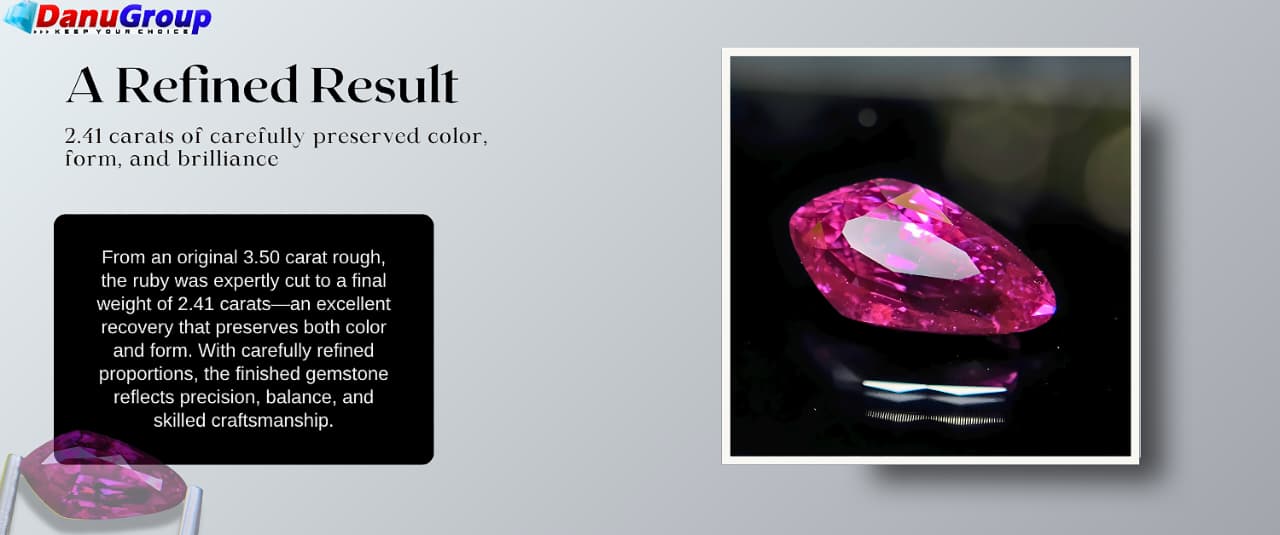
The next stage was cutting—a crucial phase that would define the final identity of the gemstone. Given the elongated natural shape of the rough, it was decided to craft the stone into a fancy drop modified cut. This shape allowed for optimal weight retention while enhancing brilliance and visual appeal.
The cutting and polishing process was carried out with careful planning and collaboration. Under the guidance of Danu Group, and through detailed discussions with Mr. Jayanath, the stone was shaped with precision to maximize its color and clarity. Every facet was placed intentionally to reflect light in a way that highlights the gemstone’s natural character.
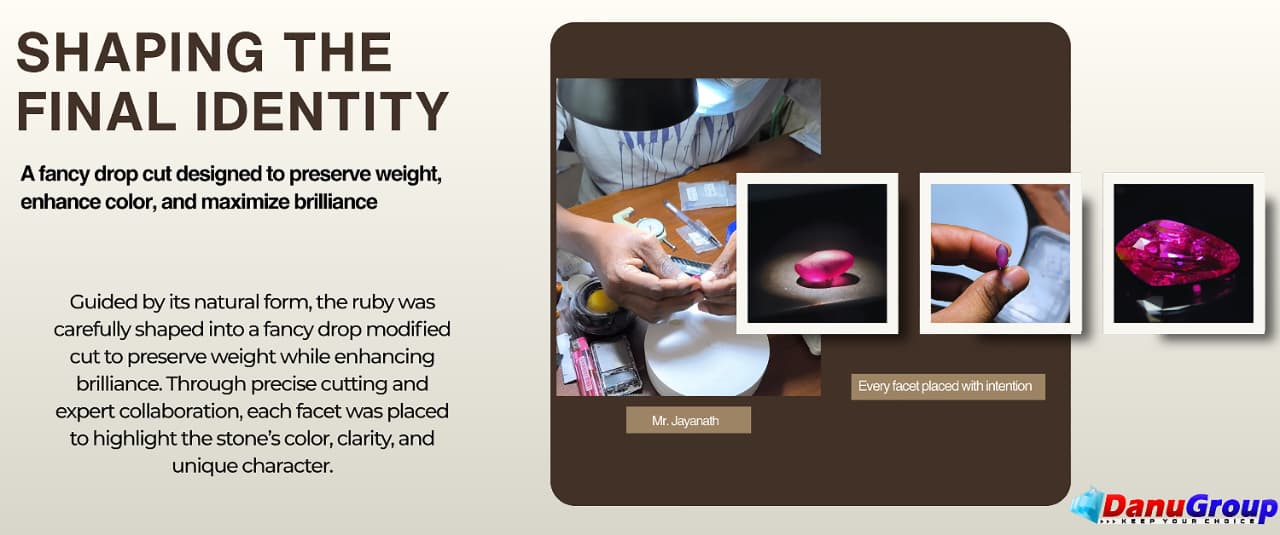
From the original 3.50 carat rough, the final gemstone was completed at 2.41 carats. This is considered an excellent recovery, especially given the adjustments required to manage internal zoning and shape optimization. The finished stone measured 11.25 x 6.04 x 4.79 mm and displayed a beautiful fancy cut form.
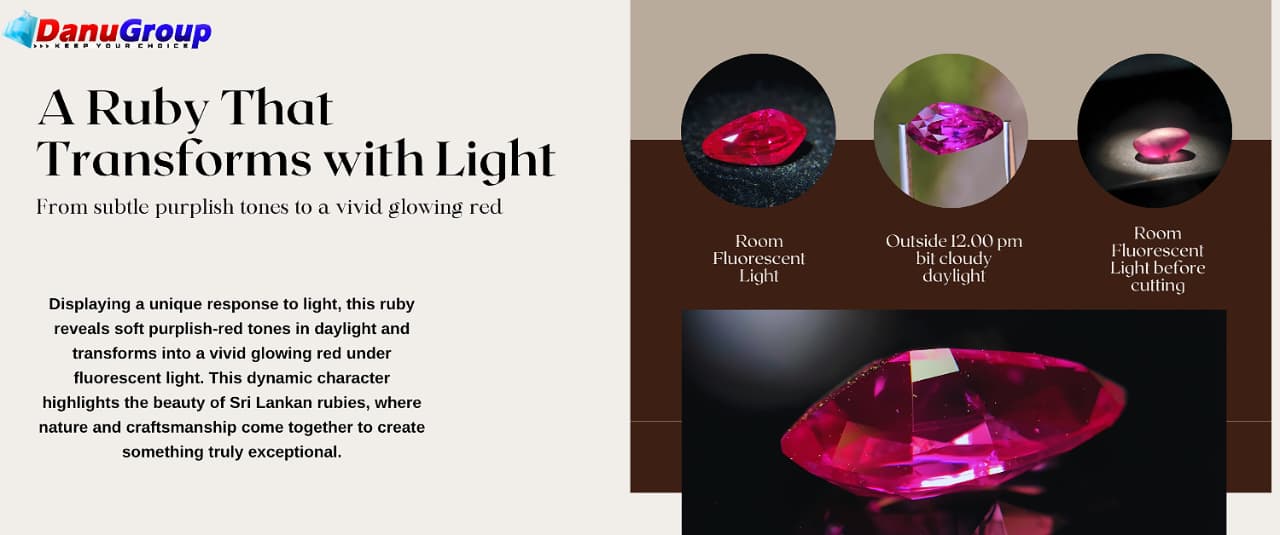
What makes this ruby truly remarkable is its behavior under different lighting conditions. In daylight, the stone reveals a subtle purplish tone blended with red, giving it a unique and elegant appearance. Under fluorescent lighting, however, the ruby transforms—displaying a vivid, glowing red color that captures attention instantly. This dynamic color response is a highly desirable characteristic, especially in Sri Lankan rubies.
This gemstone stands as a perfect example of how traditional knowledge, modern understanding, and careful craftsmanship can come together to create something exceptional. It is not just a gemstone, but a story—from riverbed formation to skilled human intervention, and finally to a polished piece ready to be admired.
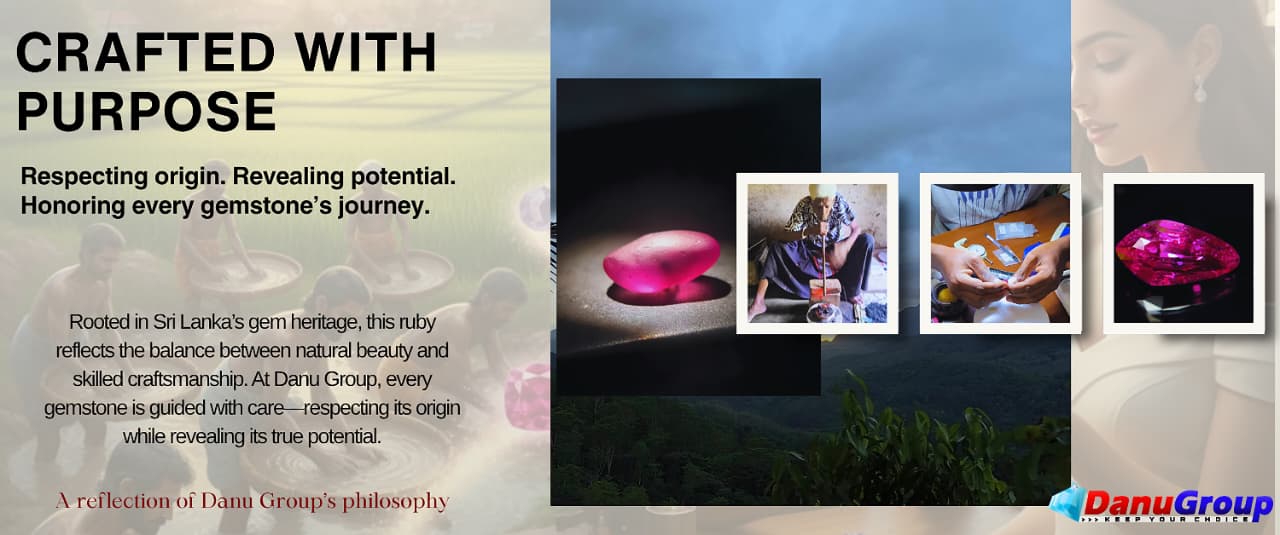
Sri Lanka has long been known as the “Island of Gems,” and stones like this continue to prove why. Each gem carries its own journey, shaped by nature and refined by expertise. The balance between preserving natural beauty and enhancing visual appeal is what defines true gem craftsmanship.
At Danu Group, every stone is approached with this philosophy—respecting its origin, understanding its potential, and guiding it through a transformation that highlights its best qualities. This ruby is not just a product; it is a reflection of that commitment.
FAQ Section
1. What is an alluvial ruby?
An alluvial ruby is a gemstone that has been naturally transported by water from its original source and deposited in riverbeds or sediment layers. These stones often have smoother shapes due to natural movement.
2. Why did the ruby have blue color zoning?
Color zoning occurs due to variations in trace elements during crystal formation. In this case, the blue zone affected the overall appearance and required careful treatment.
3. What is traditional heat treatment?
Traditional heat treatment in Sri Lanka uses low-intensity methods, such as a blowing pipe, to gently enhance color without heavily altering the stone’s natural properties.
4. Is this ruby considered natural?
Yes, the ruby is natural. The treatment applied is minimal and widely accepted in the gemstone industry to improve appearance while preserving authenticity.
5. Why was a fancy cut chosen?
The fancy drop modified cut was selected to maintain weight, enhance brilliance, and complement the natural elongated shape of the rough stone.
6. Does lighting affect the ruby’s color?
Yes, this ruby shows different hues under different lighting conditions—slightly purplish in daylight and vivid red under fluorescent light.
7. Is minimal heat treatment better than high heat?
For many collectors and buyers, minimal heat treatment is preferred as it preserves more of the stone’s natural characteristics and value.