

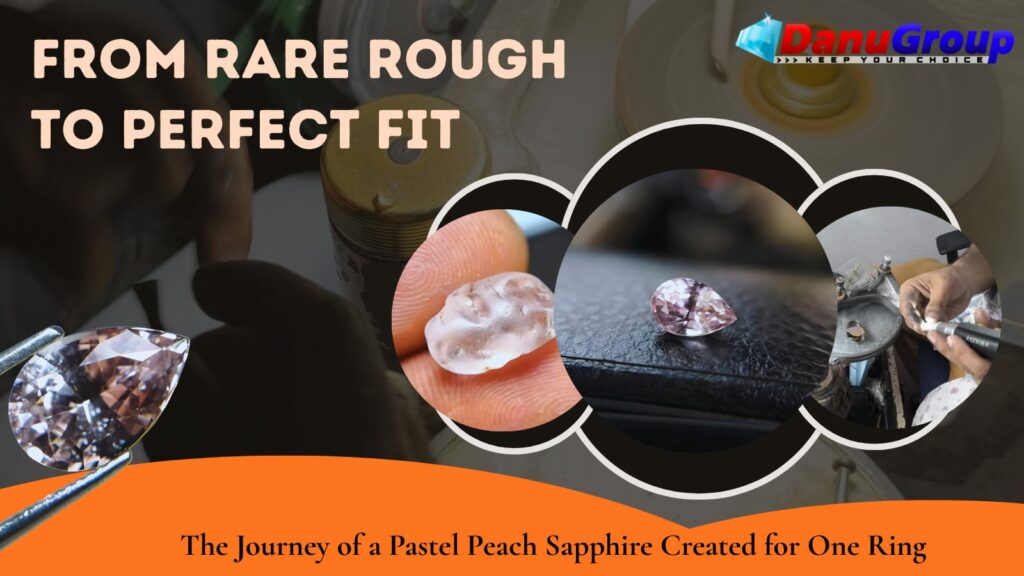
In the world of fine gemstones, true value is not defined only by carat weight, laboratory reports, or market trends. It is defined by intention, process, precision, and integrity. Some gemstones are traded. Others are selected. A very few are created through a deliberate journey shaped by vision, patience, and craftsmanship. This pastel peach sapphire belongs to the latter category.
The story began with a very specific request. The client was searching for a pear-shaped sapphire between 1.5 and 2.0 carats, displaying a very light champagne to pastel peach tone. The requirement was precise: not vivid pink, not strong yellow, not saturated orange. The color needed to be soft, airy, refined, and elegant — subtle enough to complement a sophisticated engagement ring design without overpowering it. In addition, the stone had to be natural and unheated.
Such stones are exceptionally rare. While sapphires exist in many colors and origins, extremely light pastel peach tones in unheated material are difficult to source. Too much iron can push the stone toward yellow. Too much chromium can intensify pink saturation. Achieving a balanced pastel tone requires a delicate geological combination that is uncommon in nature. After reviewing numerous finished stones available in the market, none fully matched the vision. Compromise was possible — but compromise was not the choice.
At Danu Group, we believe that when the exact stone does not exist, the journey must begin at the source.
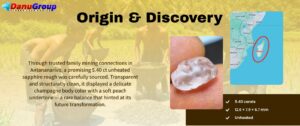
Through trusted family mining connections in Antananarivo, Madagascar — a region known for producing unique and subtle sapphire color ranges — a promising rough crystal was located. Madagascar has long been respected in the gemological world for corundum that displays unusual pastel hues, often softer and more nuanced than stones from traditional sources.
The rough sapphire weighed 5.40 carats and measured approximately 12.6 × 7.9 × 6.7 millimeters. It was transparent, unheated, and exhibited a very light champagne body color with a gentle peach undertone visible under natural light. The internal structure was clean and stable, showing very good clarity suitable for fine faceting. It was not yet a gemstone — but it held the potential to become one.
After careful study of the crystal orientation, inclusions, and color distribution, the decision was made to cut the stone into a pear shape according to the customer request, maximizing both face-up appearance and light performance while preserving the delicate pastel tone. The first cutting process was entrusted to Mr. Channa, a senior master cutter with more than a decade of experience working closely with Danu Group. His expertise lies in balancing proportion, symmetry, and brilliance while respecting the natural character of the material.
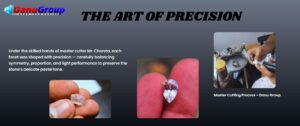
The transformation required patience. Each facet was positioned with intention. Pavilion angles were calculated to enhance light return without deepening the tone. The crown was shaped to maintain elegance and softness rather than sharp intensity. When the cutting process was complete, the result surpassed expectations.
The finished stone weighed 2.44 carats and measured 9.79 × 6.52 × 5.06 millimeters. The pear shape was balanced and symmetrical. The clarity was excellent. Most importantly, the color remained exactly within the desired range — a refined pastel peach with a light champagne nuance. It was natural and unheated, preserving its geological identity.
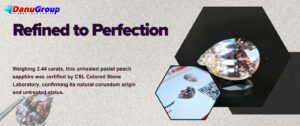
The sapphire was submitted to CSL Colored Stone Laboratory for certification. Testing confirmed that it is natural corundum with no indication of thermal enhancement. This documentation ensured transparency and reinforced confidence in the stone’s authenticity.
However, the journey was not yet complete.
When the engagement ring design was finalized, the jeweler required a slightly lower profile to ensure proper setting balance and long-term wearing comfort. The depth of 5.06 millimeters, while proportionally sound, needed refinement. The new technical requirement was clear: reduce the depth to approximately 4.60 millimeters without altering the length or width, maintain symmetry, preserve brilliance, protect color integrity, and keep the final weight above 2.00 carats.
Precision re-cutting of this nature is not routine. Reducing pavilion depth risks weight loss, changes in light performance, and potential alteration of perceived color. This stage demanded advanced corrective cutting skill and deep understanding of optical behavior in corundum. The stone was entrusted to Mr. Jayanath, a cutter recognized for precision re-proportioning work.
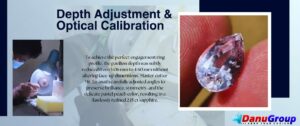
The process was executed with extreme care. Pavilion angles were adjusted subtly to maintain brilliance while reducing the “heavy belly.” Structural integrity was preserved. The face-up dimensions remained unchanged at 9.79 × 6.52 millimeters. When the final polishing was completed, the sapphire weighed 2.15 carats and measured 9.79 × 6.52 × 4.60 millimeters.
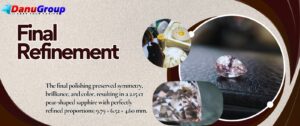
The stone retained over 88% of its first-cut weight — an outstanding outcome for a depth-reduction operation. Even more importantly, the pastel peach tone remained soft, stable, and elegant. Under warm light, a gentle pinkish hue emerges. Under white daylight, the stone reveals its delicate champagne character. The subtle balance between iron and trace chromium within the crystal structure contributes to this refined color personality, giving the sapphire quiet complexity rather than bold intensity.
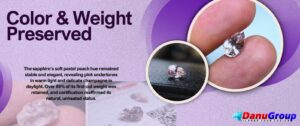
The gemstone was re-submitted to CSL for updated certification following the re-cut, once again confirming its natural and unheated status. Transparency was maintained throughout the process.
From a 5.40 carat rough crystal to a 2.15 carat precision-finished gemstone, every stage of this sapphire’s transformation was intentional. The journey required sourcing knowledge, geological understanding, cutting expertise, laboratory verification, and above all, patience. It was not created for inventory. It was created for one ring and one vision.

At Danu Group, we do not see gemstones as commodities moving through a chain of anonymous transactions. We live and work close to the source — with miners, cutters, and laboratories — guiding each step from earth to elegance. There are no unnecessary intermediaries, no artificial enhancements, and no shortcuts. The story remains intact.
This pastel peach sapphire is more than a certified stone. It is the result of collaboration between nature and craftsmanship. It represents respect for material, dedication to precision, and commitment to authenticity.
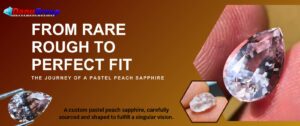
In a marketplace where many stones are simply bought and resold, we believe a gemstone should carry its journey. That journey builds trust. That journey creates meaning. And that journey continues when the stone finally rests in the ring it was always meant to complete.
Danu Group — directly from the source.
FAQ
Is this pastel peach sapphire completely natural?
Yes. This sapphire is confirmed as natural corundum with no indication of heat treatment. It has been tested and certified by CSL Colored Stone Laboratory.
Was the stone heated or enhanced in any way?
No. The gemstone remains entirely unheated and untreated. Its pastel peach tone is the result of natural geological formation.
Why was the sapphire cut twice?
The first cut achieved the desired shape and color balance. A second precision re-cut was required to adjust the depth for perfect ring setting proportions while maintaining brilliance, symmetry, and a final weight above 2.00 carats.
What makes pastel peach sapphires rare?
Extremely light peach to champagne tones in unheated sapphires are uncommon in nature. Achieving a soft, balanced pastel color without strong pink, yellow, or orange saturation requires a rare combination of trace elements and crystal conditions.
Does re-cutting affect certification?
Yes, any structural change requires updated verification. After the depth adjustment, the sapphire was re-submitted to CSL to confirm its natural and unheated status, ensuring full transparency.
Is Madagascar a respected source for pastel sapphires?
Yes. Madagascar is internationally recognized for producing sapphires with unique pastel and subtle color ranges, including delicate peach and champagne tones not commonly found elsewhere.