
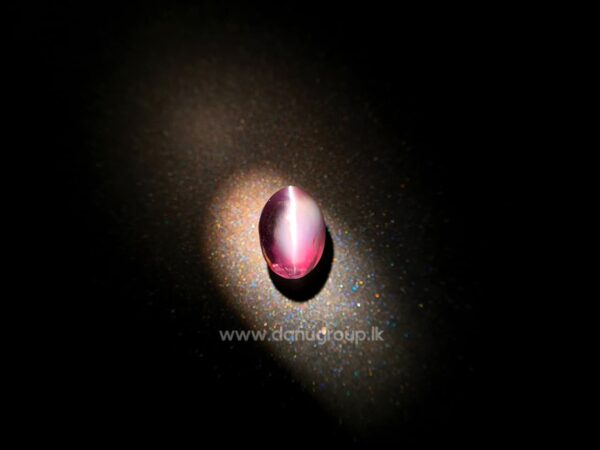
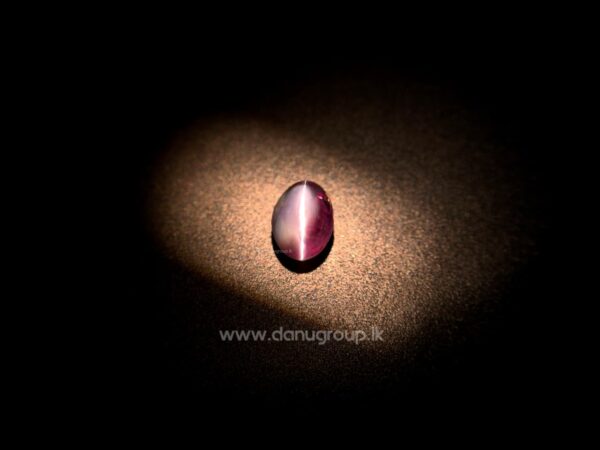
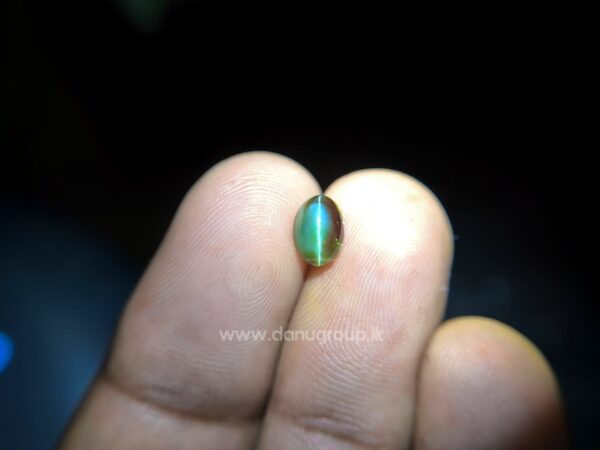
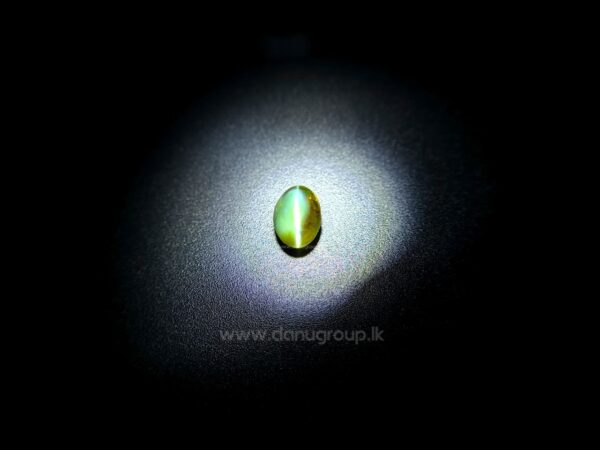
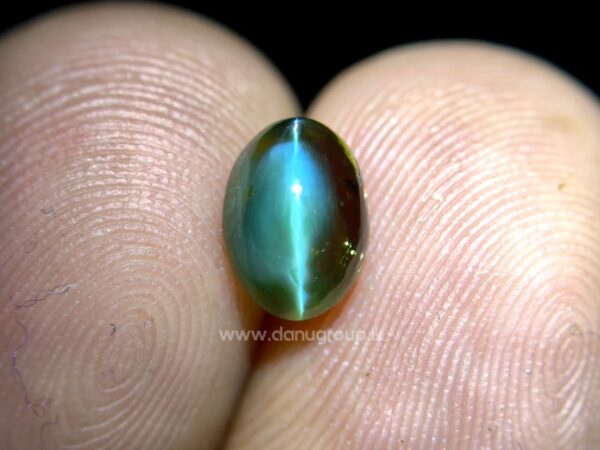
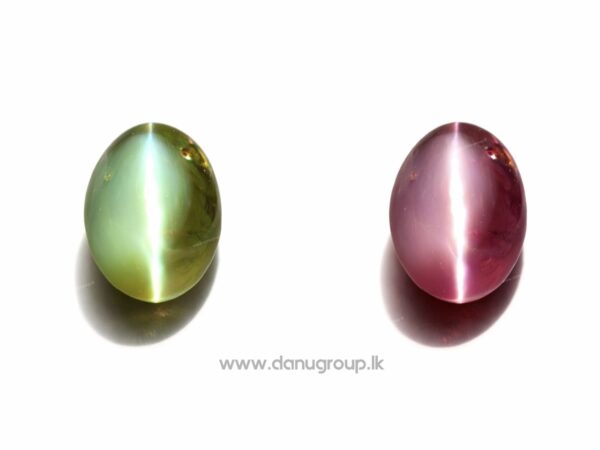
Ceylon Natural Alexandrite Cat’s Eye
For collectors, designers, and serious gemstone buyers, this is not a common commercial stone. It is a rare natural chrysoberyl selected for its individuality, color behavior, and distinctive eye. It represents exactly the kind of piece that gains meaning from both origin and careful human judgment.

Verified authenticity with trusted certification

Sourced from mining and cutting origin

Safe and secure delivery to your location
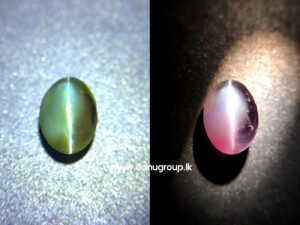
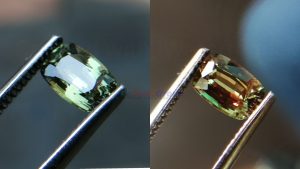


The PRICE mentioned on the website includes shipping cost. After You paid through the website cart (Visa, Master, Amex or Discover Diners club card), We start shipping process. If customers need more information or any JEWELRY request, Please Contact Us!
| Weight | 1.35 Ct |
|---|---|
| Dimensions | 7 × 5.1 × 4.4 mm |
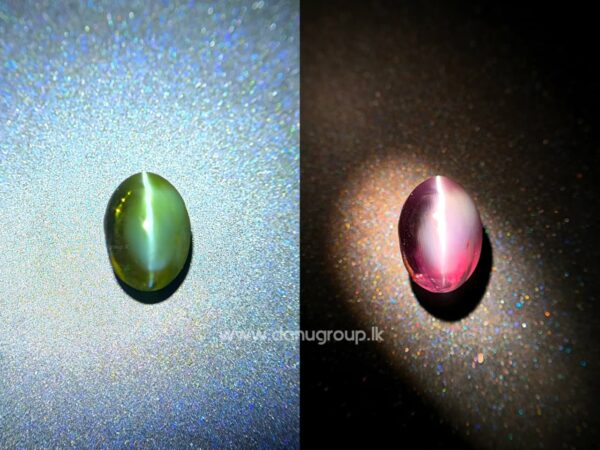
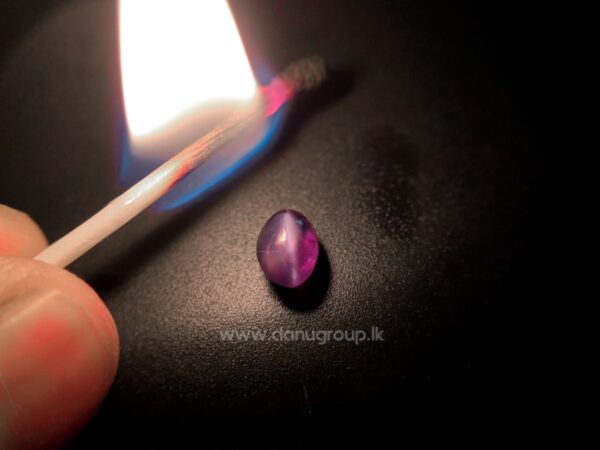
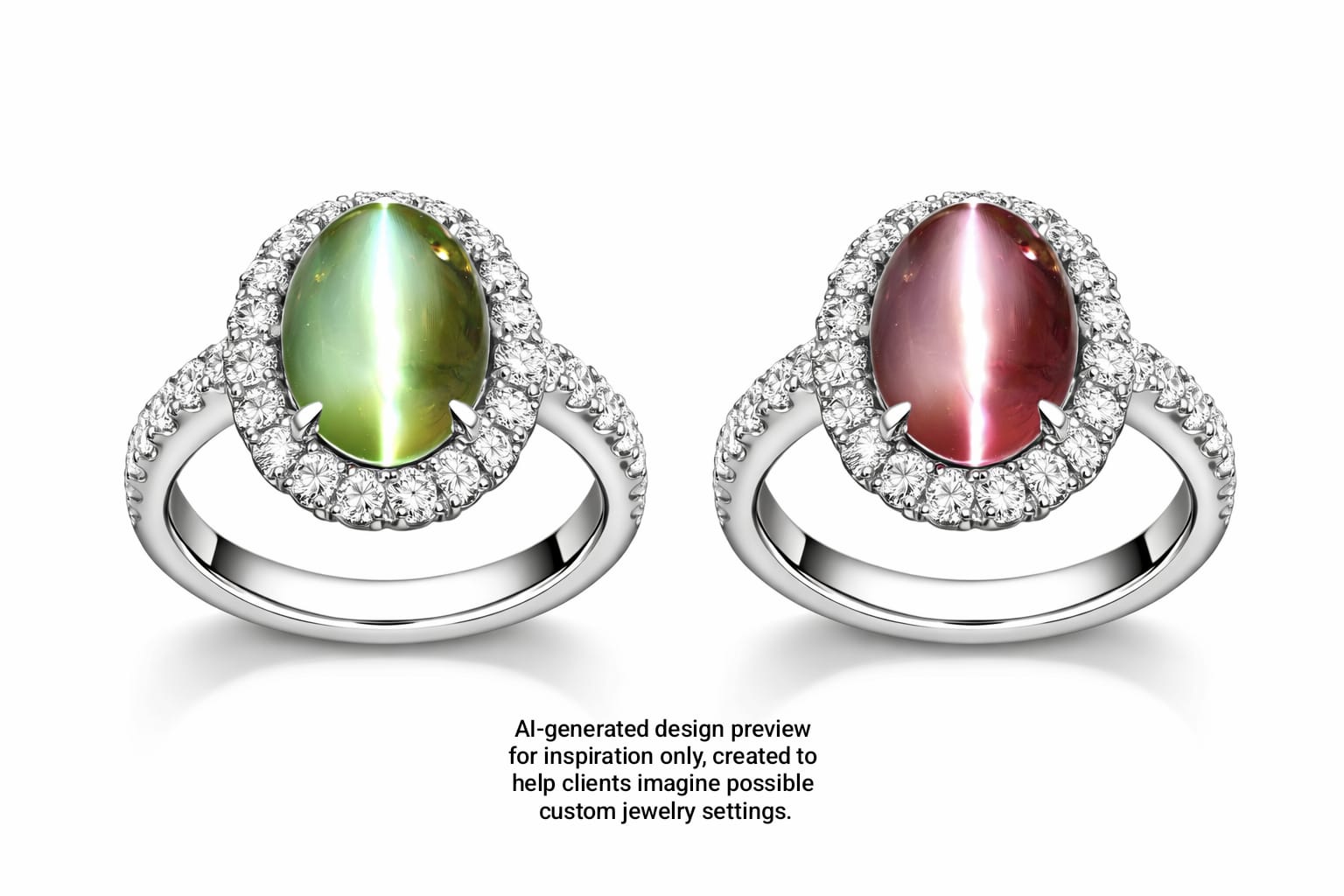
| COLOR | Color Changing from green to red |
| CUT | Oval Cabochon |
| TREATMENT | Natural/Unheated |
| VARIETY | Alexandrite Cat’s Eye |
| SPECIES | natural chrysoberyl |
| CLARITY | VS |
| QUALITY GRADE | High Quality |
| ORIGIN | Rambuka village, Sri Lanka |
| BIRTHSTONE | June |
| ZODIAC SIGN | Gemini ♊ |
| PLANET | ketu |
| WEARING FINGER | Traditionally suggested on the middle finger or little finger, depending on the astrological practice followed. |
| CHAKRA | Heart Chakra, Crown Chakra |
| SYMBOLIZES | luck, prosperity, and intellect |
| OPTICAL FEATURE | Cat’s Eye / Chatoyancy |
| RARITY APPEAL | admired for its rare optical phenomenon and distinctive natural character |
| COLEECTING VALUE | appreciated for rarity, phenomenon, and individuality |
SOME GEMSTONE IMAGES ARE PHOTOGRAPHED ON NATURAL BACKGROUNDS TO OFFER A MORE REALISTIC SENSE OF THE STONE’S TRUE BEAUTY, CHARACTER, AND APPEARANCE WHEN PURCHASING ONLINE.
Sri Lankan National Gem and Jewellery Authority Licenced Gem Dealer.
Ceylon Natural Alexandrite Cat’s Eye from Sri Lanka – Rare Color Change and Chatoyancy in One Gem
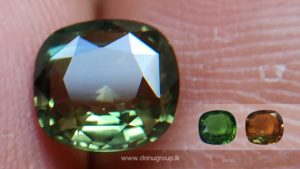
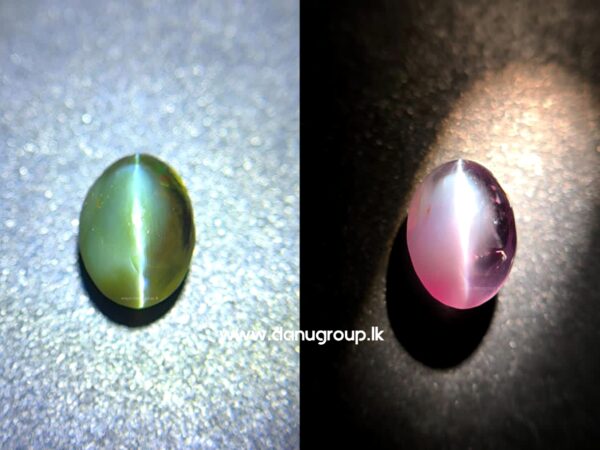
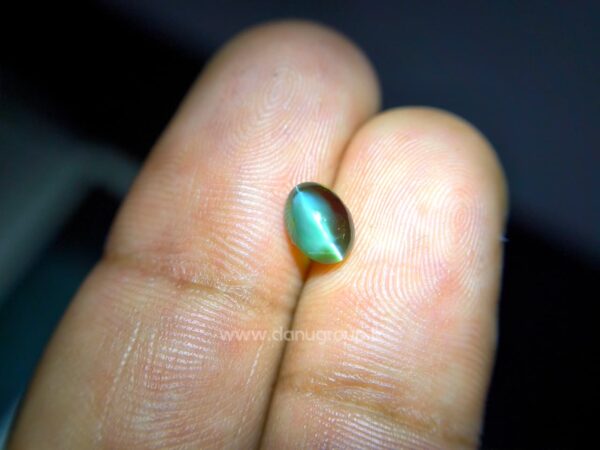
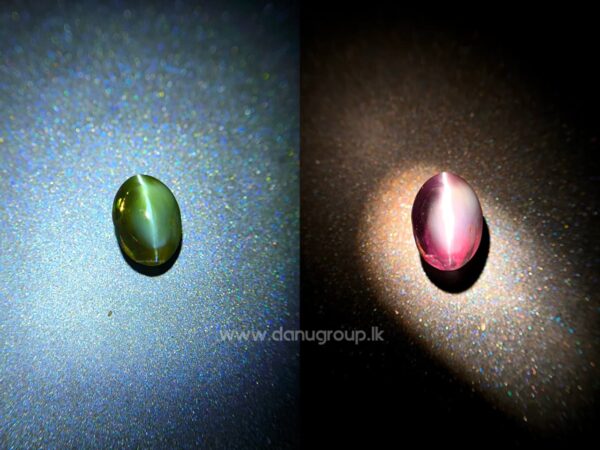
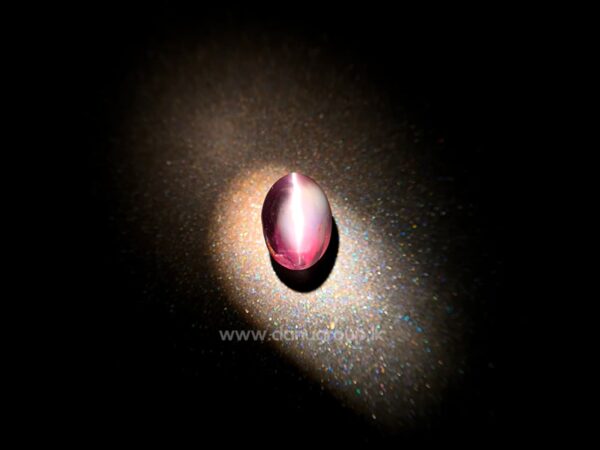
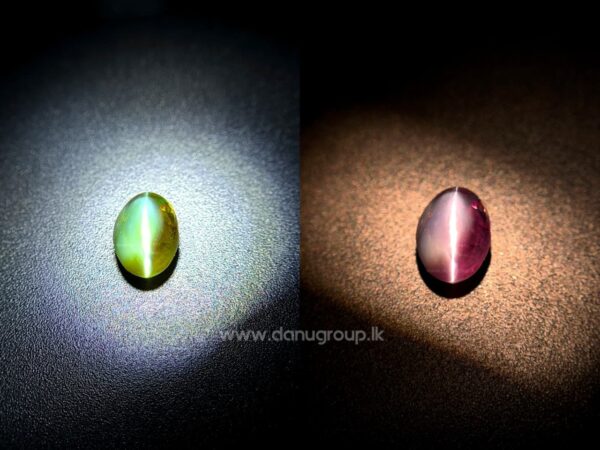
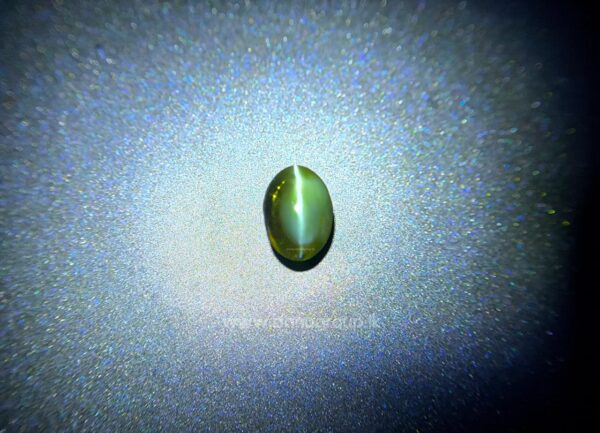
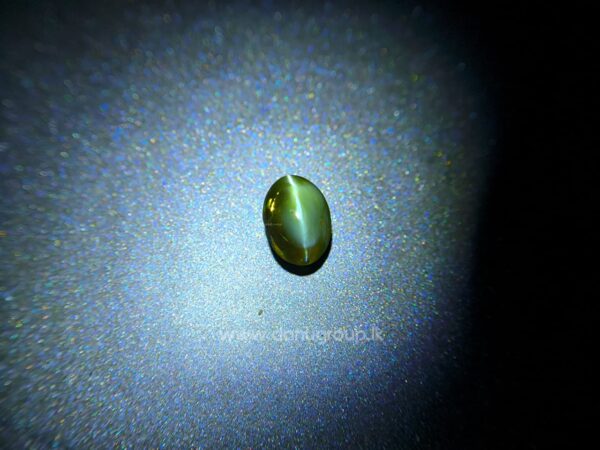
A Ceylon Natural Alexandrite Cat’s Eye is one of the rarest expressions found in natural chrysoberyl. What makes this gemstone special is the meeting of two uncommon qualities in one stone: a visible cat’s eye effect, or chatoyancy, and a distinct color change from green to red. In fine gemology, either one of these features is already desirable. When both appear together in a well-cut natural stone, rarity begins to move into a much more selective category.
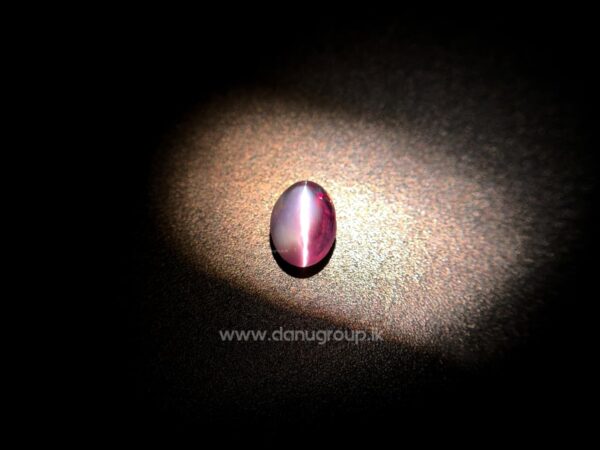
This gemstone weighs 1.35 carats and measures 7 × 5.1 × 4.4 mm. It is an oval cabochon with VS clarity, presented as natural and unheated, and identified as Alexandrite Cat’s Eye, a variety of Natural Chrysoberyl. Its body color shifts from green to red under different lighting conditions, while the surface reveals a sharp moving ray created by internal alignment. This combination gives the stone both visual life and collector interest, not through sparkle, but through precision optical behavior.
The origin of this gemstone is Rambuka village around mining in Sri Lanka, an area known among gem people for producing rare and interesting varieties. Within Sri Lankan gem trade circles, Rambuka has long been respected as one of the notable source areas for fine alexandrite-related material. For Danu Group, being close to these gem-producing regions is not just a business advantage; it is part of how rare stones are recognized early, understood properly, and brought to the world market with greater authenticity.
This finished stone began as a 4.5 carat rough. From the beginning, the rough showed promising internal behavior, especially the balance between chatoyancy and color change. That is where the real work started. In stones like this, cutting is not about following a standard outline. It is about protecting the moving eye, controlling the dome, and preserving the color-changing character without weakening the phenomenon. Danu Group was involved through each stage, from identifying the potential in the rough to guiding the making of the finished gemstone. The result is a refined Alexandrite Cat’s Eye that carries both natural rarity and cutting intelligence.
Treatment disclosure remains essential in any fine gemstone presentation. This stone is offered as natural and unheated, which is an important part of its identity. In collector terms, the appeal of this gemstone lies in the combination of species, optical character, source, and the fact that its beauty depends on nature’s structure rather than artificial enhancement.
According to traditional and cultural gemstone beliefs, Alexandrite Cat’s Eye is associated with June, Gemini, Ketu, the Heart Chakra and Crown Chakra, and is symbolically linked with luck, prosperity, and intellect. These meanings belong to belief-based traditions rather than gemological science, but they add another layer of significance for those who value symbolic gemstones.
For collectors, designers, and serious gemstone buyers, this is not a common commercial stone. It is a rare natural chrysoberyl selected for its individuality, color behavior, and distinctive eye. It represents exactly the kind of piece that gains meaning from both origin and careful human judgment.
Q & A
Frequently Asked Questions
Alexandrite Cat’s Eye is a rare variety of natural chrysoberyl that displays both a moving cat’s eye effect and a color change under different lighting conditions.
Yes, this gemstone is presented as natural and unheated.
It is rare because it combines two unusual phenomena in one stone: chatoyancy and natural color change.
The cat’s eye effect is created by fine internal inclusions aligned in a way that reflects light as a single sharp moving ray.
The color change is a natural optical property of alexandrite-related chrysoberyl, visible under different lighting environments.
Cabochon cutting is necessary to preserve and display the cat’s eye effect properly. Faceting would disturb the moving ray.
No. Most alexandrite does not show chatoyancy. Alexandrite Cat’s Eye appears only when the internal structure is suitable for that rare optical effect.
Rambuka village around mining in Sri Lanka is known among gem professionals as an important source area for rare gemstone varieties, including fine alexandrite material.
Yes. This finished gemstone came from a 4.5 ct rough, with careful planning to preserve both the cat’s eye and the color-changing character.
The cutter must balance dome height, orientation, and internal structure so the eye remains sharp while the color character is preserved.
Yes, it can be suitable for a ring, pendant, or a collector-focused jewelry design, depending on the buyer’s preference.
This type of gemstone is generally more attractive to collectors and serious gemstone buyers because of its rarity and individuality.
A fine stone should show a visible and clean eye, appealing body color, natural character, and a pleasing color shift under different light sources.
Unheated status adds to the natural identity of the gemstone and is valued by many buyers who appreciate untreated material.
Because some rare gemstones must be recognized at the rough stage and handled with care from source to finished stone in order to preserve what nature created.
QR Code

Related Products
Natural Alexandrite Cats Eye

Ceylon Natural Green Zircon - Beccarite
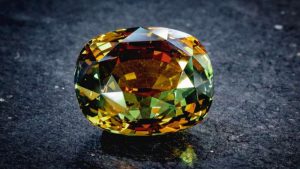
Rare Natural Alexandrite
Ceylon Natural Blue Sapphire Couple
Natural Spinel Crystal with Trigon Sri Lanka
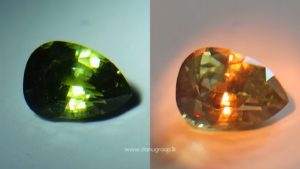
Rare Natural Alexandrite
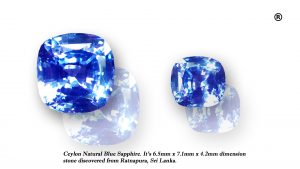
Ceylon Natural Blue Sapphire