

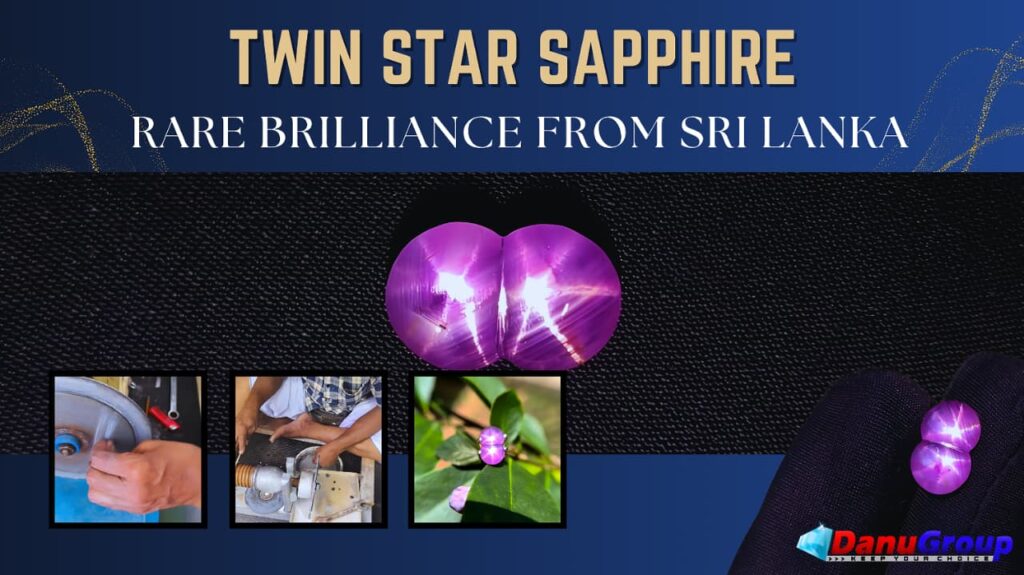
What is a Twin Star Sapphire?
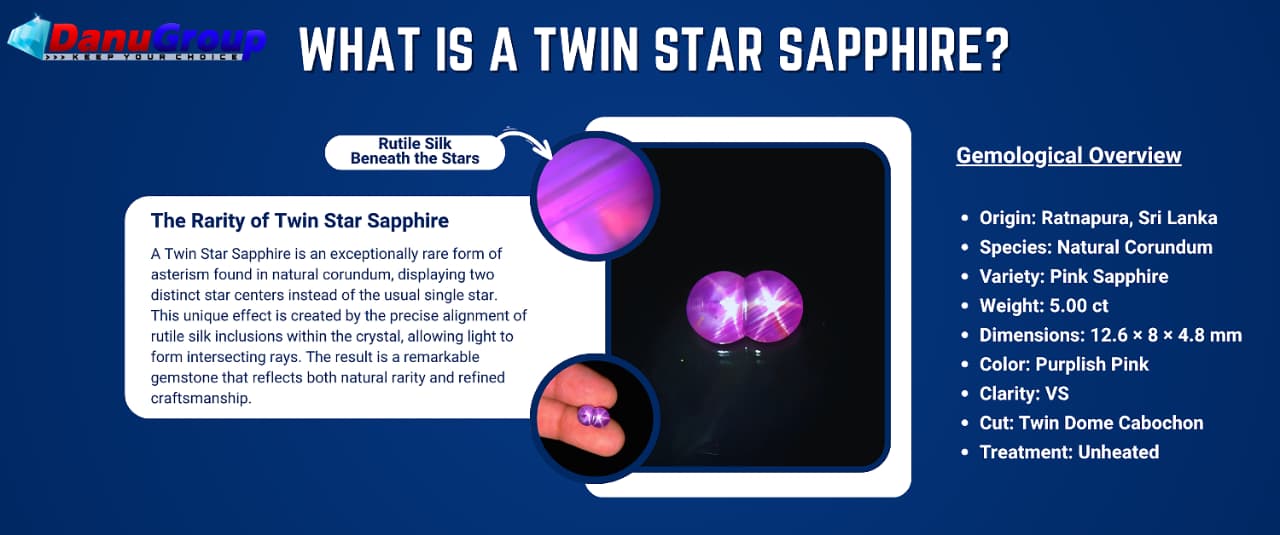
A Twin Star Sapphire is one of the rarest expressions of asterism found in natural corundum. Unlike standard star sapphires that display a single six-rayed star, this phenomenon reveals two distinct star centers on a single cabochon surface. This effect is created by exceptionally aligned rutile silk inclusions within the crystal structure, combined with a rare natural orientation of the rough stone.
This 5.00 carat Ceylon Natural Twin Star Pink Sapphire, measuring 12.6 × 8 × 4.8 mm, represents a true intersection of geological rarity and human expertise.
Gemological Overview
| Species | Natural Corundum | Variety | Pink Sapphire |
| Weight | 5.00 ct | Dimensions | 12.6 × 8 × 4.8 mm |
| Color | Purplish Pink | Clarity | VS |
| Cut | Twin Dome Cabochon | Treatment | Natural / Unheated |
| Origin | Ratnapura village around mining in Sri Lanka | ||
The dual star effect is a result of light reflecting off parallel rutile needles, forming intersecting rays. In this gemstone, two separate axes of alignment exist — an extremely uncommon internal structure.
Origin – Ratnapura Village Around Mining in Sri Lanka
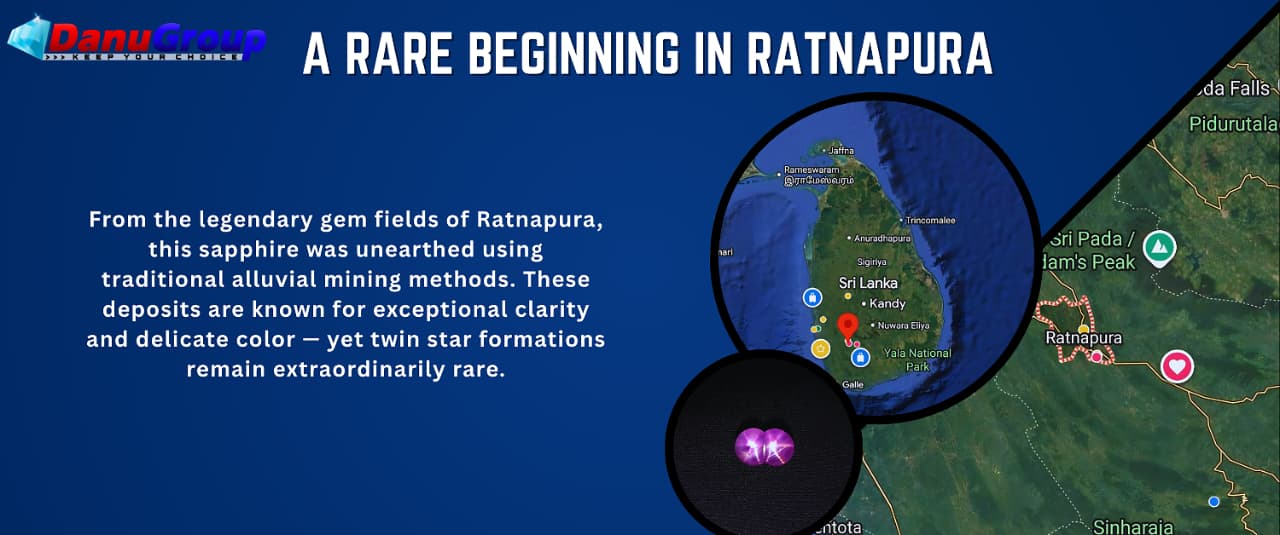
Sri Lanka, known globally as the “Island of Gems,” produces some of the finest sapphires due to its unique geological conditions. This stone was sourced directly from Ratnapura village around mining in Sri Lanka, where traditional alluvial mining methods bring naturally weathered gemstones to the surface.
These deposits often yield stones with high clarity and subtle color tones, but twin star potential remains exceptionally rare, even in such rich deposits.
From Rough to Radiance – The Cutting Intelligence Behind Twin Stars
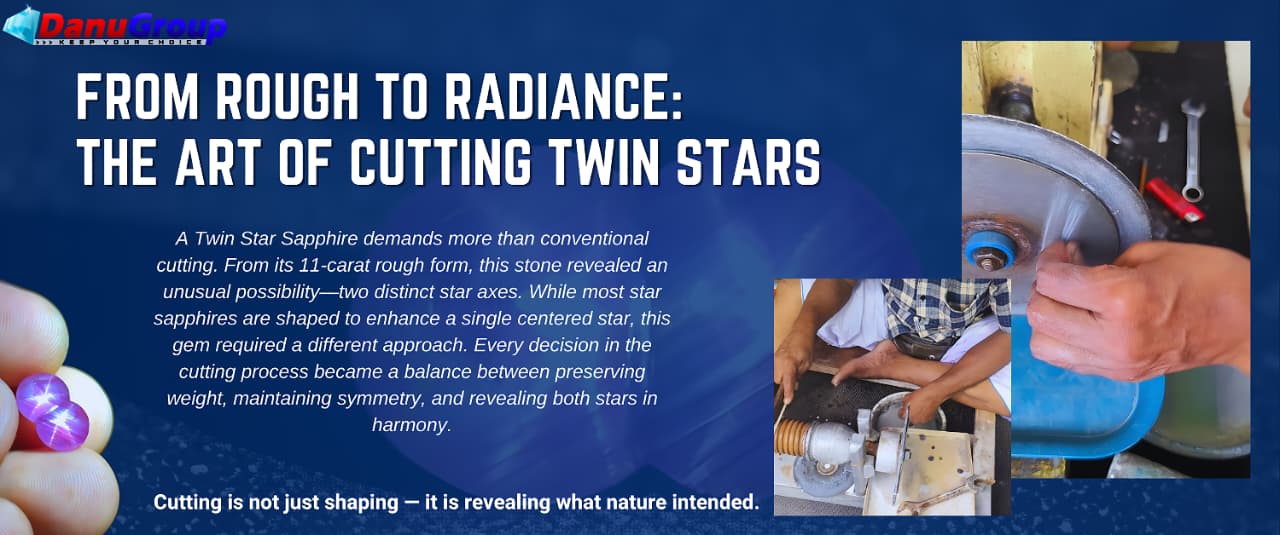
The original rough weighed 11 carats, and from the very beginning, this stone presented a unique challenge.
Most cutters, when approaching star sapphires, aim to:
Maximize a single centered star
Preserve weight
Maintain symmetry
However, this stone revealed something unusual — two possible star axes during early evaluation. This is where cutting becomes not just a skill, but a decision-making art.
Critical Cutting Decision
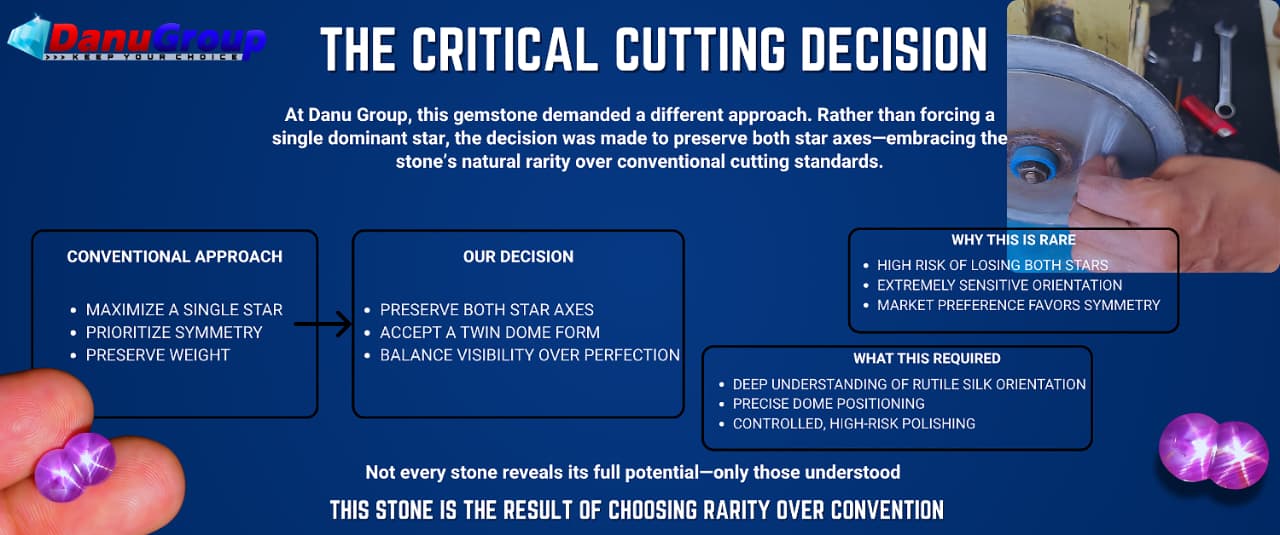
At Danu Group, the decision was made to:
Preserve both star axes instead of forcing a single dominant star
Accept a non-standard dome shape (Twin Dome)
Balance visibility of both stars rather than maximizing weight or symmetry
This required:
Deep understanding of internal silk orientation
Accurate positioning of the cabochon dome
Controlled shaping to avoid losing one star during polishing
Not every cutter can execute this. In fact, most stones with similar structure are cut into single-star sapphires, because:
The risk of losing both stars is high
The orientation is extremely sensitive
The commercial market often favors symmetry over rarity
This stone is a result of choosing rarity over convention.
Why Twin Star Formation is very Rare
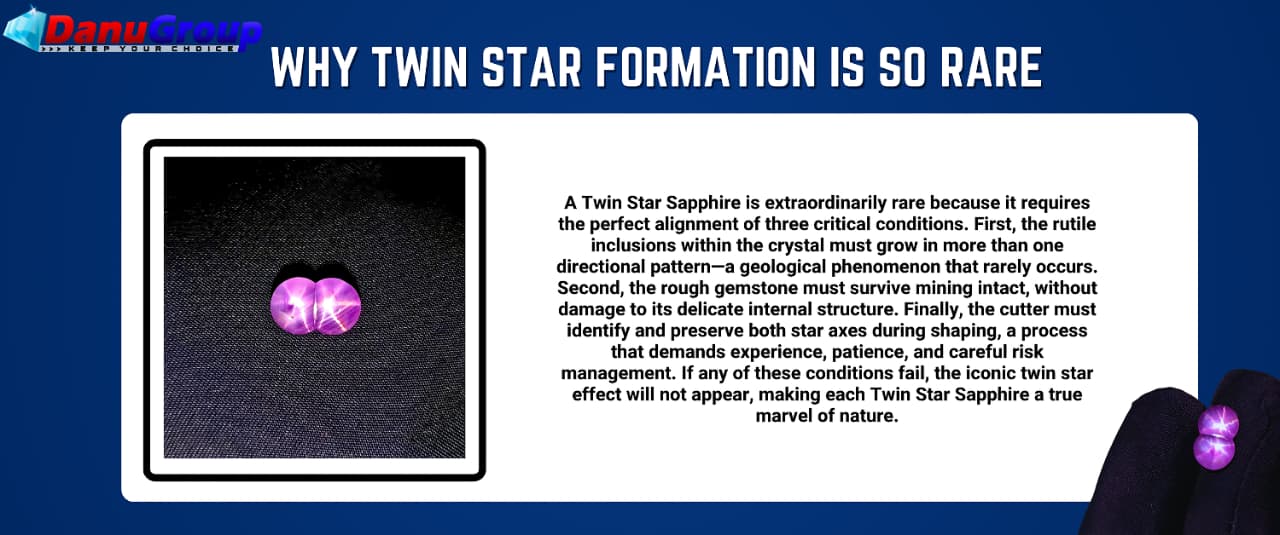
For a Twin Star Sapphire to exist, three critical conditions must align:
1. Natural Crystal Growth Alignment
The rutile inclusions must form in more than one directional pattern — a rare geological condition.
2. Preservation During Mining
The rough must remain intact without damage to internal structure.
3. Correct Cutting Orientation
The cutter must identify and preserve both star axes — a process that requires experience, patience, and risk acceptance.
Even if one of these conditions fails, the twin star effect will not appear.
Treatment Disclosure
This sapphire is 100% natural and unheated.
No artificial enhancement has been applied. The star effect, color, and internal structure are entirely formed by nature.
Collector & Market Positioning
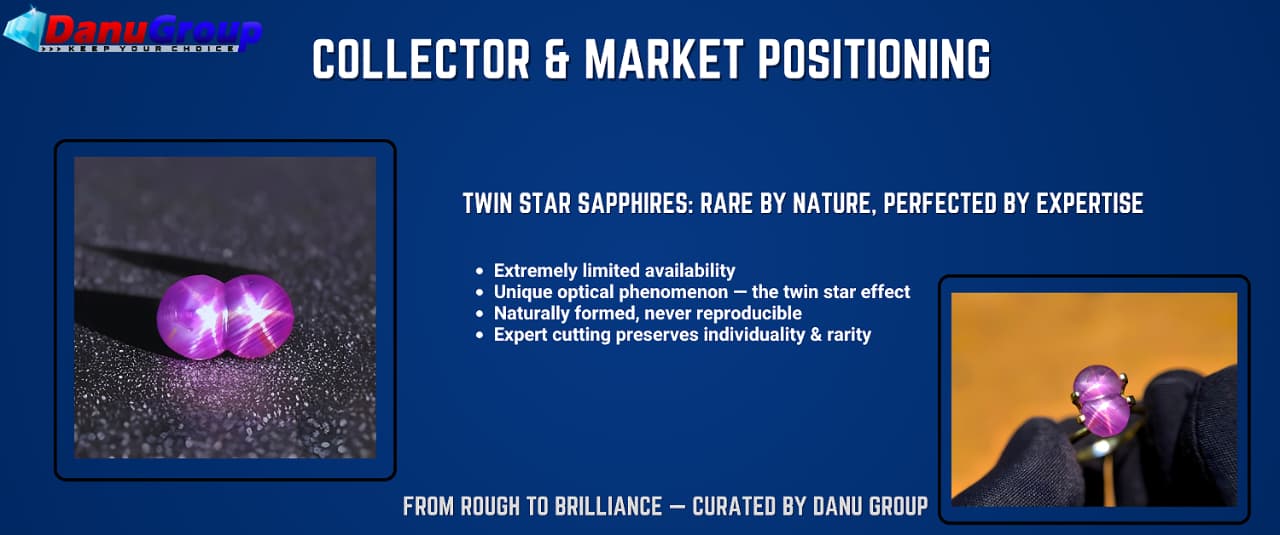
While star sapphires are recognized in the gemstone market, twin star sapphires occupy a niche collector category due to:
Extremely limited availability
Unique optical behavior
Non-reproducible natural formation
High dependence on cutting expertise
From a business perspective, this type of gemstone is not about mass appeal — it is about rarity-driven demand.
Collectors, designers, and serious gemstone buyers value such stones for:
Individuality
Story behind formation and cutting
Source authenticity
At Danu Group, we focus on identifying such potential at the rough stage and making strategic cutting decisions that preserve rarity rather than standardize output.
Danu Group Perspective – From Source to Strategy
This gemstone represents the core philosophy of Danu Group:
Direct sourcing from mining areas
Deep evaluation before cutting
Decision-making based on long-term value, not short-term yield
Respecting the natural identity of each stone
This is not just a gemstone — it is a combination of geological chance and human judgment.
FAQ
Q: Is this Twin Star Sapphire natural and untreated?
Yes, this gemstone is completely natural and unheated, with no artificial enhancement.
Q: Why does this sapphire show two stars?
Due to rare internal alignment of rutile inclusions in multiple directions, allowing dual asterism to appear.
Q: Can all star sapphires be cut into twin stars?
No, only a very small percentage of rough stones naturally contain the required internal structure.
Q: What makes the cutting special?
The cutter must identify and preserve two star axes simultaneously, which is technically challenging and risky.
Q: Is this type of gemstone common in the market?
No, twin star sapphires are extremely rare and not commonly available even among dealers.
Q: Why was a twin dome shape used?
To maintain visibility of both stars, the shape was adapted instead of forcing a standard symmetrical cut.
Final Insight
A Twin Star Sapphire is not just rare because of nature —
it is rare because someone recognized its potential and chose to preserve it.
Danu Group – where rare potential is seen, understood, and revealed.