
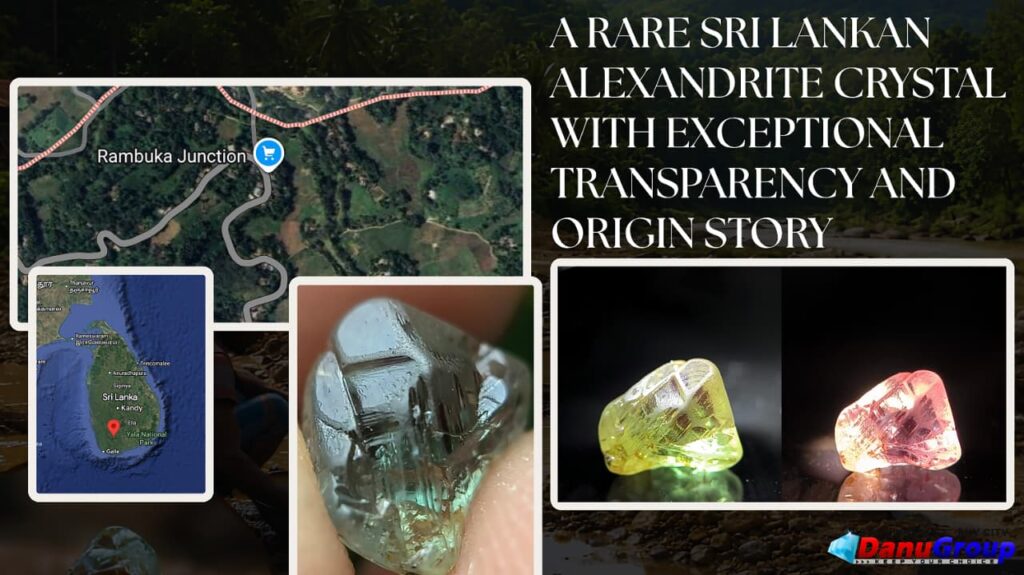
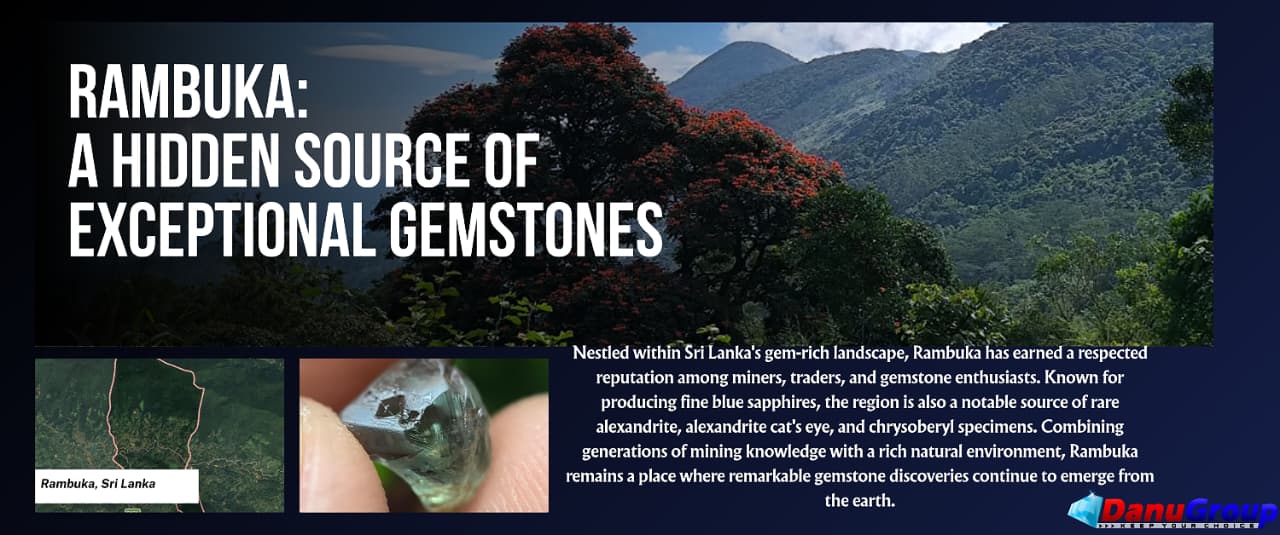
Sri Lanka has always been admired as one of the world’s most meaningful gemstone islands, not only for blue sapphire but also for rare collector gemstones that appear only in very limited quantities from special source areas. Among those rare treasures, alexandrite holds a unique position. It is one of the most fascinating varieties of chrysoberyl, loved for its natural color-change effect, excellent hardness, rarity, and scientific beauty. This 2.42 carat natural alexandrite crystal from Rambuka village around mining in Sri Lanka is a remarkable example of that rare natural character.
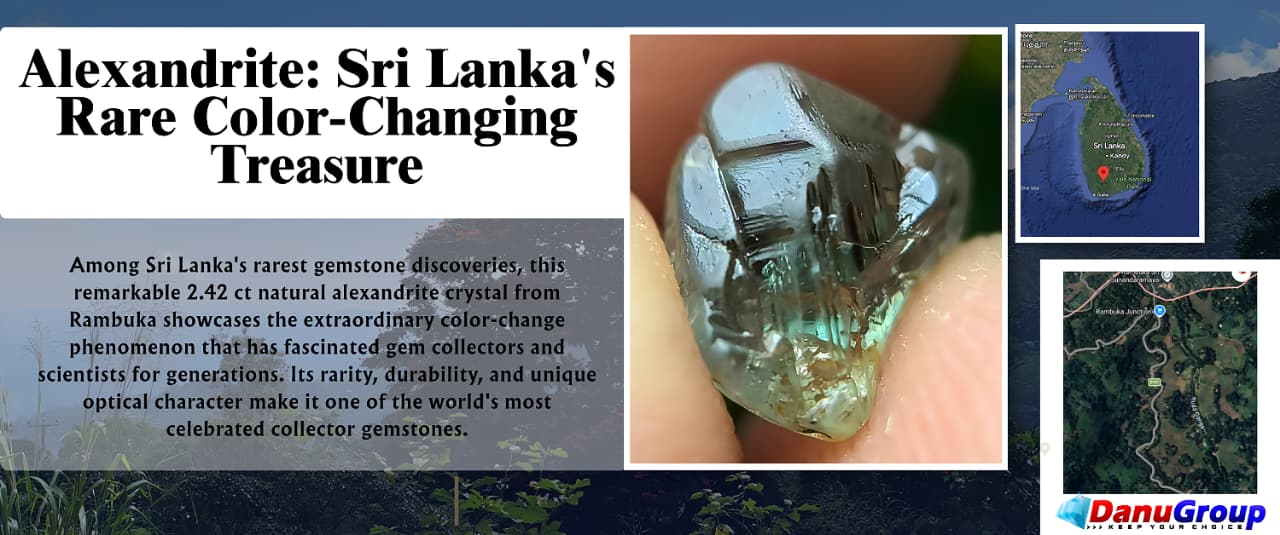
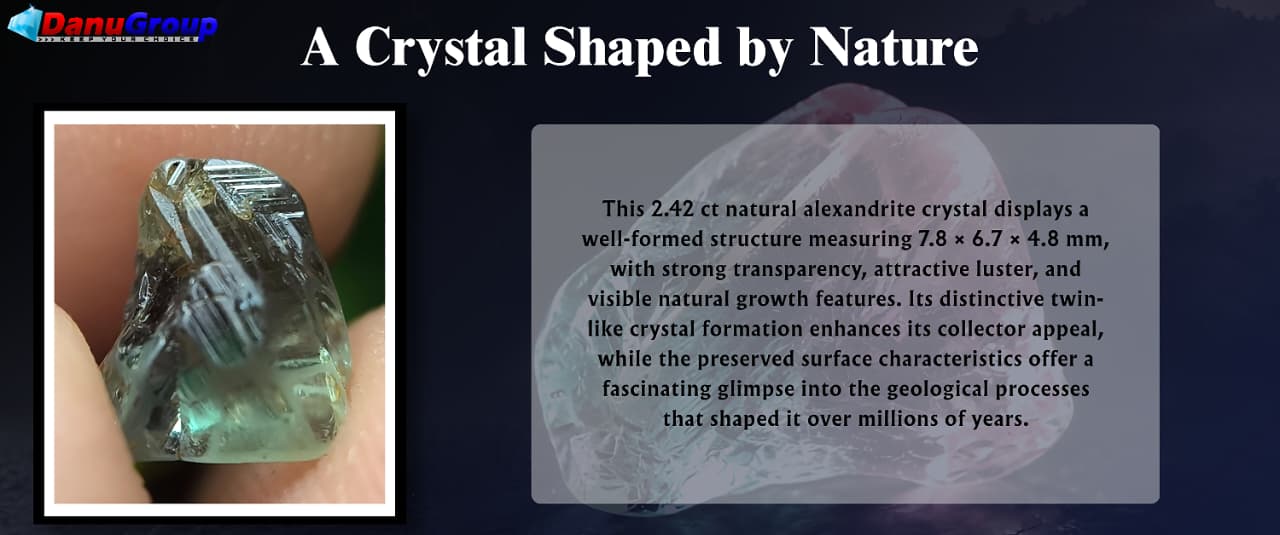
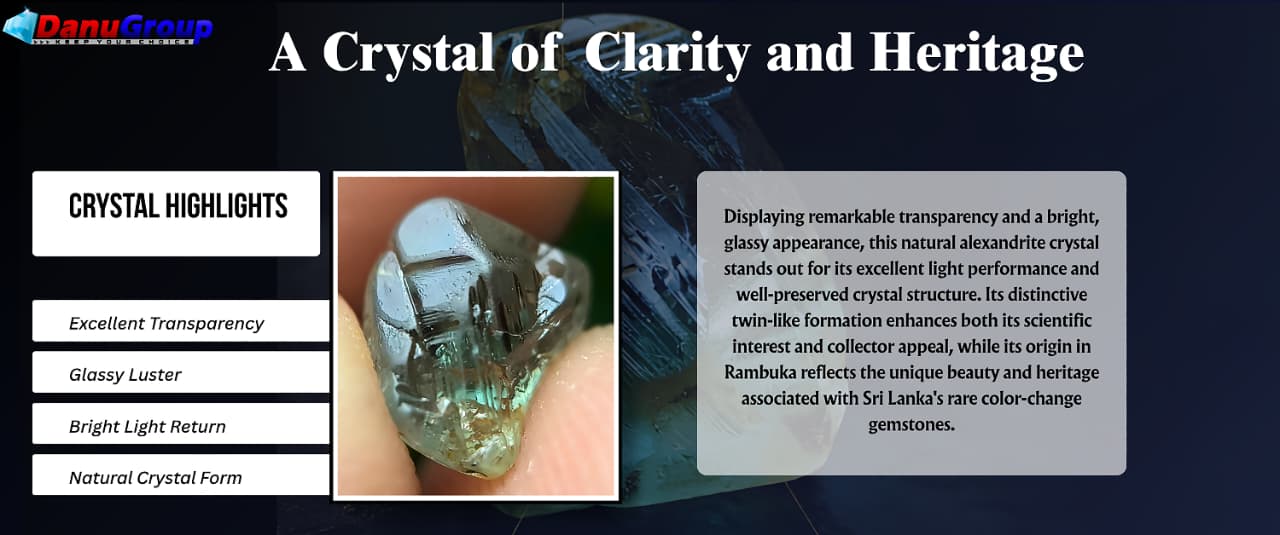
This alexandrite crystal measures 7.8 × 6.7 × 4.8 mm and shows an excellent glassy body with strong transparency, attractive luster, and visible natural growth marks. Its crystal appearance is especially interesting, with a twin-like formation that gives the piece a more collectible identity. In the hand, it is not just a rough gemstone; it feels like a natural record of formation, pressure, growth, and geological time. The surface features and internal appearance remind us that alexandrite is not simply beautiful because of color, but because of how nature builds its structure.
Rambuka is well known among Sri Lankan gem people as a meaningful gemstone source area. It is respected for blue sapphire, and for Danu Group, Rambuka is also one of the most exciting source areas for fine color-change alexandrite, alexandrite cat’s eye, and rare chrysoberyl-related material. Not every buyer around the world is aware of Rambuka in the same way they may know Ratnapura, but for people who work close to the mines, Rambuka carries a special identity. It is a place of nature, village culture, mining knowledge, and genuine source-level gemstone discovery.
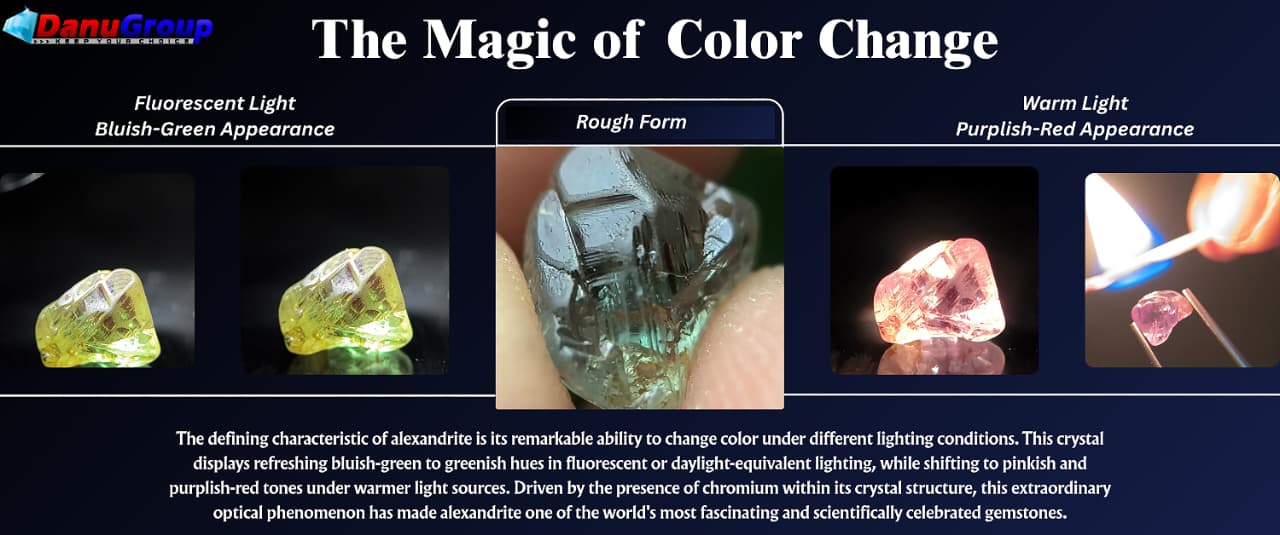
The most amazing feature of this crystal is its color behavior. Under room fluorescent light, the stone shows a unique bluish-green to greenish tone with a fresh and lively body color. Under warmer lighting, it shifts toward a pinkish to purplish-red appearance, showing the classic alexandrite color-change phenomenon. This reaction is caused by the presence of chromium within the chrysoberyl structure, where the stone absorbs and reflects light differently depending on the light source. This is why alexandrite is often described as one of the most scientifically beautiful gemstones in the world.
Gemologically, alexandrite belongs to the chrysoberyl family, with the chemical composition beryllium aluminum oxide. Chrysoberyl is known for its excellent durability, with a hardness of 8.5 on the Mohs scale, making it one of the harder natural gemstones after diamond, corundum, and a few others. Alexandrite normally has a refractive index around 1.746 to 1.755, specific gravity around 3.73, and an orthorhombic crystal system. The combination of hardness, brilliance, pleochroism, and color change makes alexandrite highly valued by collectors, gemologists, and jewelry lovers.
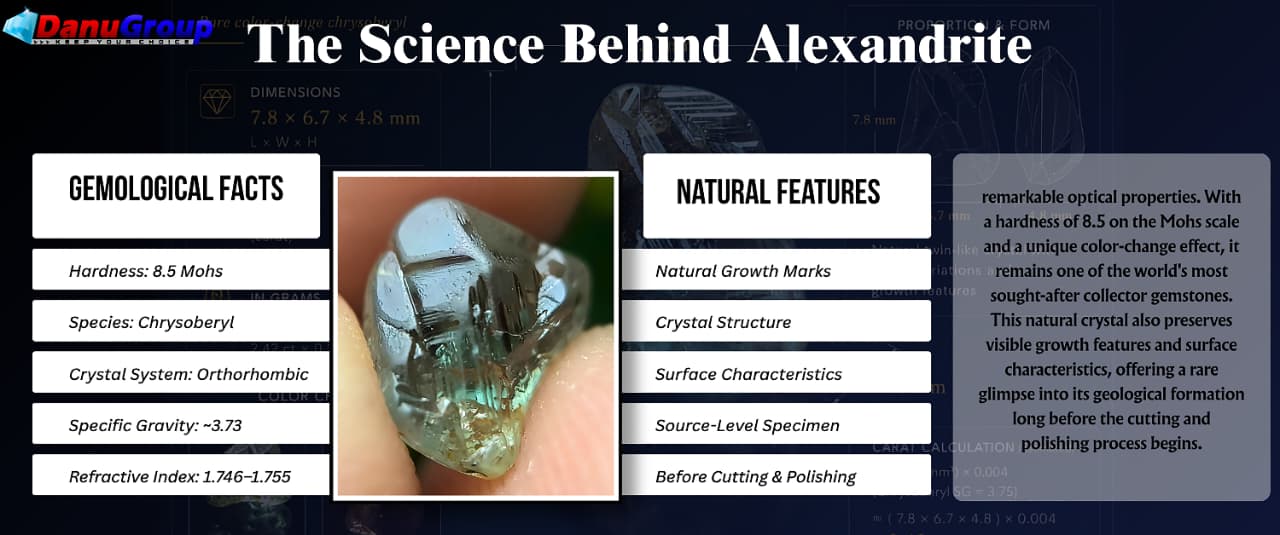
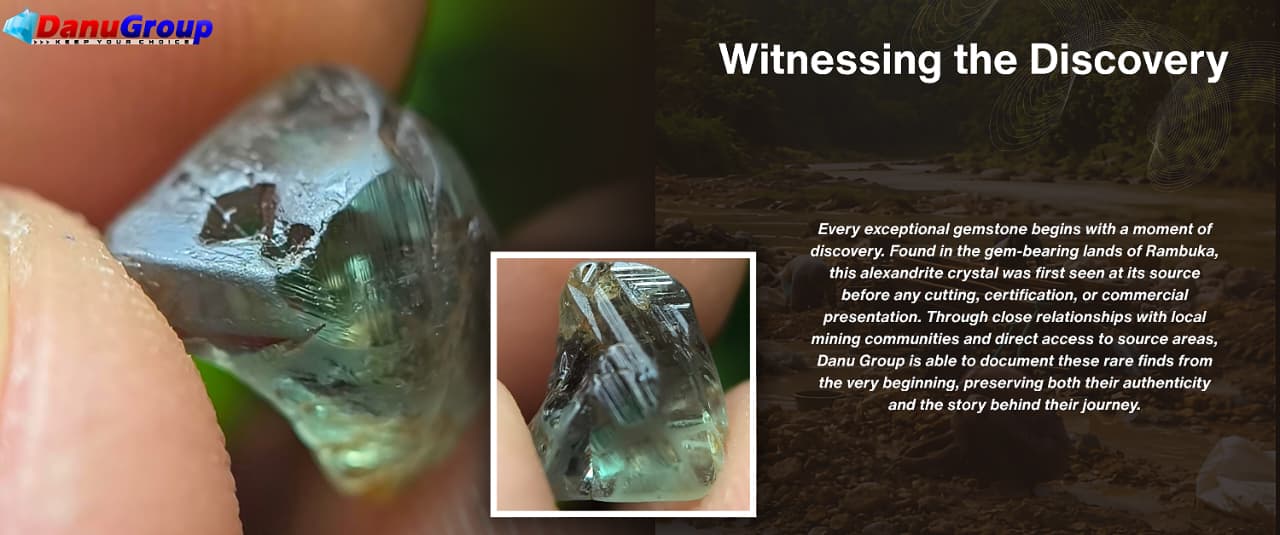
This crystal also shows visible naturally occurred growth marks, which add important character for a source-level gemstone. In many commercial gemstones, buyers only see the finished polished result, but a natural crystal like this allows us to see the early identity of the stone before cutting. These growth features are part of its story. They show that the crystal was formed naturally, carried through the Earth, and discovered from an alluvial mining environment before reaching our hands.
When we first found this crystal from the Rambuka mining area, it was an unforgettable feeling. We were among the first people to see this stone after it came from the ground. That moment is something only people close to the source can truly understand. Before a gemstone reaches a showcase, certificate, or final buyer, it begins as a small discovery in a mining village. For Danu Group, being close to these source areas is one of our strongest advantages. Our nearby offices and direct connections allow us to see special stones early, understand their origin, and preserve their story with honesty.
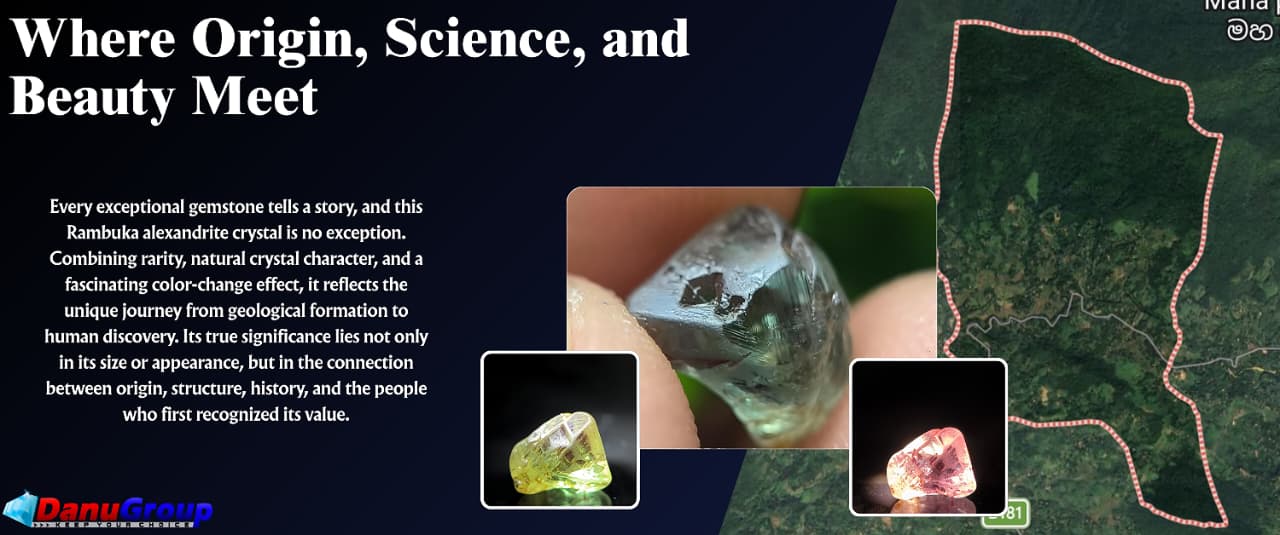
The transparency of this alexandrite is one of its finest qualities. Many alexandrite crystals show heavy inclusions, darker areas, or limited clarity, but this piece has an impressive glassy body with excellent light movement for a natural crystal. The body is lively, bright, and attractive, making it suitable for serious collectors who appreciate both gemological rarity and natural crystal beauty. The visible twin-like crystal appearance makes it even more remarkable, especially for people who value natural formation details and not only finished faceted stones.
Alexandrite from Sri Lanka has a different charm compared with material from other sources. Sri Lankan alexandrite often carries softer elegance, natural brightness, and a refined color-change character. Rambuka material can be especially interesting because of its connection to both fine sapphire and rare color-change chrysoberyl. A crystal like this represents not only a gemstone, but also a small piece of Sri Lankan mining heritage.
At Danu Group, we believe that every important gemstone should be understood from source to story. This 2.42 carat Rambuka alexandrite crystal is not just a rare stone with beautiful color change. It is a natural crystal with excellent luster, strong transparency, visible growth marks, twin-like appearance, and a meaningful origin from one of Sri Lanka’s special gemstone villages. It carries science, beauty, locality, and emotion together in one small natural form.
For collectors, gemologists, and rare gemstone lovers, this represents the type of gemstone that cannot be explained only by weight and measurements. Its true value comes from the combination of origin, color behavior, crystal structure, natural formation, and the feeling of discovery. From Rambuka village around mining in Sri Lanka to the hands of Danu Group, this alexandrite crystal reminds us why gemstones are not only luxury products, but natural wonders shaped by the Earth over time.
FAQ
1. Why is Rambuka alexandrite special?
Rambuka is known among Sri Lankan gem people as a meaningful source area for blue sapphire, alexandrite, alexandrite cat’s eye, and rare color-change chrysoberyl material. It is a village-based mining area with strong natural gemstone identity.
2. What color change does this alexandrite show?
This alexandrite shows a bluish-green to greenish tone under room fluorescent light and shifts toward a pinkish to purplish-red appearance under warmer light. This is the natural color-change effect that makes alexandrite famous.
3. What causes alexandrite color change?
Alexandrite color change is mainly caused by chromium within the chrysoberyl structure. Different light sources interact with the stone differently, creating the visible shift between greenish and reddish tones.
4. Is alexandrite durable for jewelry?
belongs to the chrysoberyl family and has a hardness of 8.5 on the Mohs scale, making it a durable gemstone. However, for natural crystals or stones with visible growth features, proper cutting or protective jewelry setting should always be considered carefully.
5. Why are visible growth marks important?
Visible natural growth marks show the stone’s natural formation history. They add character and help connect the gemstone to its original crystal growth, especially for collectors who appreciate natural rough and crystal specimens.
6. Why is this crystal important to Danu Group?
This crystal was discovered from the Rambuka mining area and reached Danu Group directly from the source. Being close to the mining region allowed us to see and appreciate the stone from the beginning, preserving its natural story, origin, and beauty.