
What Makes a Natural Orange Sapphire So Rare?
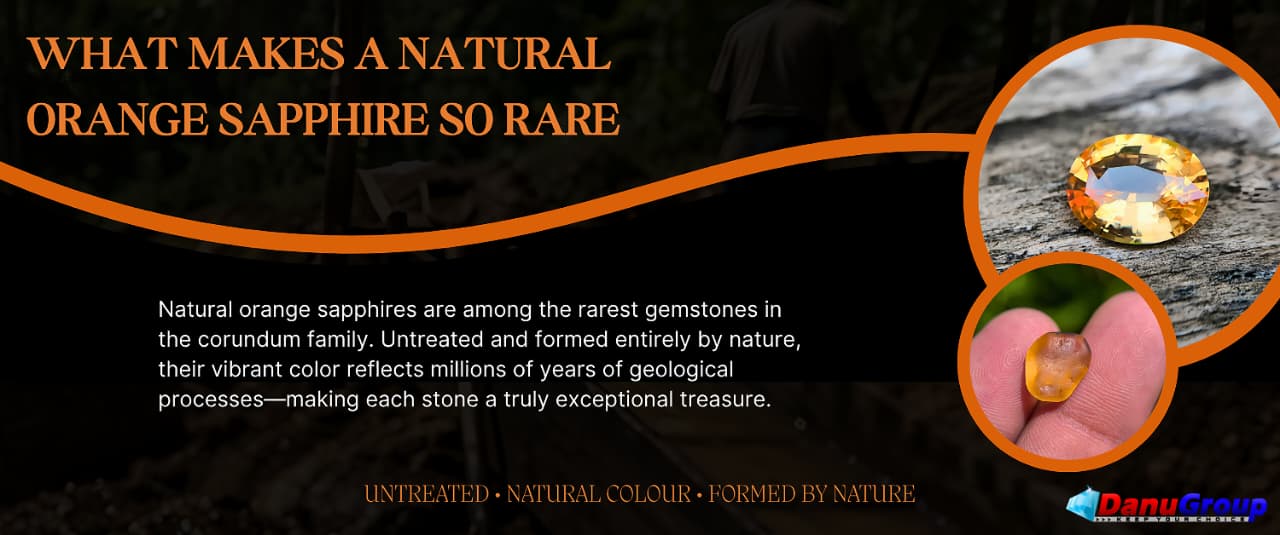
Among the many colors found within the sapphire family, natural orange sapphire remains one of the least frequently encountered in untreated form. While blue, yellow, and pink sapphires are relatively familiar to collectors, a naturally vibrant orange sapphire without any form of heat treatment is exceptionally uncommon. Its warm body color is created entirely by nature through the presence of trace elements within the crystal during its formation millions of years ago.
Unlike many orange sapphires available in today’s jewelry market, this gemstone has received no heat treatment. It represents the original color produced by geological processes alone, making it a remarkable example of Sri Lanka’s natural gemstone heritage.
For collectors, gemologists, and buyers seeking rarity, untreated orange sapphire occupies a very special position within the corundum family.
A Rough Sapphire from Endana Village
Every gemstone begins long before it reaches a jewelry collection.
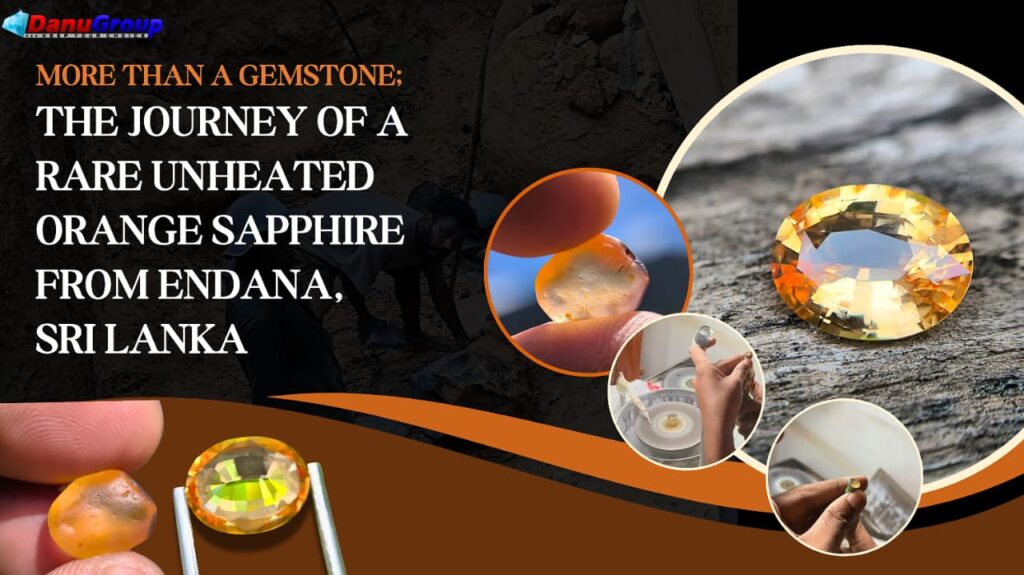
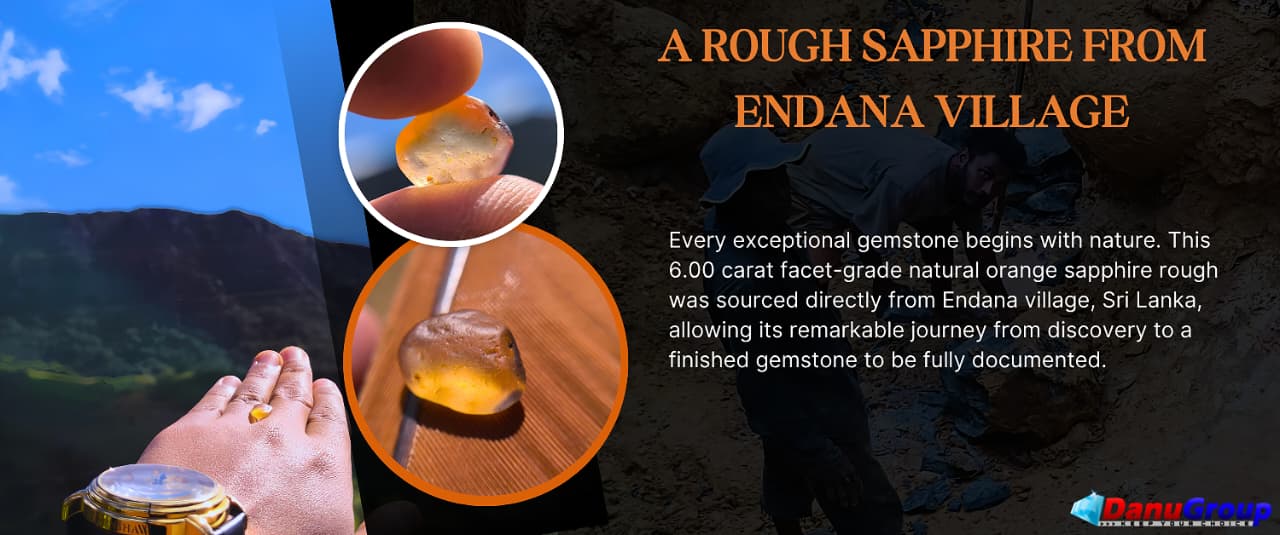
This story started with a 6.00 carat facet-grade alluvial natural orange sapphire rough sourced directly from Endana village around mining in Sri Lanka, an area respected by local gemstone miners for producing beautiful sapphires, vivid pink sapphires, rubies, Padparadscha-type material, spinels, and other unique colors.
Unlike buying finished gemstones through multiple dealers, Danu Group obtained this rough directly from the source, allowing its complete journey to be documented from discovery to the finished gemstone.
The rough immediately showed excellent cutting potential.
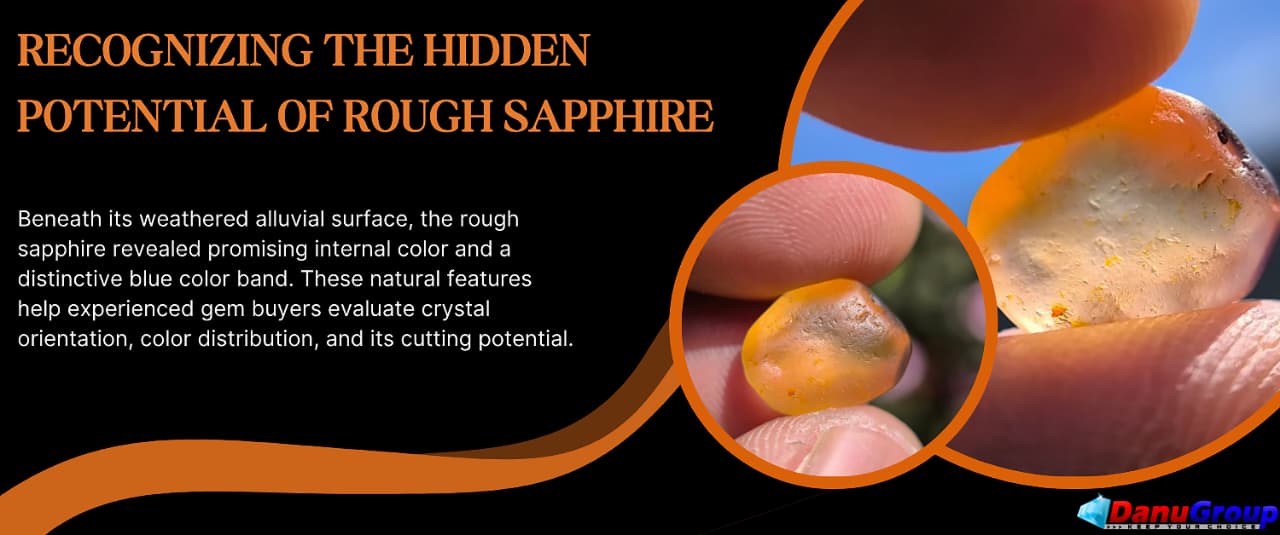
Although the crystal displayed a weathered alluvial surface, careful observation revealed an encouraging internal body color together with an unusual blue color band visible near the surface.
For experienced rough buyers, this type of natural surface feature can provide valuable information during evaluation. Rather than reducing confidence, it often helps experienced gem buyers understand crystal orientation, color distribution, and the possible color performance hidden inside the rough.
This is one of the important skills involved in selecting facet-grade sapphire rough directly from the source.
Planning the Future Gemstone
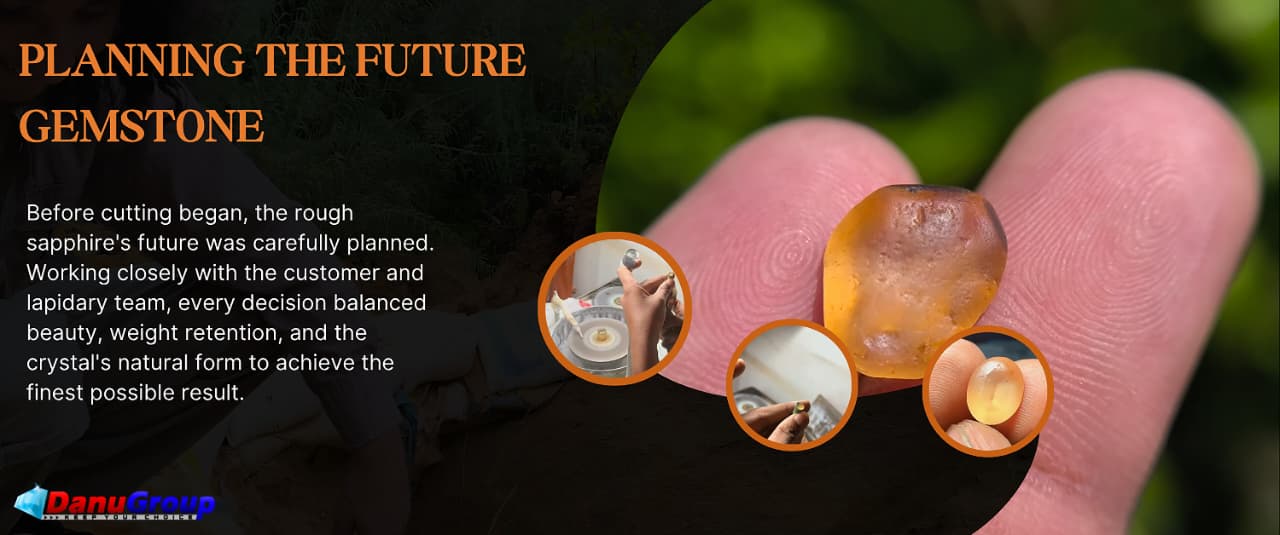
Before cutting began, the rough was reserved by one of our long-term customers from the Netherlands.
Rather than simply requesting a finished gemstone, the customer chose to become part of the cutting journey itself.
Together, we discussed possible cutting styles, balancing beauty, weight retention, and the natural shape of the crystal.
Initially, both cushion and oval designs were considered.
After further examination and detailed discussions with our lapidary team, the final decision was made to produce an elegant oval gemstone, allowing the crystal to express its best natural appearance while preserving as much valuable material as possible.
Discovering Hidden Potential
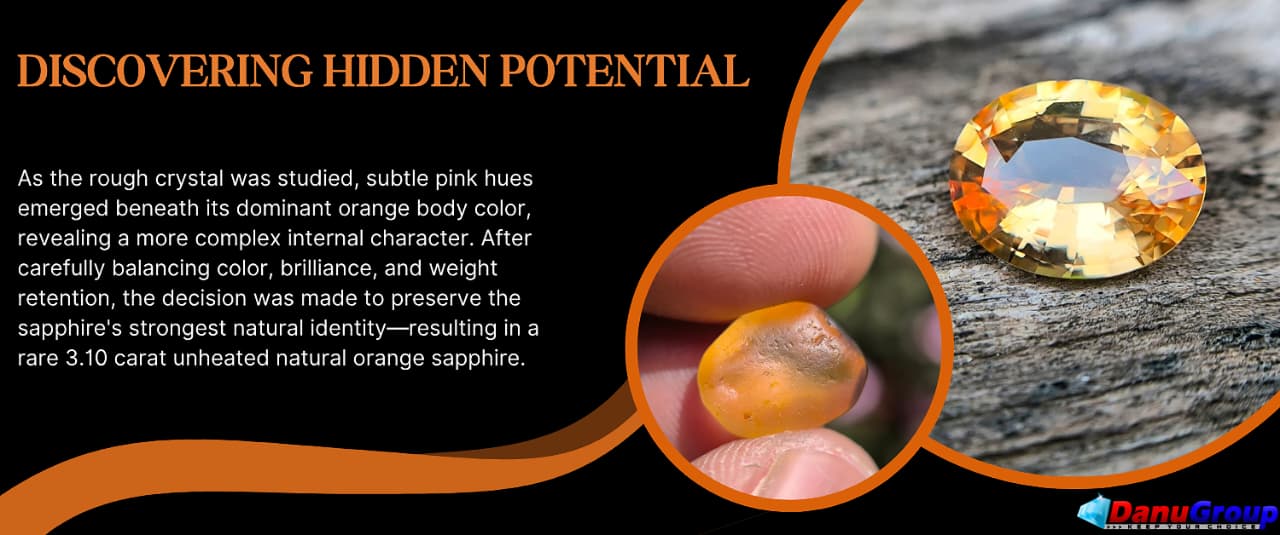
As the cutting plan progressed, further examination revealed an especially interesting characteristic within the rough crystal.
When viewed from different crystal directions, subtle pink hues became visible beneath the dominant orange body color. Although the face-up appearance was clearly orange, these secondary color components suggested that the rough possessed a more complex internal color distribution than first expected.
This prompted careful evaluation of its Padparadscha-type color potential during the planning stage. If a stronger pink contribution could be brought to the face-up appearance, the gemstone might have approached the delicate balance of pink and orange associated with Padparadscha sapphires.
However, achieving that result would have required a significantly different cutting orientation, resulting in substantial weight loss and sacrificing the excellent size potential of the crystal.
After carefully balancing color, brilliance, proportions, and weight retention, the final decision was made to preserve the gemstone’s strongest natural identity. As cutting progressed, the crystal revealed itself as a beautifully saturated natural unheated orange sapphire, displaying exceptional brightness, transparency, and an elegant balance of color.
Rather than forcing the gemstone toward another color category, we respected what nature had created. The result is a rare 3.10 carat natural orange sapphire that faithfully reflects the crystal’s original character while preserving both its beauty and valuable weight..
Balancing Weight and Beauty
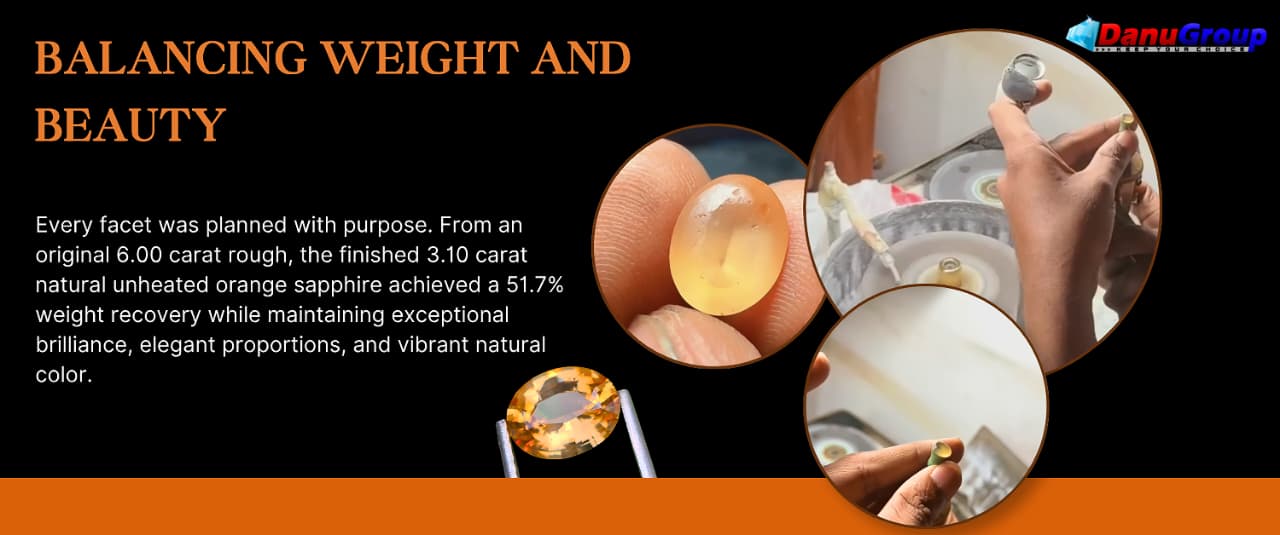
Weight retention became another important consideration throughout the cutting process.
Our original target was approximately 3.00 carats. Creating additional pavilion angles or orienting the stone differently to emphasize subtle secondary colors would have required removing considerably more material, reducing the finished weight well below our target.
After carefully balancing brilliance, symmetry, proportions, color, and weight retention, the final cutting plan preserved both the gemstone’s natural beauty and its valuable size.
From an original 6.00 carat facet-grade rough, the finished gemstone weighs 3.10 carats, representing a 51.7% weight recovery, an excellent result for a natural sapphire requiring precision orientation and careful planning. Measuring 10.3 × 8.1 × 4.8 mm, the gemstone exceeded our original weight expectations while maintaining attractive proportions, excellent face-up appearance, and outstanding brilliance.
The result is a clean, lively natural unheated orange sapphire displaying exceptional color, brightness, and craftsmanship—demonstrating how thoughtful planning can successfully balance beauty, rarity, and weight preservation.
The Gemological Story
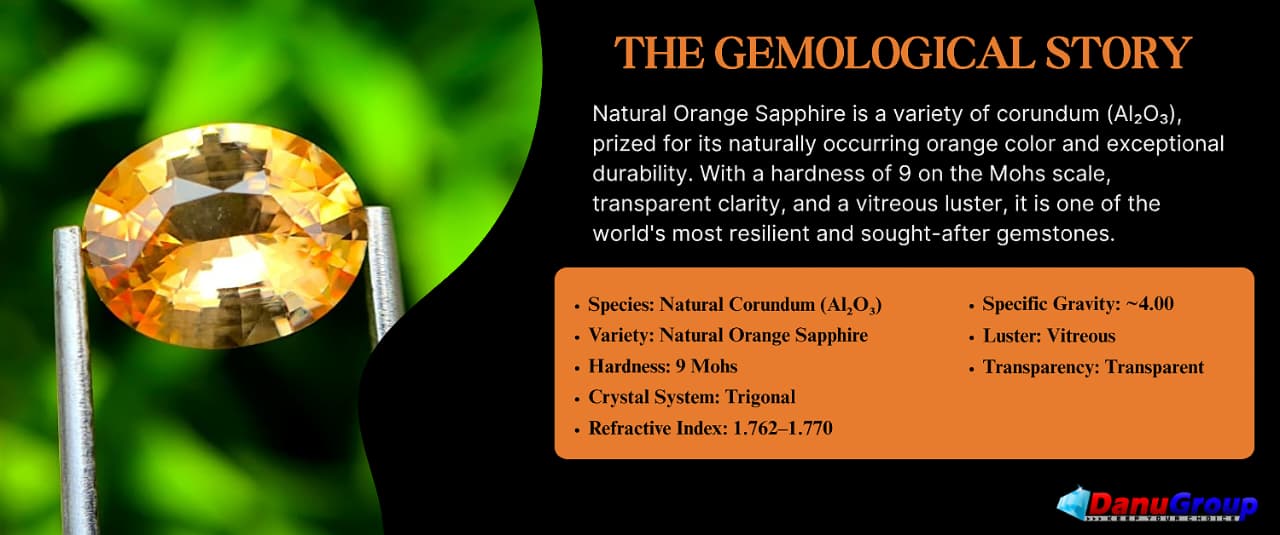
Orange sapphire belongs to the mineral species Natural Corundum (Al₂O₃).
Its orange body color develops naturally through the interaction of trace elements, primarily iron, together with varying amounts of chromium, producing colors ranging from soft pastel orange to rich orangish-red.
Corundum possesses a hardness of 9 on the Mohs scale, making sapphire one of the hardest natural gemstones after diamond.
Additional gemological properties include:
Species: Natural Corundum
Variety: Natural Orange Sapphire
Hardness: 9 Mohs
Crystal System: Trigonal
Refractive Index: Approximately 1.762–1.770
Specific Gravity: Approximately 4.00
Luster: Vitreous
Transparency: Transparent
These characteristics make sapphire highly suitable for everyday jewelry while remaining one of the world’s most durable gemstones.
Natural Orange Sapphire Versus Heated Material
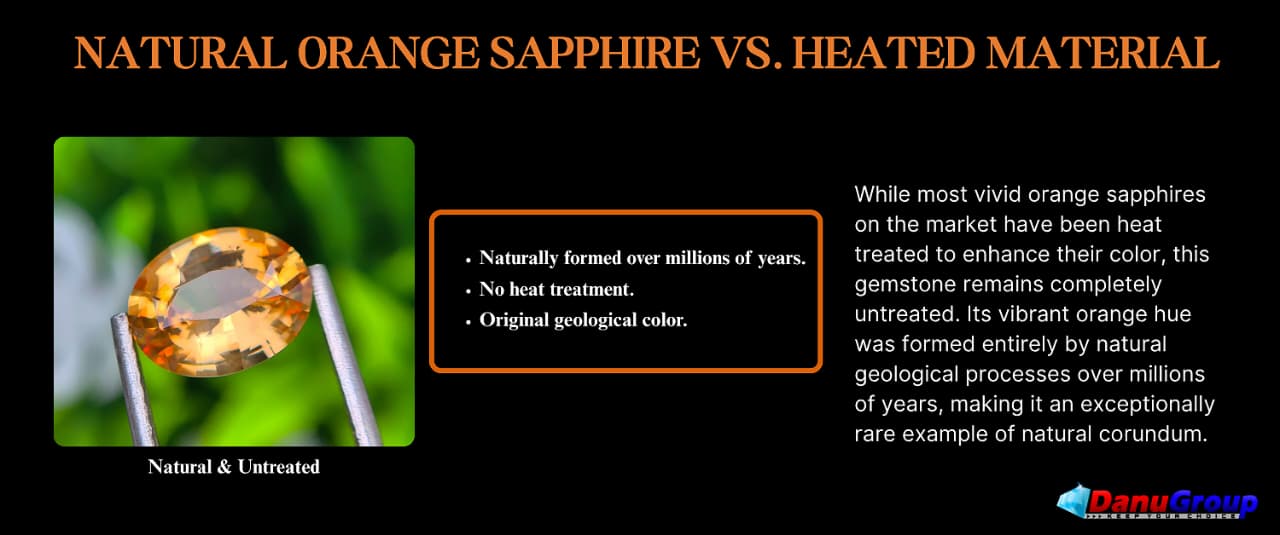
Today, the majority of vivid orange sapphires seen in commercial jewelry stores and online marketplaces have received heat treatment to improve or modify their color.
Heat treatment is an accepted practice within the gemstone industry, but untreated natural orange sapphires remain considerably rarer because their color represents only natural geological processes.
This gemstone belongs to that rarer category.
Its attractive orange color developed entirely within the Earth over millions of years without artificial enhancement.
That natural origin is one of its greatest strengths.
From Endana to the Netherlands
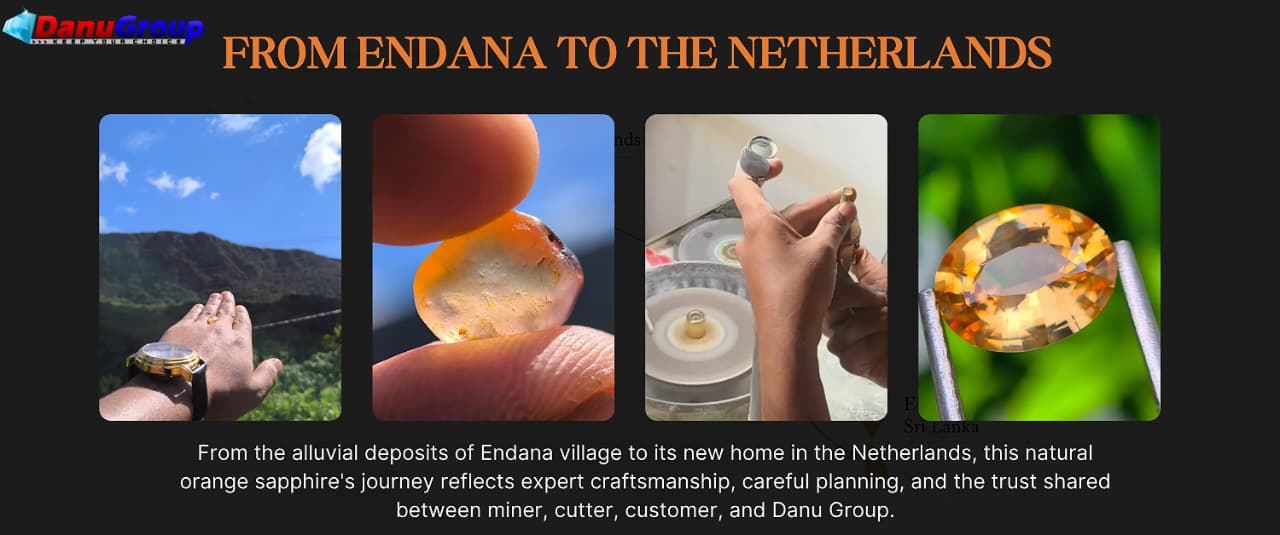
Once cutting was completed, the gemstone prepared for the final stage of its journey.
From a rough crystal discovered in the alluvial deposits surrounding Endana village, through careful planning, collaborative discussions, precision lapidary work, and final evaluation, this sapphire is now ready to travel to its new owner in the Netherlands.
Its journey reflects more than successful cutting.
It represents trust between miner, source, cutter, customer, and Danu Group.
More Than a Gemstone
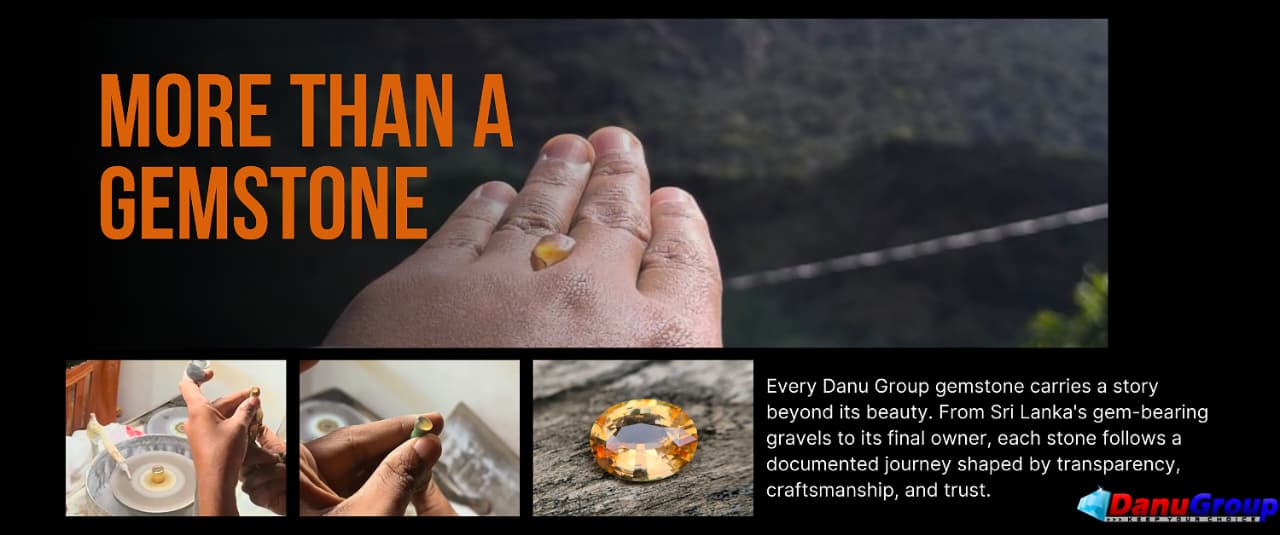
At Danu Group, every gemstone begins with its origin.
We believe transparency begins long before certification.
It begins beside the mining villages, where rough gemstones first emerge from Sri Lanka’s ancient gem-bearing gravels.
From selecting the rough, studying its hidden potential, planning the cut, working together with our customers, and guiding each decision until the final gemstone is complete, every stage becomes part of its story.
This natural unheated orange sapphire is not simply a beautiful gemstone.
It is a documented journey from the source to its final destination.
At Danu Group, you’re not simply buying a gemstone.
You’re becoming part of its journey—from the source to its final destination.
Frequently Asked Questions (FAQ)
1. Is this orange sapphire natural?
Yes. It is a natural orange sapphire belonging to the corundum family.
2. Has this sapphire received any treatment?
No. This gemstone is completely natural and unheated.
3. Where was the rough sapphire found?
It was sourced directly from Endana village around mining in Sri Lanka.
4. What was the rough weight before cutting?
The original facet-grade alluvial rough weighed 6.00 carats.
5. What is the finished size?
The finished gemstone weighs 3.10 carats and measures 10.3 × 8.1 × 4.8 mm.
6. Why was an oval cut selected?
After several stages of examination, the oval shape provided the best balance between color, brilliance, symmetry, and weight retention.
7. Why are untreated orange sapphires considered rare?
Natural orange sapphires with attractive color are uncommon because many orange sapphires in the commercial market have been heat treated to modify or enhance their appearance.
8. What created the orange color naturally?
The color formed naturally through trace elements, primarily iron together with varying amounts of chromium within the crystal during its geological formation.
9. Why is Endana an important gemstone source?
Endana is respected among Sri Lankan gemstone miners for producing fine sapphires, rubies, Padparadscha-type material, spinels, and other richly colored gemstones.
10. What makes this gemstone special?
Its rarity comes from the combination of direct source provenance, natural unheated condition, carefully documented rough-to-cut journey, exceptional cutting quality, and complete transparency from discovery in Sri Lanka to its final owner in the Netherlands.