
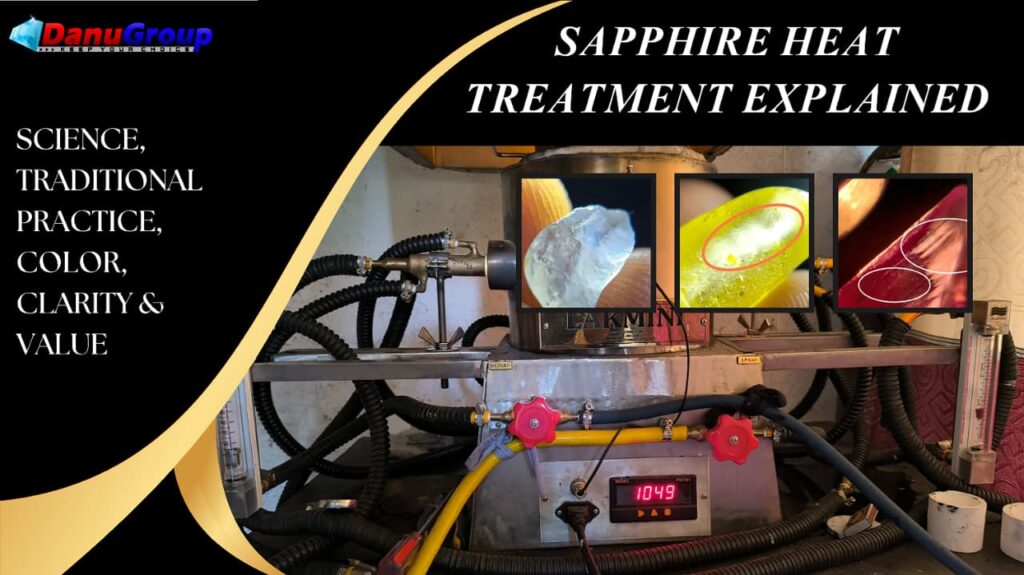
Sapphire Heat Treatment: Scientific Understanding, Practical Experience, and Gemstone Value
Sapphire Heat treatment is one of the oldest and most widely accepted enhancement practices in the gemstone industry. In sapphire, it is especially important because many natural corundum crystals contain hidden beauty that may not be fully visible when they are first recovered from the ground. Some stones appear milky, pale, dark, silky, or uneven in color, but their internal chemistry may hold the potential for stronger blue, golden yellow, or cleaner transparency. Heat treatment does not create sapphire. It only modifies the appearance of an existing natural sapphire by using heat to encourage changes that can also happen slowly inside the Earth over geological time.
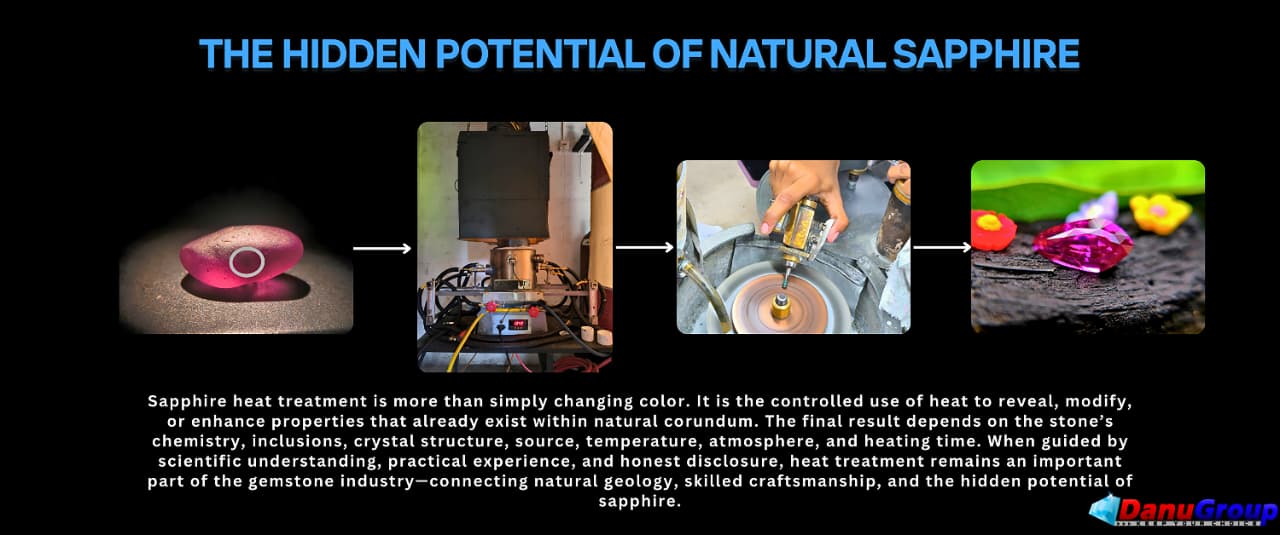
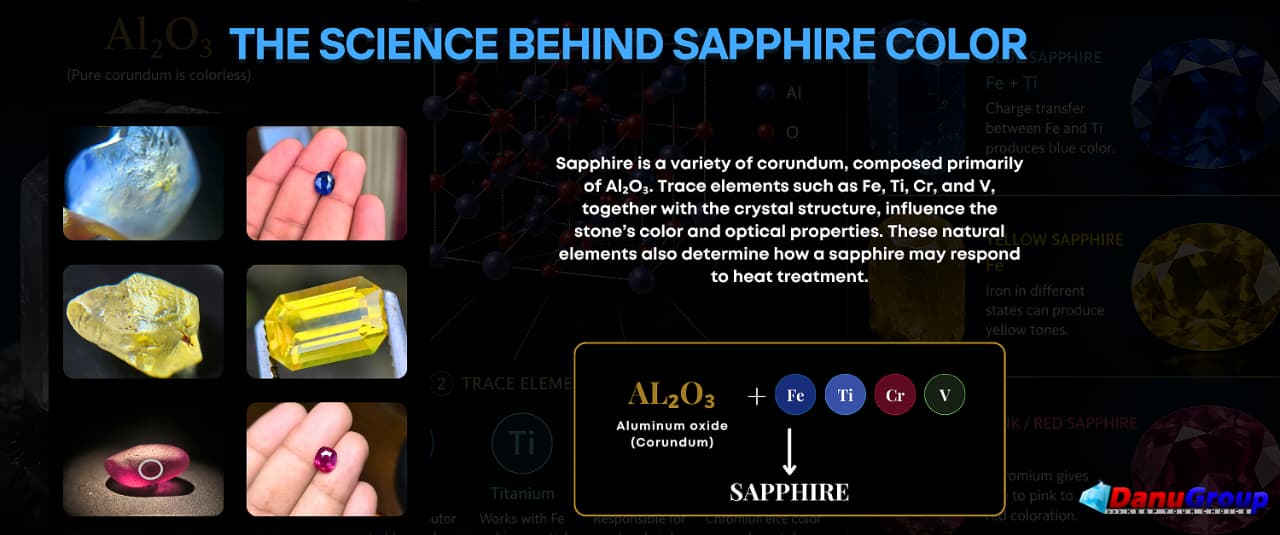
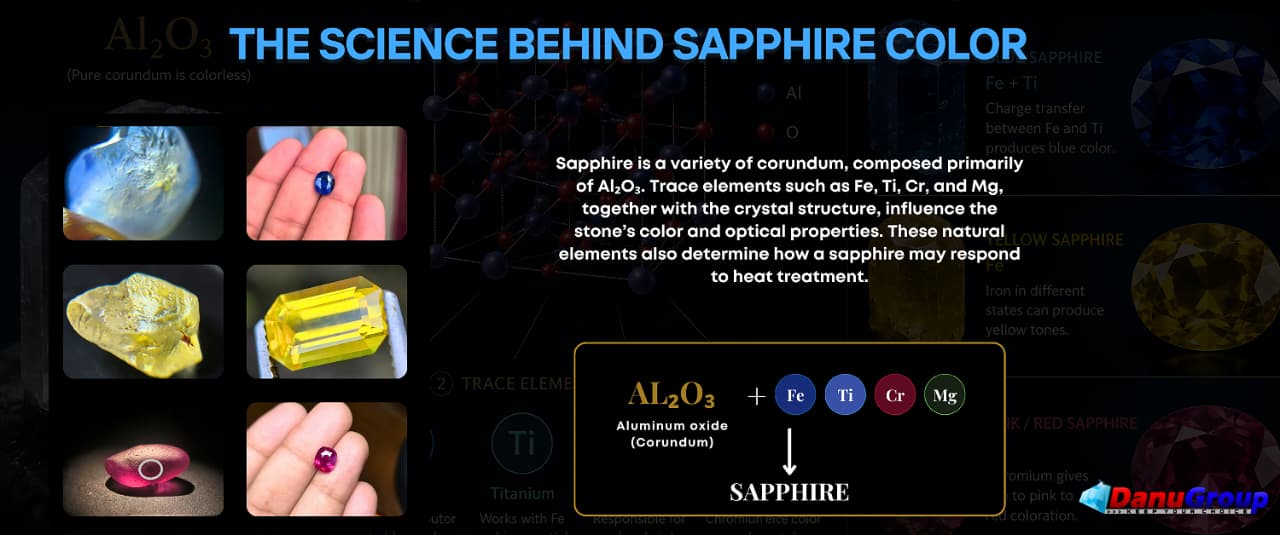
From a gemological point of view, sapphire is the mineral corundum, composed mainly of aluminum oxide. Pure corundum is colorless, but natural sapphire gains color from trace elements and structural defects within the crystal. Iron, titanium, chromium, Vanadium, and other trace components can influence color. The way these elements exist inside the crystal, how they interact with each other, and how they respond to heat determine whether a sapphire improves, changes, or remains almost the same during treatment.
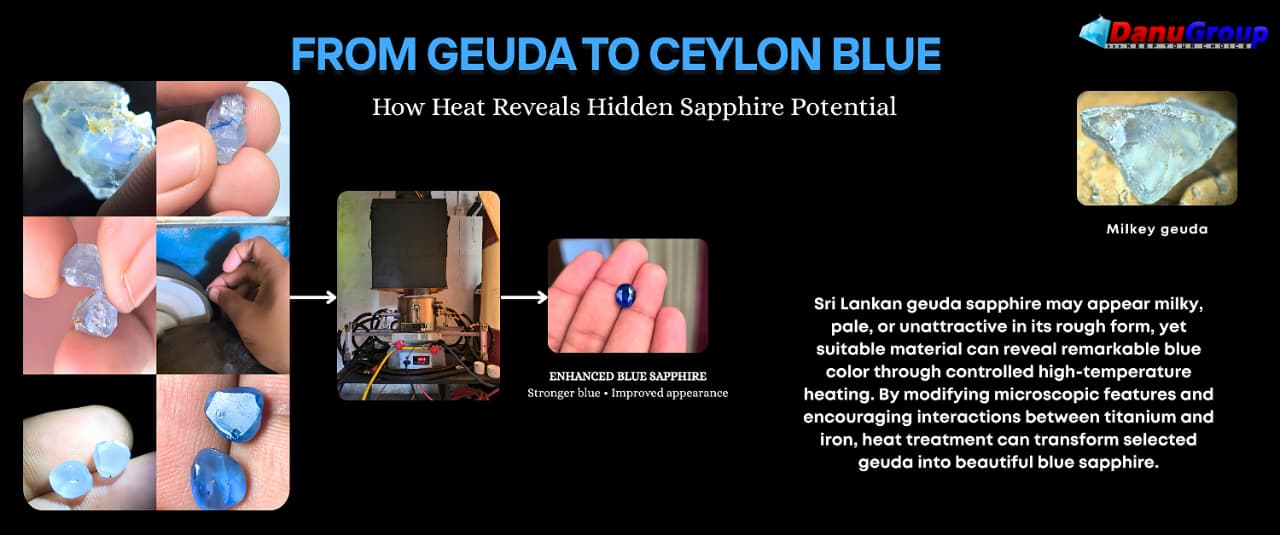
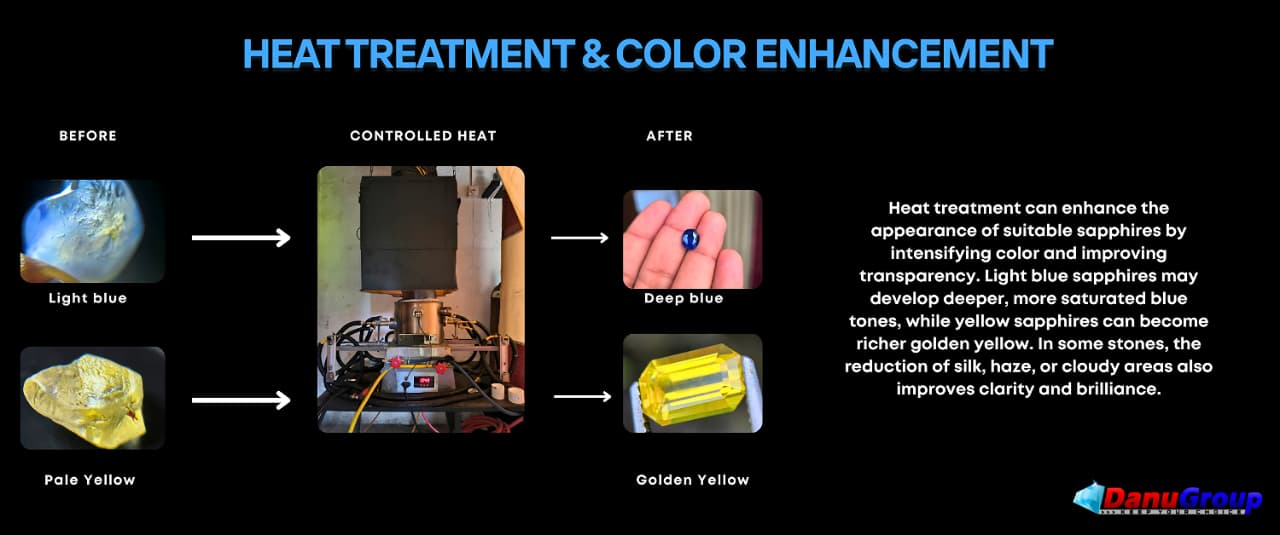
One of the best-known examples is geuda sapphire from Sri Lanka. Geuda material can look milky, sleepy, pale, or unattractive in the rough state. However, some geuda contains the right internal chemistry to develop blue color after high-temperature heating. In suitable stones, heat can help dissolve fine rutile silk or other microscopic features, allowing titanium and iron to interact more effectively and produce stronger blue through intervalence charge transfer. This is one reason traditional Ceylon geuda heating became so important in the sapphire trade. A stone that may look ordinary before heating can sometimes become a fine blue sapphire after controlled treatment.
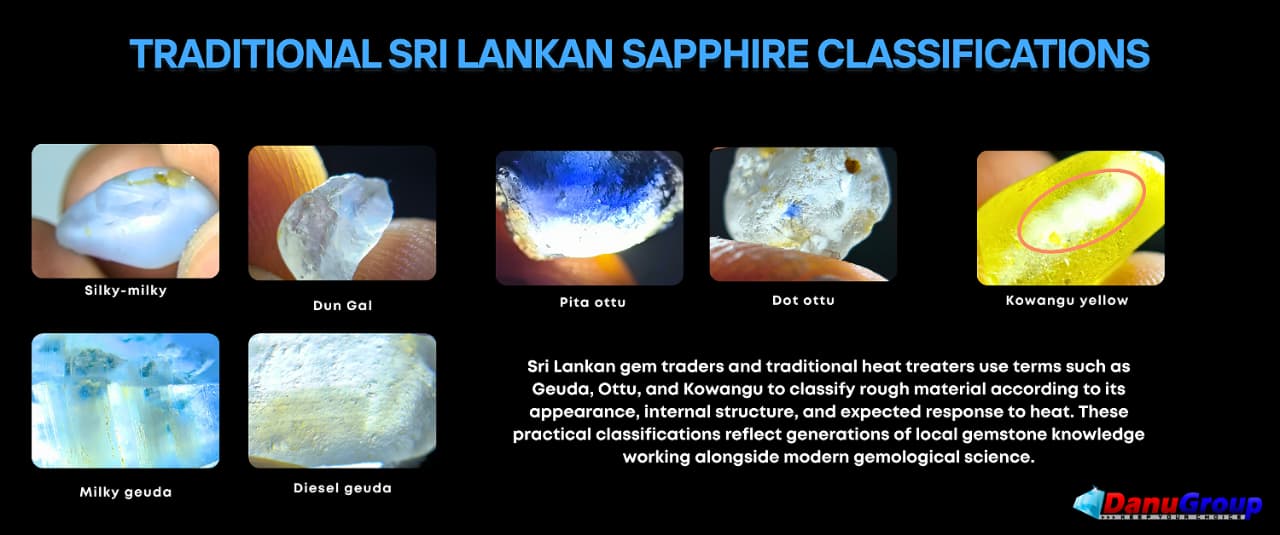
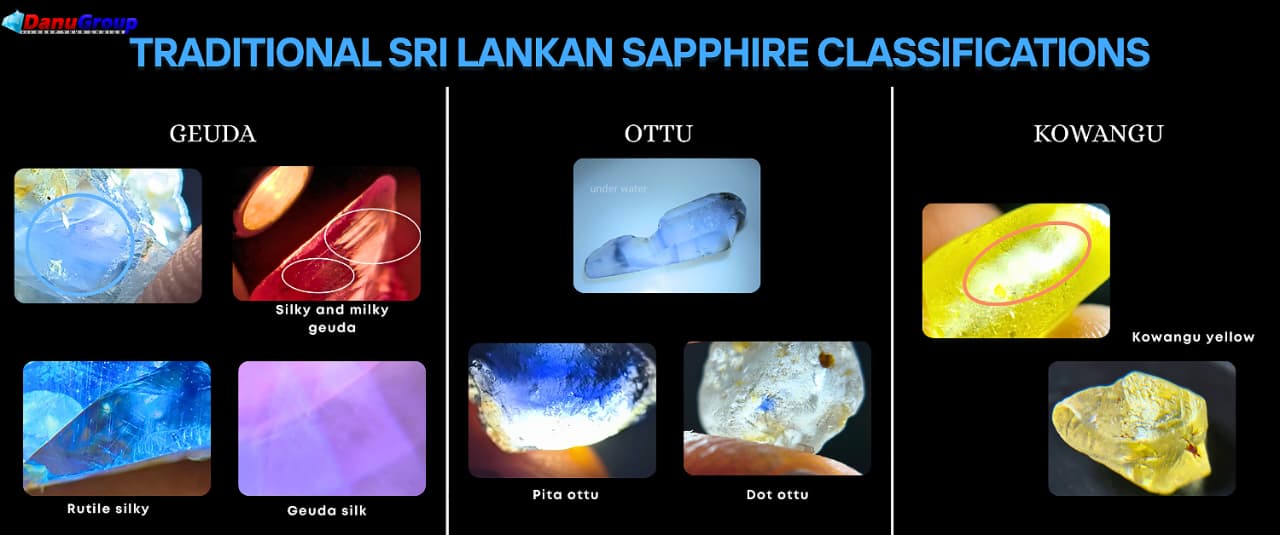
In Sri Lankan sapphire heating practice, rough material is also described using traditional trade terms that reflect appearance, internal texture, and expected response to heat. Alongside general geuda material, heaters may separate stones into categories such as young geuda, silky geuda, milky geuda, rathu geuda, silky-milky geuda, and young-milky geuda. Another important local group is ottu, which may be further recognized as iri ottu, pita ottu, athul ottu, dot ottu, and rathu ottu depending on the internal appearance and structure of the rough. These are not formal gemological species names, but practical working classifications used by miners, buyers, and traditional heaters to judge potential behavior during treatment. A separate trade term, kowangu, is also important in the local market, especially for material selected for heating with the aim of developing stronger yellow to orange color. These traditional classifications show how practical Sri Lankan gemstone knowledge works alongside gemological science, helping experienced heat treaters decide which stones may improve, which may change in a specific direction, and which may carry greater risk during heating.
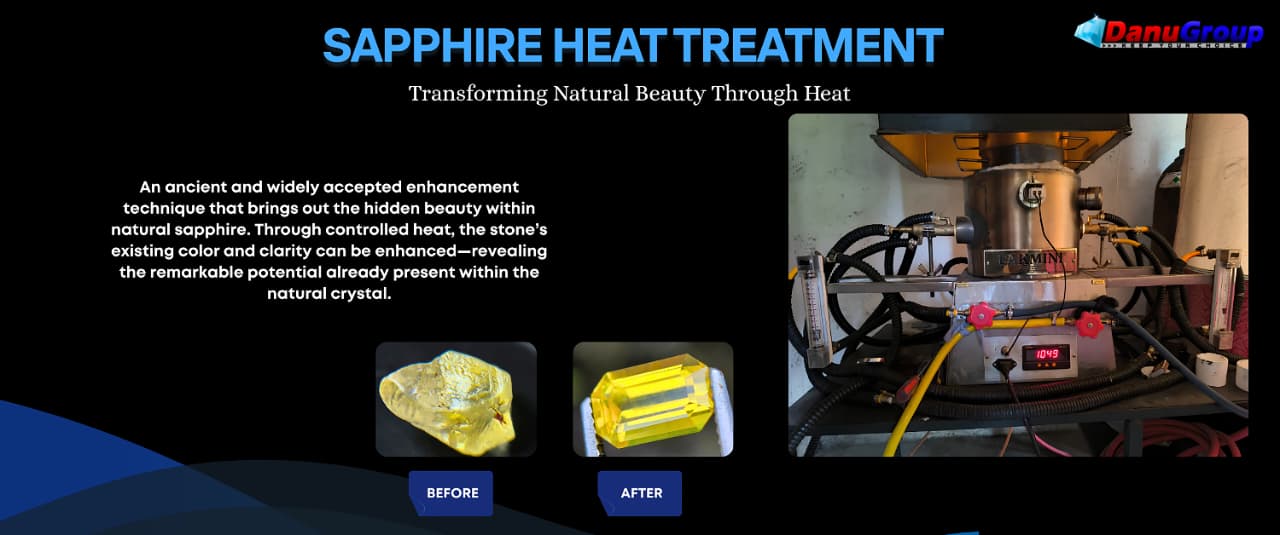
Heat treatment can also intensify color. Light blue sapphire may become deeper and more saturated if the trace elements and internal structure are suitable. Yellow or yellowish-orange sapphire can become richer golden yellow when iron-related color centers are affected by heat and atmosphere. Some stones with dull or weak body color may show better brightness after heating because internal silk, haze, or cloudy areas are reduced. This improved transparency can make the color appear cleaner and more attractive, even if the actual body color change is not dramatic.
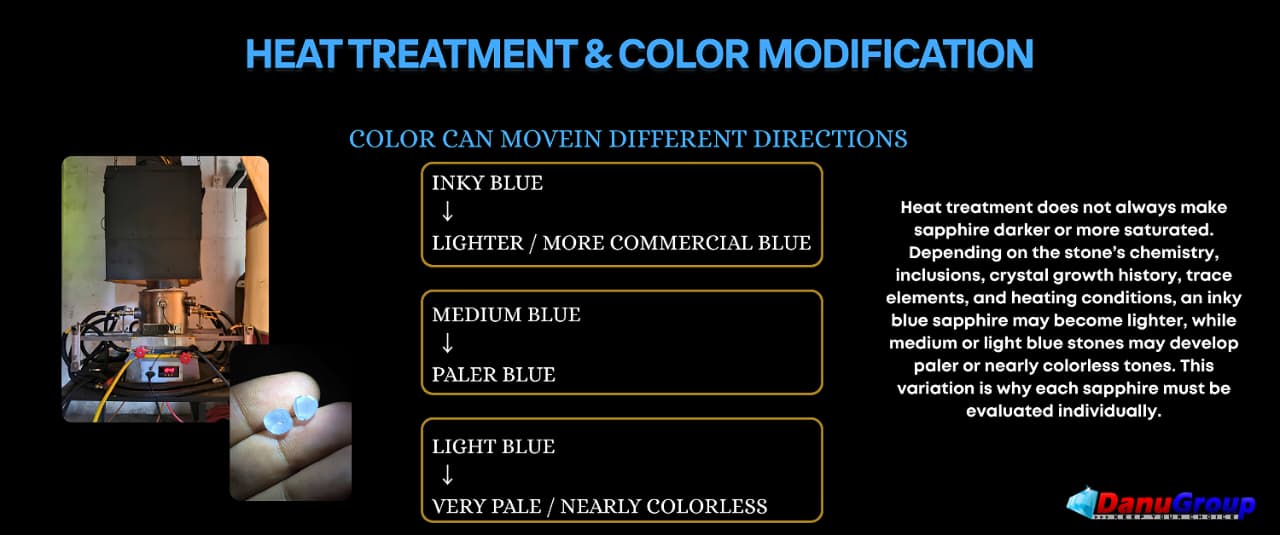
Another important effect is color modification. Not every heat treatment makes a stone darker or stronger. In some cases, overly dark “inky blue” sapphire can be lightened and made more commercial. Certain medium or light blue stones may become paler, lighter blue, or nearly colorless, depending on their composition and the heating conditions. This is why practical experience is so important. Two sapphires that look similar from the outside may react very differently in the furnace because their internal chemistry, inclusions, crystal growth history, and trace element balance are not the same.
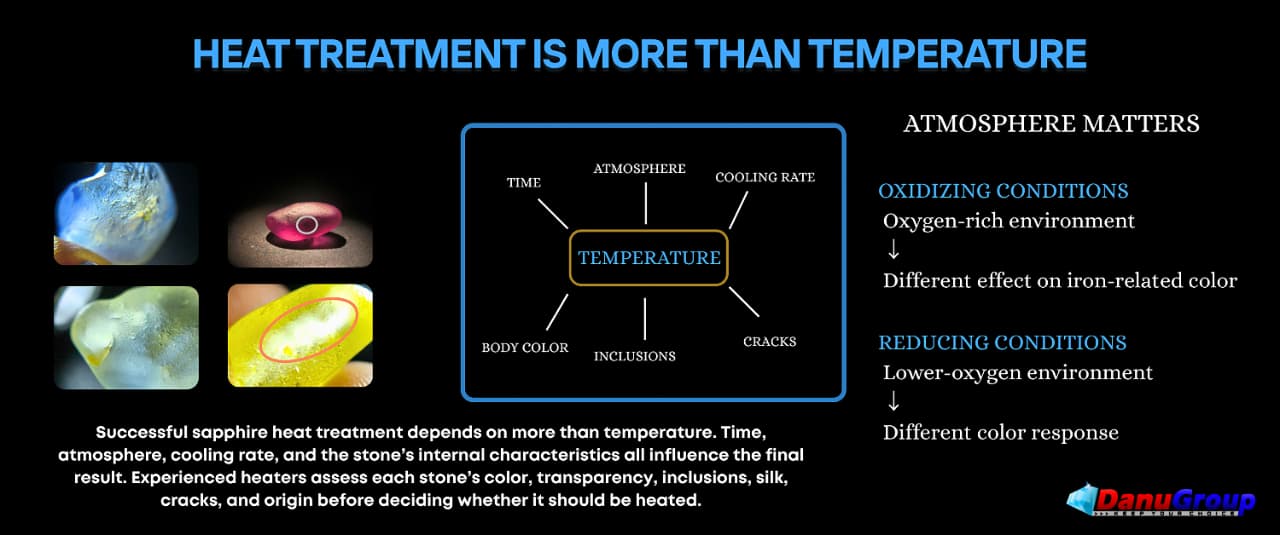
Temperature is only one part of sapphire heat treatment. Time, atmosphere, cooling rate, and the condition of the stone all matter. Heating may be carried out in oxidizing or reducing conditions, and the atmosphere can strongly influence final color. Oxygen-rich conditions can affect iron-related colors differently from reducing conditions. In practical gem heating, the stone’s body color, transparency, inclusions, silk, cracks, and source type are carefully considered before deciding whether the material is worth heating. A good heater does not only think about maximum temperature. The real skill is knowing which stones have potential, which stones are risky, and which stones should not be heated at all.
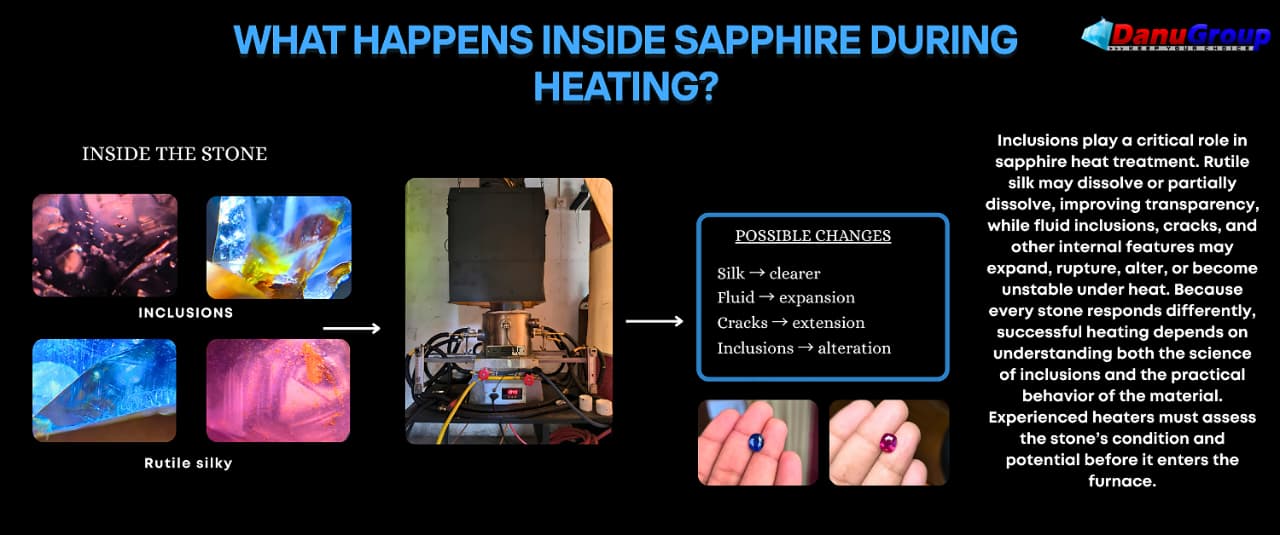
Inclusions are also central to understanding heat treatment. Fine rutile silk can dissolve or partially dissolve during heating, improving transparency and sometimes developing color. Some inclusions may change shape, create tension halos, or become altered under high temperature. Fluid inclusions can expand or rupture, especially if heating is too aggressive or if the stone contains weak internal areas. Cracks may extend, and stones with unstable fractures may break. For this reason, heating is never completely risk-free. Even experienced people can lose stones during the process if the material reacts badly.
This is where science and practical knowledge meet. Gemological science explains the role of trace elements, oxidation state, crystal defects, and microscopic inclusions. Practical experience teaches how different source materials behave, how rough looks before heating, how the furnace environment affects results, and how to judge risk. A laboratory can later study signs of heating under magnification, spectroscopy, and other advanced testing methods. A practical heater, however, must make decisions before the stone enters the heat process. That decision comes from experience, observation, and understanding the behavior of many stones over time.
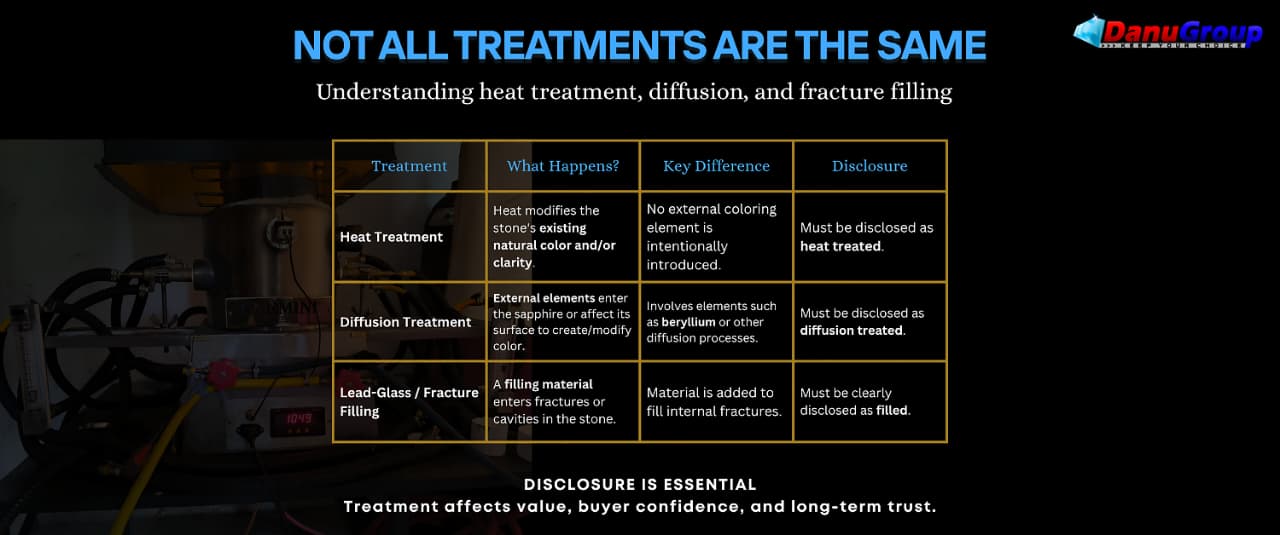
It is also important to separate normal heat treatment from other treatments. Standard heat treatment uses heat to modify natural color and clarity within the existing stone. Diffusion treatment, such as beryllium diffusion or surface-related color diffusion, involves external elements entering the stone and must be disclosed differently. Lead-glass filling and fracture filling are also separate treatments and should never be confused with ordinary heating. In professional gemstone selling, accurate disclosure is essential because treatment affects value, buyer confidence, and long-term trust.
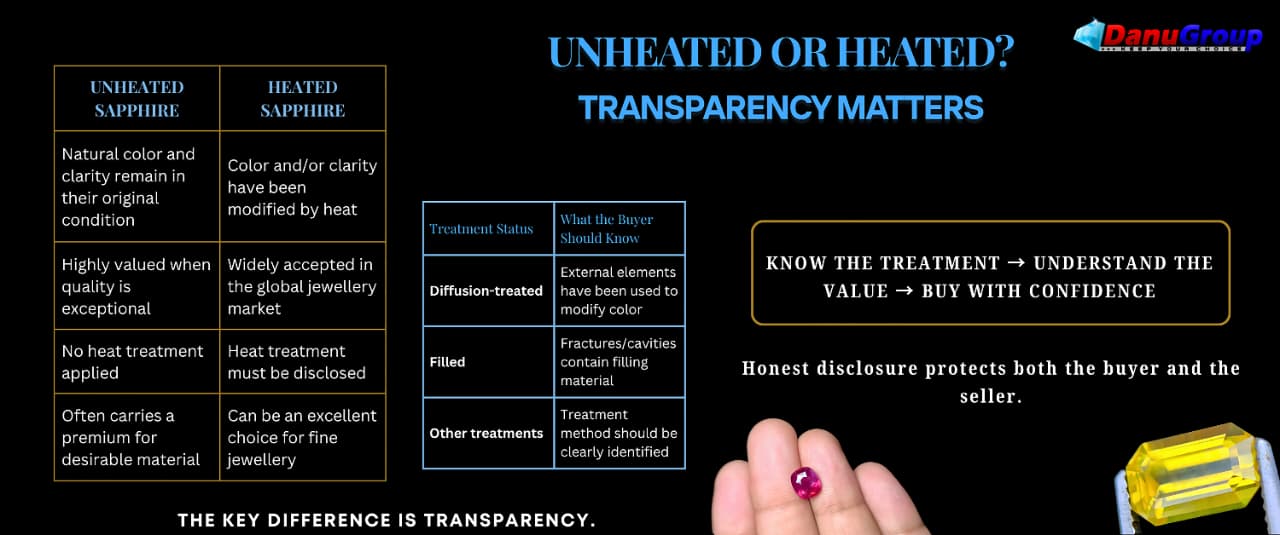
Unheated sapphire remains highly valued because its color and clarity are presented in the condition created by nature. However, heated sapphire is also accepted and respected in the global jewellery market when properly disclosed. Many beautiful sapphires used in fine jewellery are heated. The key difference is transparency. A buyer should know whether the stone is unheated, heated, diffusion-treated, filled, or treated by another method. Honest disclosure protects both the seller and the buyer.
For jewellery designers and gemstone buyers, heat-treated sapphire offers important opportunities. A well-heated natural sapphire can have attractive color, good clarity, and strong durability while being more accessible than comparable unheated material. For collectors, untreated stones, unusual pre-heated rough, geuda examples, and stones showing interesting reactions to heat can all have educational value. For gemologists, heat treatment is a fascinating subject because it reveals how tiny chemical differences inside a crystal can completely change visual appearance.
In the end, sapphire heat treatment is not simply “making color.” It is the controlled use of heat to unlock, modify, or improve what already exists inside natural corundum. Some stones become more beautiful. Some change only slightly. Some may become lighter, darker, clearer, or damaged. The result depends on chemistry, inclusions, structure, source, temperature, atmosphere, and time. This is why proper sapphire heating requires both scientific understanding and traditional practical skill. When done correctly and disclosed honestly, heat treatment remains an important part of the gemstone world — connecting geology, craftsmanship, and the hidden potential of natural sapphire.
FAQ
1. Why are sapphires heated?
Sapphires are heated to improve color, clarity, or overall appearance. The treatment can reveal hidden color, reduce silk or cloudiness, and improve visual quality when the material has suitable internal chemistry.
2. Does heat treatment create sapphire?
No. Heat treatment does not create sapphire. It only modifies the appearance of an existing natural sapphire.
3. What is geuda sapphire?
Geuda is a type of sapphire material, often seen in Sri Lanka, that may look milky, pale, or sleepy before heating. Some geuda can develop attractive blue color after proper heat treatment.
4. Why do some sapphires turn blue after heating?
In suitable sapphires, heat can help iron and titanium interact inside the corundum crystal, creating or strengthening blue color through charge-transfer processes.
5. Can heating improve clarity?
Yes, in some sapphires. Heat may dissolve or reduce fine rutile silk and hazy internal features, allowing the stone to appear cleaner and more transparent.
6. Can heat treatment damage sapphire?
Yes. Stones with fractures, unstable inclusions, or unsuitable internal structure can crack, break, lose color, or show little improvement if heated improperly.
7. Do all sapphires improve with heat?
No. The result depends on trace elements, inclusions, source type, crystal structure, heating atmosphere, temperature, and time. Some stones improve, some change very little, and some may become worse.
8. Is heated sapphire accepted in the jewellery market?
Yes. Heat-treated sapphire is widely accepted when the treatment is properly disclosed. Many natural sapphires used in jewellery are heated.
9. Is unheated sapphire more valuable?
Often, yes. Unheated sapphire can be more valuable when color, clarity, size, and origin are attractive because the stone’s beauty is natural without heat enhancement.
10. Can laboratories detect heat treatment?
Advanced gemological laboratories can often identify evidence of heating by studying inclusions, internal features, spectroscopy, and other gemological indicators.